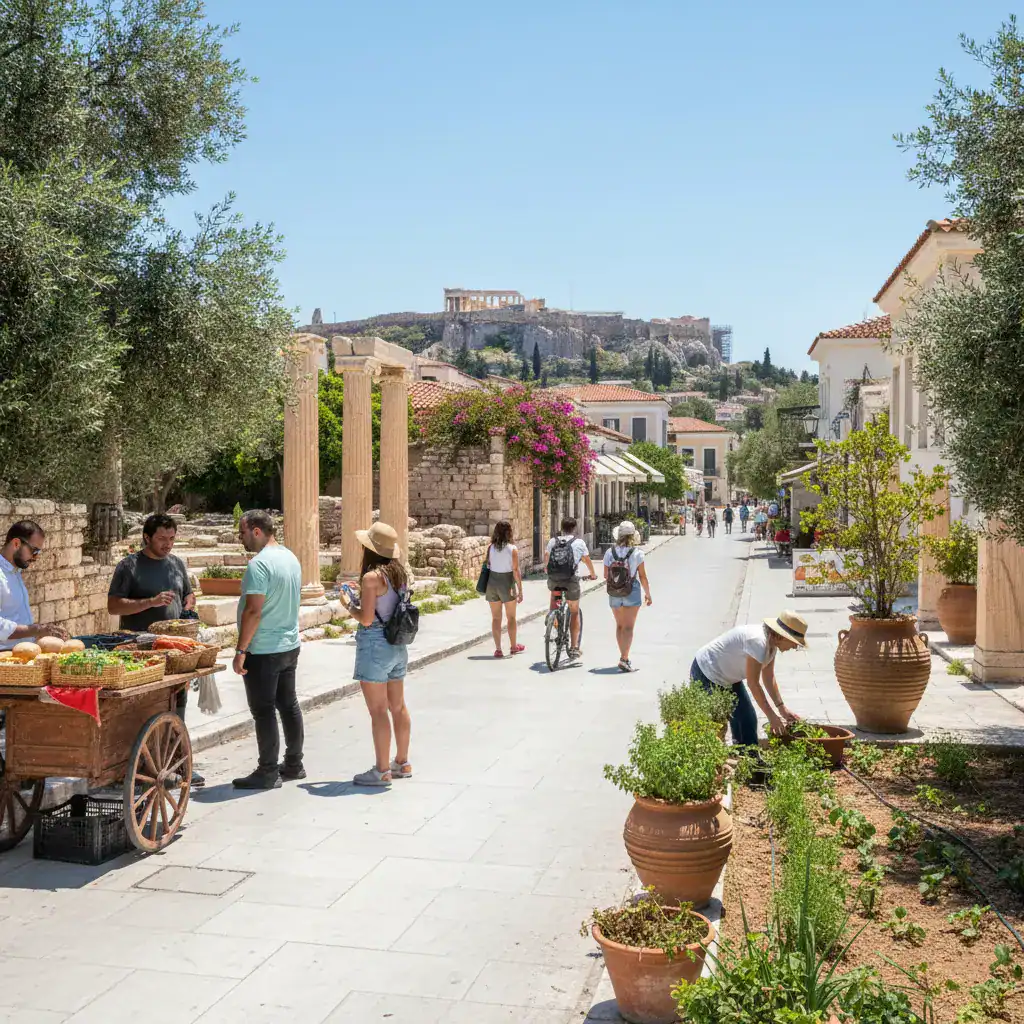
In an era where tourism is a primary driver of economic activity, Athens is striving to redefine its approach to tourist development. The focus is shifting beyond merely increasing visitor numbers to emphasize quality, sustainability, and planned growth governed by clear regulations. The Greek capital is not rejecting tourism; rather, it is strategically enhancing it, while simultaneously integrating it into a framework that ensures a balance between economic development and the daily lives of its residents.
Athens’ Strategic Shift Towards Quality Tourism
Athens has already solidified its position on the international map as an attractive destination for both leisure tourism, business travel, and large-scale events. However, it is now entering a new phase of strategic consolidation and qualitative upgrade. Through coordinated initiatives by the Athens Development and Destination Management Agency (ADDMA), the city is working to create a cohesive narrative that blends its rich historical identity with a modern, dynamic urban experience, promoting this unified vision to the international market.
A crucial role in this transition is played by synergies between the public and private sectors. Initiatives that bring all stakeholders to the same table strengthen a common strategy and present a unified voice for the city externally, an essential element in shaping a strong and competitive destination. However, the most critical aspect of this effort is the sustainability and effective management of tourist development.
The Intensifying Challenge: Tourism Pressure on Athens
Data clearly illustrate the intensity of the challenge. The ‘overnight stays per resident’ index in the Municipality of Athens increased from 3.67 in 2018 to 10.41 in 2025, marking an increase of 183.7%. Concurrently, the ‘visitors per resident’ index rose by 142.2%. These figures unequivocally show that tourist pressure on the city is intensifying at a faster rate than would be suggested by a mere increase in accommodation, making management tools and policies more necessary than ever.
Furthermore, tourist activity remains heavily concentrated geographically. The 1st Municipal Community accounts for nearly 60% of the total bed capacity in the Municipality, with areas like the Commercial Center, Monastiraki, and Plaka continuing to be the core of tourist saturation. At the same time, there is a gradual diffusion of tourist development into neighborhoods such as Koukaki, where short-term rental accommodations increased from 311 to 465 within a few years, a 49.5% rise. This trend, while partially relieving the historic center, creates new challenges as it impacts the character and function of areas that until recently retained more distinct local characteristics.
The Imperative for Clear Rules and Methodical Planning
In this environment, the need for clear rules and methodical planning is more pressing than ever. Athens is attempting to leverage tools such as the Carrying Capacity Study for Tourism and the Sustainable Tourism Observatory to make informed decisions and ensure that growth is not uncontrolled but balanced and long-term sustainable. This approach reflects a broader philosophy: tourism is an ideal means to make the city better for everyone.
The discussion about the economic footprint of tourist activity and the fair distribution of revenues is also part of this framework. The necessity for a larger portion of the resilience fee – the so-called ‘city tax’ – to be allocated to municipalities is gaining particular importance, as local authorities are the ones called upon to manage the increased pressure on infrastructure and services. Strengthening municipalities through these resources could significantly contribute to improving daily life for both residents and visitors.
Athens’ Mature Model of Tourism Development
Overall, Athens appears to be adopting a more mature model of tourism development. Its narrative is expanding to portray a city that is evolving, collaborating, and planning its future with an emphasis on quality and balance. In an international competition that is becoming increasingly demanding, this approach aspires to be its strongest comparative advantage.
Source: naftemporiki.gr