

It’s 2027, and the real question is no longer “Is AI changing tourism marketing?” The real question is: which approach will win-older, familiar tactics, or new AI-first playbooks? The answer is clear: the AI-first approach is pulling ahead fast. Some basic marketing rules still apply, but AI is now built into how people find and choose trips. Many older methods can’t keep up with travelers who use AI every day.
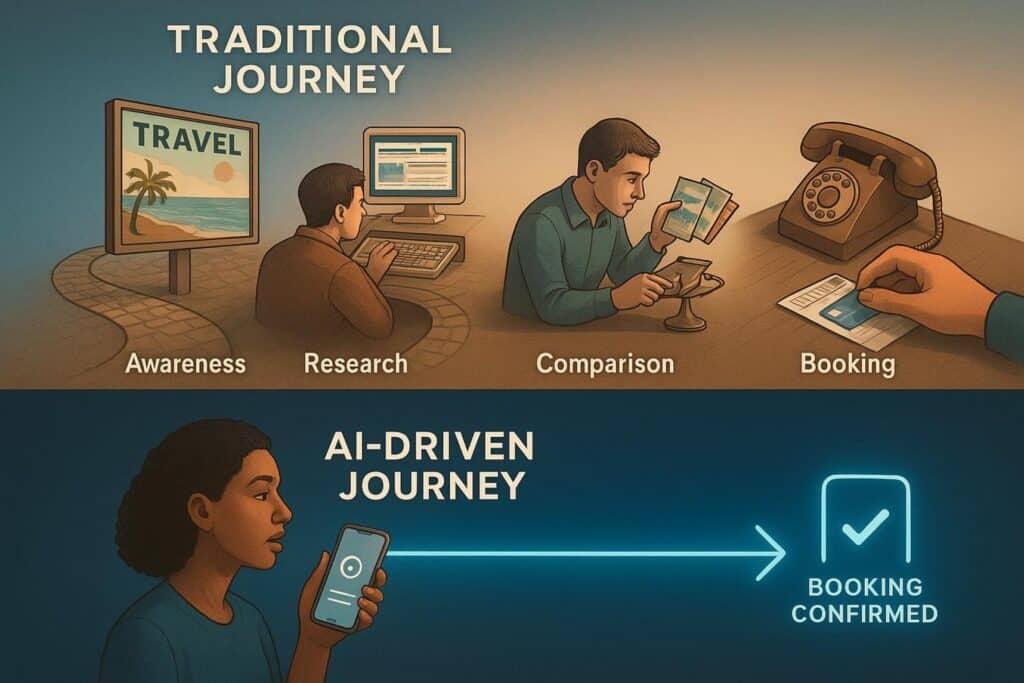
The full path from awareness to booking used to take many steps across lots of tabs and comparison sites. Now it can happen in one chat. AI assistants can handle detailed requests in seconds. If your vineyard tour, boutique hotel, or museum ticket is not easy for AI to pull into its answer, you may never show up as an option at all.
This shift goes past writing content faster. AI now helps make decisions and run campaigns. In 2027, being visible inside AI-generated answers (not just on search results pages) is what drives attention, bookings, and revenue. Winning tourism marketing now depends on giving the right offer to the right person at the right moment-something that works best with agent-style AI that links analysis, decisions, and execution.
What Defines Tourism Marketing Success in 2027?
How Have Traveler Expectations Evolved With AI Adoption?
Traveler expectations have changed a lot because AI is now part of everyday travel planning. Planning a trip no longer means juggling fifteen tabs, bouncing between comparison sites, and doing manual currency conversions. Many travelers now just explain what they want, in normal language, and the AI returns real options, trade-offs, and itineraries almost right away. This ease has changed what people think “good” discovery and booking should feel like.
Data supports this. By early 2026, 56% of U.S. leisure travelers used AI for at least one trip in the previous 12 months-more than double the year before. The growth comes from AI removing friction: saving time, reducing overload, and helping people feel more confident. While 54% still double-check suggestions on review sites, 94% of AI users trust AI recommendations at least as much as traditional sources, and 25% trust AI even more.
If a brand doesn’t meet this new baseline, it can drop out of the traveler’s shortlist entirely — which is why earning a place inside those AI answers has become its own discipline: https://non.agency/en/blog/generative-engine-optimization-geo-a-complete-guide-to-ai-visibility/
Key Metrics for Tourism Marketing Effectiveness
In 2027, many classic marketing metrics matter less than they used to. More of the customer journey now happens inside AI chats and personal agents, where tracking tags often never load. So metrics like search impressions and site sessions show a smaller part of what’s really going on. The decision often happens inside a private AI interface, which is harder to measure with older tools.
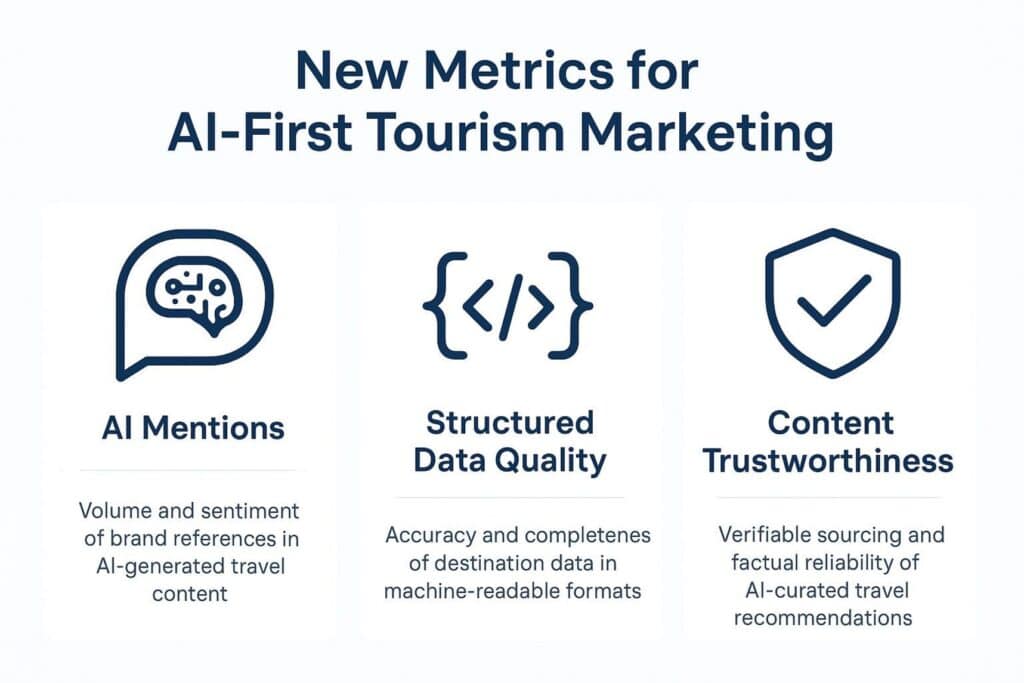
Effectiveness is now tied to how “readable” and “usable” your brand is to AI, not just whether you rank on Google. That means new metrics linked to Generative Engine Optimization (GEO) or Answer Engine Optimization (AEO), such as:
- How often your brand is mentioned or used in AI-generated answers
- How complete your structured data is (hours, pricing, location, availability, accessibility)
- How current your content is, and whether your claims look trustworthy
Success now starts earlier-inside AI answers and agent workflows-often before someone even reaches a booking engine.
Old Tourism Marketing Tactics: What Still Works and What’s Obsolete?
Traditional Channels: SEO, Search Ads, and Social Campaigns
In 2027, older channels still matter, but their job has changed. Traditional SEO signals — keywords, backlinks, domain authority — still help, but they’re now basic requirements. They build a foundation, but they don’t guarantee top visibility like they used to.
That framing is the right one. As Rad Paluszak from NON.agency puts it: “GEO doesn’t replace SEO. It adds what AI answer engines need on top of a solid foundation.” The older signals keep doing their job; they just stop being the finish line.
Also, pumping ad budgets at set times (like “spend big for peak season”) is less effective for today’s more careful, price-aware travelers.
Social campaigns still play a big role in trust and validation. AI systems often check social presence when forming recommendations. Real human posts tend to get better engagement than polished AI-written posts. But discovery often starts elsewhere now, so social media is more about confirming that you’re legitimate after the AI has already suggested you.
Limitations of Legacy Content Strategies
Older content strategies show their weaknesses in an AI-first environment. Traditional SEO used to pull people back to your site through many steps. Generative search now creates an answer before a person ever sees “Page 1.” If your offer isn’t included in the AI’s answer, it may as well not exist.
This means even a very carefully written, keyword-heavy blog post can still be invisible in a chat-first world if it doesn’t follow GEO practices. The old linear journey (awareness → research → comparison → booking) is often compressed into one conversation. Content now needs to be easy for AI to extract for direct answers. Long, unstructured pages can still help humans, but they often need clear sections and markup to show up in AI results.
Role of DMOs and OTAs Before the AI Shift
Before AI reshaped travel planning, DMOs (Destination Marketing Organizations) mainly managed the story of a place and ran broad awareness campaigns. OTAs (Online Travel Agencies) won by gathering inventory and making it easy to compare and book, even if the planning process felt scattered and overwhelming. Their old “peak season playbook” is losing power as demand spreads out across the year and “peak vs. off-peak” becomes less clear-often called demand fragmentation.
In the old model, DMOs pushed general destination info while OTAs fought on price and inventory. But with travelers more price-sensitive and cautious, “spend more on ads at key times” doesn’t work as well. In 2027, these groups need to move past older roles and adjust to a market with more segments, more personal preferences, and longer paths to conversion.
AI-Native Playbooks: What Are the New Rules for Tourism Marketing?
Personalization at Scale: Using AI for Smarter Segmentation
AI-first playbooks rewrite the rules, with personalization at scale as the main driver. Marketing is moving from broad segments to true one-to-one personalization using predictive models. This means combining scattered traveler data into a live customer view, spotting booking intent, and finding high-value audiences. Platforms like Appier use agent-style AI to read interests and behavior, then trigger personalized offers based on what the traveler does across the journey.
This personalization also shapes on-site and in-trip experiences. Website chat and recommendation tools can show different offers to different people in real time-for example:
- Families see family-friendly packages
- Adventure travelers see activity bundles
- Budget travelers see flexible date deals
By 2026, this was already becoming standard. Brands that run “a segment of one” well tend to see stronger engagement and better conversion, because travelers now expect suggestions that match their exact needs.
Dynamic Pricing and Predictive Demand Forecasting
AI-first strategies lean heavily on demand prediction and dynamic pricing. Forecasting models use signals like booking patterns, search trends, weather, and social buzz to predict where demand will rise. For example, a model may learn that searches for “Palm Springs getaway” jump when heavy snow hits the Northeast, then automatically show warm-weather resort ads to Boston audiences at that moment.
Dynamic pricing is now more advanced, especially for hotels, rentals, and tours where demand changes often. AI updates prices in real time based on demand signals to balance profit and occupancy. Instead of using static rates, operators can raise prices during high demand and stimulate bookings during slow periods.
Answer Engine Optimization and Structured Data for AI Visibility
The base of AI-first tourism marketing is Answer Engine Optimization (AEO), also called Generative Engine Optimization (GEO). The goal is to shape your information so it shows up inside large language model answers. Traditional SEO aimed for blue links. AEO aims for the AI answer that often shows up above those links. This means giving direct, structured answers to common questions, such as: “Yes, wheelchair accessible; elevators available on all floors.”
AEO also means adding machine-readable context using schema.org markup for events, offers, attractions, and key business details. This helps AI quickly understand location, time, availability, and accessibility. Trust signals matter too, like verified reviews, first-party data, and quotes from real staff experts. Keeping content updated-often with visible dates-also helps, because some systems prefer content updated within the last 90 days for time-sensitive searches. If you miss these GEO basics, even a great blog post can disappear in a chat-first market.
AI-Powered Content: Long-Tail Guides, Multimedia, and Localization
AI-driven content is changing what brands publish. Instead of generic posts, more operators create specific, useful guides that match real queries, like “How to spend 48 hours in Kelowna without renting a car.” This type of content matches how people speak to AI, can earn placement in AI answers, and signals that your business understands real constraints. Around three in five tourism operators already use AI for content drafting, saving a lot of time.
Multimedia also matters more. Google’s Search Generative Experience already mixes images, maps, and short clips in AI snapshots. Adding short captioned videos, images with alt text, and short audio clips can help both travelers and systems understand the offer. AI localization tools like DeepL and Claude.ai also make it easier to adapt content for international visitors without heavy manual translation work.
Conversational and Agentic Interfaces: Chatbots, Itinerary Generators, and Customer Service Agents
Chat-based and agent-style interfaces are quickly becoming the main way travelers interact with brands. AI can now handle complex requests, like building a two-day Napa wine plan by checking hours, hotel rates, reviews, and traffic, then returning a full plan with booking links. This is far beyond basic “FAQ chat.” These tools work as itinerary builders and support agents that understand details.
Agent-style AI systems (including Appier’s tools) can act on goals automatically. They can pick send times, create messaging, and deliver personalized suggestions with less manual input. Fully automated booking through AI is still limited-OpenAI pulled back its “Instant Checkout” idea in early 2026-but discovery and planning are already strongly shaped by these agent-style interactions.
Automation in Review Monitoring and Response
Reviews have always taken time to manage. AI-first playbooks now use automation for review tracking and responses. AI tools can draft replies for Google and TripAdvisor, and a human can approve or edit them before posting. For businesses with lots of reviews, this can save two to four hours per week while still keeping quality and a personal tone.
This also helps keep replies consistent and fast, while spotting patterns in feedback (like repeated complaints about parking or check-in). Reviews are often the most trusted marketing content a tourism business has, and AI helps use them well.
AI Tools Landscape in Tourism Marketing: What’s Available in 2027?
Content and Review Automation Platforms
By 2027, there are many AI tools for content and review work. Large models like ChatGPT, Claude, and Gemini are widely used for drafting social posts, blog articles, and emails. Around three in five tourism operators already use AI for content support. For visuals, tools like Canva (Magic Studio) and CapCut make it easier to remove backgrounds, resize in batches, and create short “talking head” reels-often saving two to three hours a week on visual tasks.
For review management, tools like ReviewPro support large-scale monitoring, while custom GPTs or Gemini Gems can be set up to draft replies for Google and TripAdvisor. This helps businesses respond quickly and keep fresh social proof online.
AI-Powered Itinerary, Pricing, and Demand Tools
For trip planning, new tools like TRVLR.ai, Layla AI, and Mindtrip can build detailed itineraries in seconds based on preferences, mobility needs, and budgets. They can produce day-by-day plans, accessible routes, and sometimes connect to booking systems.
For pricing and demand, tools like Wheelhouse, PriceLabs, and Beyond Pricing are widely used by accommodation and tour operators. They use AI to read booking trends, competitor pricing, search patterns, and signals like weather to adjust prices in real time. Larger brands also use demand forecasting models to predict market changes earlier and react faster.
Agentic AI and Answer Engine Optimization Software
Agent-style AI and AEO tools are driving some of the biggest changes. Companies like Appier offer “Agentic AI as a Service” to connect decision-making across the funnel and run campaigns with ongoing optimization as behavior shifts.
On the AEO side, tools like Rank Math (WordPress), Surfer SEO, and Semrush help teams structure content with schema markup and spot question-based search intent, so content is easier for AI systems to read and quote. Tourism Tribe’s free Pocket Rocket app also offers weekly AI readiness checks, AEO scores, and priority actions, helping operators and DMOs improve their AI visibility. These tools help make your offers “quotable” and usable during the early discovery stage, before someone clicks through to book.
Comparing Outcomes: Old Tactics vs. AI-Native Strategies for Travel Brands
Lead Generation and Customer Engagement: What’s Changed?
Old lead generation usually meant many steps: SEO, paid ads, content marketing, and repeated visits back to a website. Engagement was often reactive-brands answered questions after people had already moved through several touchpoints.
With AI-first strategies, awareness-to-booking can shrink into one conversation. AI assistants act like fast lead generators: they process requests and produce a shortlist. If your data isn’t set up for AI visibility, you may never appear in that shortlist. Engagement becomes more proactive and more personal, with AI spotting intent and triggering relevant offers in real time, earlier in the journey.
Trust-Building and Validation in the Age of AI Agents
Trust works differently in the age of AI. Many travelers like AI for planning, but payment still needs strong trust. OpenAI tried “Instant Checkout” in late 2025 and dropped it by March 2026. When it was time to enter card details, many users left the chat and booked through platforms they already trusted, like Expedia or Booking Holdings (and those companies benefited).
The lesson is simple: AI is great for discovery and inspiration, but older booking platforms still control payment because they’ve earned trust over time. Travel brands now need two things:
- Visibility in AI recommendations
- A smooth, secure booking experience on a trusted platform (their own or a partner)
Verified reviews, clear policies, and transparent business practices matter even more as travelers move from AI discovery to real transactions.
Voice, Visual, and Agentic Search: Reaching Travelers Where They Are
Reaching travelers in 2027 means working with voice, visual, and agent-driven search. Text search is still used, but it’s often replaced by voice queries and AI summaries. A large share of travel questions already come through voice. Over 20% of people globally were expected to use voice assistants in 2025, and there were 8.4 billion devices in circulation. People ask questions like, “Find me a boutique hotel in Charleston under $200,” and want a direct answer.
Visual search is also growing: travelers can take a photo of a landmark and get info or deals right away. AI summaries (like AI Overviews) are replacing link-only results. For brands, this means:
- Write for natural language questions
- Lead with short, direct answers
- Tag key facts (hours, pricing, accessibility) with structured data so voice devices can read them correctly
Agent-driven search adds another layer: personal AI agents will compare options using structured data. If your inventory is not easy for agents to read, or your offer isn’t personalized enough, the agent may filter you out before the traveler even sees you.
Who Wins and Loses in the Ai-Driven Tourism Trust Economy?
Adaptability of Operators, DMOs, and OTAs
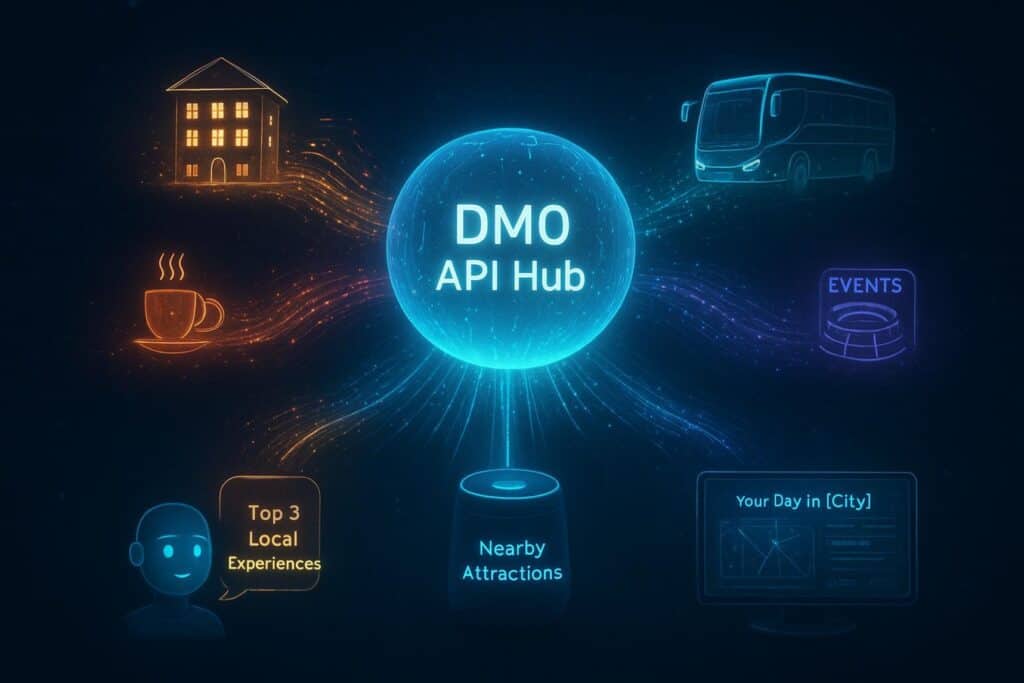
In an AI-driven trust economy, the winners are the groups that adapt fast. DMOs are at a turning point. They can’t just promote a destination; they need to become the most trusted source of destination facts. That means collecting partner inventory, sustainability info, and real-time event updates into one hub that AI can access by API. If they do this well, AI will rely on DMO data instead of generic OTA summaries. Adding bookable elements-tickets, passes, transport-also helps AI agents book through DMO feeds instead of routing around them.
Operators can also benefit by using AI for speed and better customer experiences. For example, 71% of Australian tourism operators have started using AI, even though only 19% say they feel confident. Early adopters help shape how AI assistants describe their destination and their business. They also build the data cleanliness and content depth that AI systems reward.
Barriers for Lagging Destinations and Service Providers
Destinations and providers that move slowly face a real risk: becoming invisible. Common barriers include lack of technical skills (40%), privacy worries (33%), and budget limits (31%). For small businesses-78% of Australian tourism operators are micro-businesses-these barriers can feel too big.
But the risk is simple: if your inventory is not readable to agents, your offers aren’t specific enough, or booking still requires too much manual effort, AI systems may skip you. With many consumers using AI search to guide buying decisions, “being found” now means being readable to a personal AI, not just ranking on Google. Brands that stick to older habits and skip structured data, updates, and chat-friendly content can drop out of the AI discovery phase completely.
Emerging Winners: Brands That Partner With AI Agents
The new winners are brands that work with AI agents instead of treating AI as a side tool. These businesses use AI to track changing behavior and adjust campaigns in real time. They connect traveler data into a live view, spot intent, and deliver offers based on actions.
Getting into that consideration set works differently than it used to. As Rad Paluszak from NON.agency puts it: “AI engines care more about mentions than links. That’s a big change from classic SEO.” Before an agent compares prices, something has to put your brand on its list — and that increasingly comes from being named across reviews, guides, and travel communities rather than from a backlink profile.
Brands that support “DIY agents” — personal assistants set up around loyalty status, price limits, and preferences — also gain an advantage. These agents compare and even negotiate using structured data. Brands that make their inventory easy for agents to read, and keep offers competitive and personal, are more likely to be selected by these non-human “buyers.” The future is agent-to-agent interaction, and the brands that prepare for that will be the ones that get chosen.
How Can Tourism Organizations Build AI Readiness?
Skills and Training for Internal Teams
AI readiness starts with training teams. The needed skills shift from classic marketing tasks to skills like writing good prompts, keeping data clean, and understanding AI risks and ethics. Staff don’t need to become developers. They do need to become comfortable users who can check outputs, catch mistakes, and manage the information AI depends on.
A practical method is to place cross-team “AI champions” in marketing, operations, and visitor services. They can lead adoption, share what works, and support training. Teams can also use practical programs (like Tourism Tribe) that focus on simple, high-impact use cases such as AI website checks and building strong FAQs. The goal is building ability without losing human judgment and control.
Upgrading Technology Stacks and Workflows
Tech and workflows also need updates. Many organizations are moving to headless CMS setups that can output both normal web pages and machine-friendly formats like JSON, making it easier for AI to reuse content. Content workflows should treat pages as living data, not one-time posts. This can include:
- Version control for key pages
- Update SLAs for important info (hours, pricing, access, seasonal closures)
- Quarterly AI visibility audits
It also helps to add analytics that track traffic from AI tools and see how assistants quote your content. A customer data platform (CDP) can pull together scattered traveler data, supporting stronger personalization and targeting.
Practical AI Adoption Steps for Operators and DMOs
Operators and DMOs can build AI readiness in small sprints:
- Map conversational intent by grouping common “who/what/where/when” questions from chat logs and emails.
- Use structured content by adding FAQ, Event, and TouristDestination schema markup to key pages.
- Add an on-site AI chatbot to capture real visitor questions and reduce email workload (even a simple open-source widget trained on FAQs can help).
- Track AI referrals in GA4 or Matomo by tagging sources like ChatGPT, Perplexity, and SGE.
- Teach partners basic AI readiness so the whole destination supply chain improves.
- Publish long-tail local guides like “How to spend 48 hours in Kelowna without renting a car.”
- Add multimedia with captions and alt text so AI systems can interpret it correctly.
- Keep freshness signals with monthly checks or database syncing so timestamps update when details change.
Step by step, these actions build the data quality and content structure that AI-driven discovery depends on.
Key Takeaways for Future-Ready Tourism Marketers
2027 is set up to be a major year for travel, possibly the biggest shift since the post-pandemic rebound. For tourism marketers, the advantage goes to teams that move early and build AI-first habits. The direction is clear: broad segmentation is giving way to one-to-one personalization through agent-style AI, AEO/GEO is becoming a must-have for visibility, and voice, visual, and agent-driven search are now core channels.
The main point is simple: AI in tourism is no longer something to watch from the sidelines. It decides who shows up and who gets skipped. Brands that do well will keep their data clean, structure their content so AI can use it, and keep information updated so it stays safe to recommend.
Payment may still happen on trusted booking platforms, but the decision is often made earlier-inside AI systems, at the moment of inspiration and shortlisting. Marketers who understand this and act on it will help shape how AI describes their destination and services, keeping their brand visible and relevant as travel keeps changing.










Leave a comment