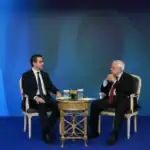
Athens, December 6 – Deputy Minister of Transport, Konstantinos Kyranakis, today announced a significant overhaul of Athens’ urban transport system, beginning with the dismantling of the city’s 50-year-old trolley network. The move, aimed at creating a cleaner, safer, and more reliable transportation system for the Greek capital, was detailed in an interview with APE-MPE.
Trolley Network Dismantling Begins Tomorrow
Kyranakis confirmed that the removal of the overhead trolley network will commence tomorrow, Sunday, in Piraeus. This extensive undertaking is projected to last 18 months. The decision to retire the trolley system stems from its high operational costs and environmental impact, which, according to Kyranakis, no longer offer the benefits they once did.
Economic and Environmental Factors Drive Change
The Deputy Minister explained that the operating cost of trolleys is more than double that of new-generation electric buses. He highlighted that the extensive 143-kilometer network not only fails to provide environmental benefits but also exacerbates traffic congestion. Specifically, the state pays approximately 5.5 euros for every kilometer traveled by a trolley, whereas the corresponding cost for an electric bus is significantly lower, at 2.5 euros.
Addressing Traffic Congestion and Future Plans
Kyranakis acknowledged that there is no “magic wand” for an immediate solution to Athens’ traffic problems. However, he emphasized that upgrading public transport is the most crucial way to encourage citizens to reduce their reliance on private cars, which will have an immediate positive impact on traffic flow.
The ministry’s comprehensive plan for improving urban transport includes several key interventions:
- Metro Upgrades: New trains and renovation of older ones, replacement of tracks on Lines 2 and 3, and more frequent services.
- Line 1 Renovation: Modernization of trains on the oldest metro line.
- Bus Fleet Renewal: 1,000 new electric buses are expected to be on Athens’ roads by early 2026.
- Driver Recruitment: Hiring of new drivers to support the expanded and modernized fleet.
These initiatives aim to significantly enhance the efficiency and environmental footprint of Athens’ public transportation system.
Greece Re-enters European Railway Map
In a related development, Kyranakis also touched upon the tripartite Memorandum of Understanding between Greece, Bulgaria, and Romania for the Black Sea-Aegean Corridor, signed in Brussels. He noted that this agreement marks Greece’s emergence from railway isolation, reintegrating the country into the European railway map. This corridor is expected to strengthen citizens, the economy, and security in the region.
The strategic shift from an aging trolley network to modern electric buses and comprehensive upgrades across the metro and bus systems underscores Greece’s commitment to sustainable and efficient urban mobility. The government anticipates that these changes will not only improve the daily commute for Athenians but also contribute to a greener and more economically viable future for the city’s transport infrastructure.
Source: https://www.reporter.gr/eidhseis/politikh/659906-kyranakis-apoksilosi-trolei-kai-nea-epoxi-gia-tis-astikes-sygkoinonies-stin-athina-poies-paremvaseis-dromologoyntai