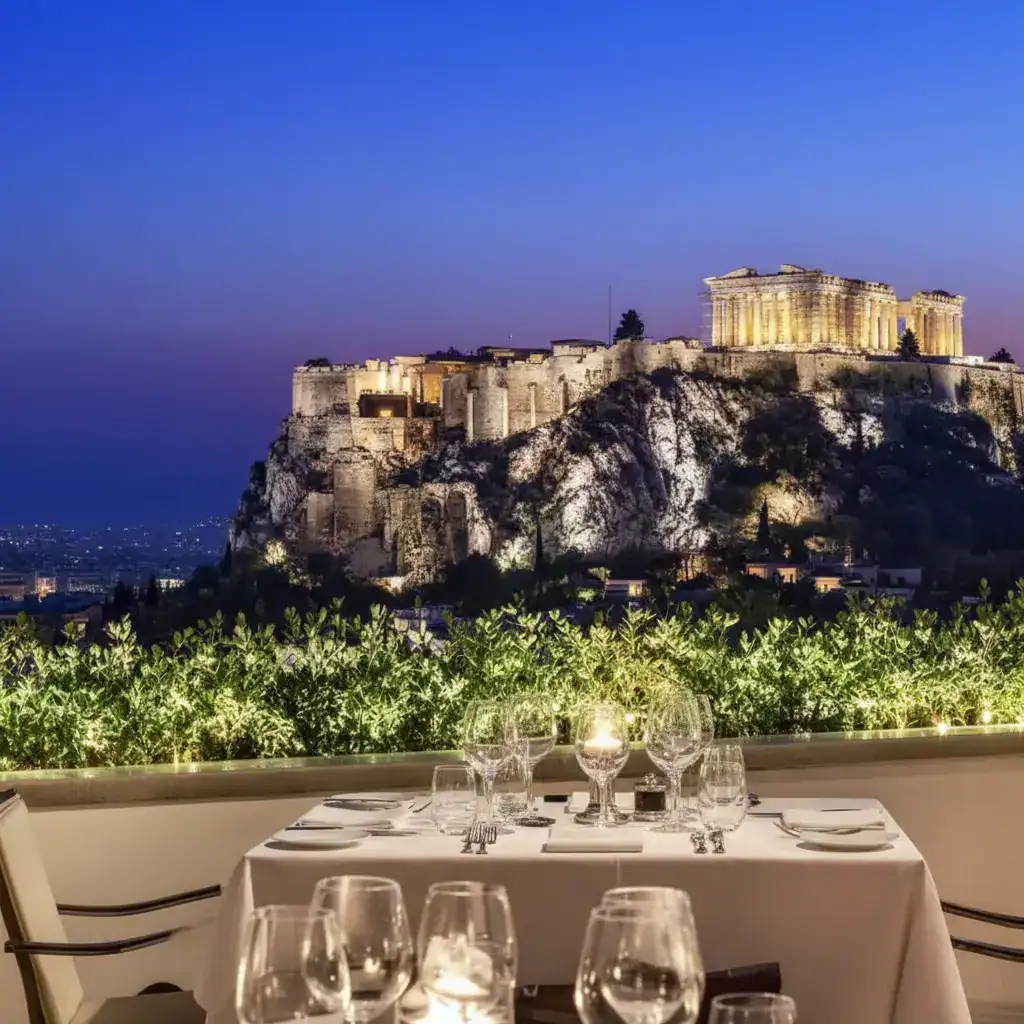
Athens is at a critical juncture in its tourism development. While the city has successfully established itself as a prime destination, a growing chorus of hoteliers is warning against the dangers of unchecked growth, drawing parallels to cities like Barcelona that have struggled with over-tourism. The 55th Annual General Assembly of the Athens-Attica & Argosaronic Hotel Association (EXAA) served as a platform for these pressing concerns, highlighting the delicate balance between economic prosperity and preserving the city’s unique identity.
The Barcelona Dilemma: A Warning for Athens
The core of the discussion revolved around the risk of Athens losing its distinctive character and succumbing to models adopted by other major European cities. Eugenios Vasilikos, President of EXAA, articulated this fear vividly. “Athens has become a destination. We face numerous difficulties and even more problems. We are at a very dangerous point where we might no longer be a destination. It’s very easy to return to older times that we, as Athens, have experienced,” Vasilikos stated, emphasizing the need for strategic investment in infrastructure and a well-thought-out tourism model.
Vasilikos further elaborated on the need for a balanced approach to development, explicitly referencing Barcelona. “We are in a period where we must be very careful about what we do and think about where we want to go. We don’t need to reach levels like Barcelona, which has been prohibiting the development of new hotels for years. We need to construct new hotels and new units, but this must be done with proper planning. The notorious spatial plan that we have been hearing about for years needs to be released, implemented, and followed,” he urged, underscoring the urgency of a comprehensive spatial planning framework.
Lessons from Lisbon: The Cost of Success
Stefan Merkenhof, managing consultant at gbr consulting, presented a compelling comparison between Athens and Lisbon, noting their similar performance patterns in hotel operations. While Athens excels during the summer months (June-August), Lisbon records a higher Average Daily Rate (ADR) during the winter (November-March). However, Merkenhof delved deeper into the “other side” of Lisbon’s development, offering a cautionary tale for Athens.
Lisbon’s transformation into a major international destination came with significant societal costs. Following the global economic crisis, a government policy allowing free rent increases led to mass evictions. Simultaneously, aggressive tax policies and the introduction of the Golden Visa attracted foreign capital and investors, revitalizing old buildings and making the city attractive. This boosted tourism, led to the development of luxury hotels through property conversions, improved hotel performance, and significantly increased the short-term rental market.
Merkenhof cited a Spanish newspaper headline: “Lisbon: A city ‘dying’ due to its own success.” He explained the consequences: “A massive wave of locals relocating to the suburbs. Six historic neighborhoods lost 30% of their population since 2013, while housing prices skyrocketed. This phenomenon is known as gentrification. Consequently, Lisbon now faces new challenges, including resident displacement, pressure on neighborhoods, loss of local character, and sustainability issues.” His conclusion for Athens was clear: “Athens can learn from Lisbon. Athens must develop a vision and a strategy using all this knowledge.”
The Short-Term Rental Conundrum and the Call for a “Brave Decision”
A hotelier, a member of EXAA, advocated for a “brave decision,” potentially even a “freeze” on the development of new hotels. “A large number of beds have been added by short-term rentals, but now it is clear that the problem is that we don’t know how to differentiate what is a hotel, what is a short-term rental, and what is a rented room. We must consider a brave decision that will be essential for our future,” he stated, emphasizing the need to improve both infrastructure and the existing hotel capacity.
Vasilikos, when asked about EXAA’s proposals to the state to help Athens avoid the “bad” examples of other European metropolises, highlighted several key areas: a special spatial plan, an emphasis on quality over quantity, a shift in the tourism model beyond the narrow “sun and sea” framework, and significant improvements in infrastructure, which he stressed was a responsibility of municipal authorities and the region.
Athens’ Competitive Edge and Investment Attractiveness
Despite these concerns, Athens is gradually strengthening its profile as a travel and investment destination compared to its European competitors. According to a CBRE survey, Athens has climbed to 8th place among top European cities for hotel investments in 2025, up from 10th in 2024, indicating its growing attractiveness to investors.
In terms of hospitality performance, Athens excels in occupancy rates during May-July. Its Average Daily Rate (ADR) positions it between Madrid and Barcelona, while Rome maintains the highest prices. More specifically, Athens, despite slightly trailing Barcelona in overall occupancy, recorded its highest performance approaching 90% in the summer, significantly surpassing Madrid, Lisbon, and Rome.
Regarding ADR, Rome leads by far, with prices exceeding 300 euros in 2025. Barcelona follows, with Athens next, showing an ADR higher than Madrid and Lisbon, at 185 euros. The city’s hotel capacity is also undergoing a significant upgrade, reflected in the substantial penetration of chains, particularly international ones, into higher-category accommodations.
The Path Forward: Vision, Strategy, and Sustainability
The discussions at the EXAA General Assembly underscore a critical moment for Athens. The city’s tourism success is undeniable, but it comes with inherent risks if not managed strategically. The experiences of Barcelona and Lisbon serve as potent warnings: unchecked growth, particularly in short-term rentals, can lead to gentrification, displacement of local residents, and a loss of the very character that attracts tourists in the first place.
The call for a comprehensive spatial plan, a focus on quality over quantity, and a diversification of the tourism model are not merely suggestions but urgent necessities. Athens has the opportunity to learn from the mistakes of others and forge a sustainable path forward, one that balances economic benefits with social equity and environmental preservation. The challenge lies in translating these warnings into concrete policies and actions, ensuring that Athens remains a vibrant, authentic destination for both its residents and its visitors.
The future of Athens’ tourism landscape hinges on a “brave decision” – a decision to prioritize long-term sustainability and the well-being of its citizens over short-term gains. The question is whether the city’s stakeholders will heed the warnings and act decisively to safeguard its unique identity.
Source: https://www.euro2day.gr/amp/news/economy/article/2328647/toyrismos-kindynos-na-ginei-h-athhna-varkelonh.html