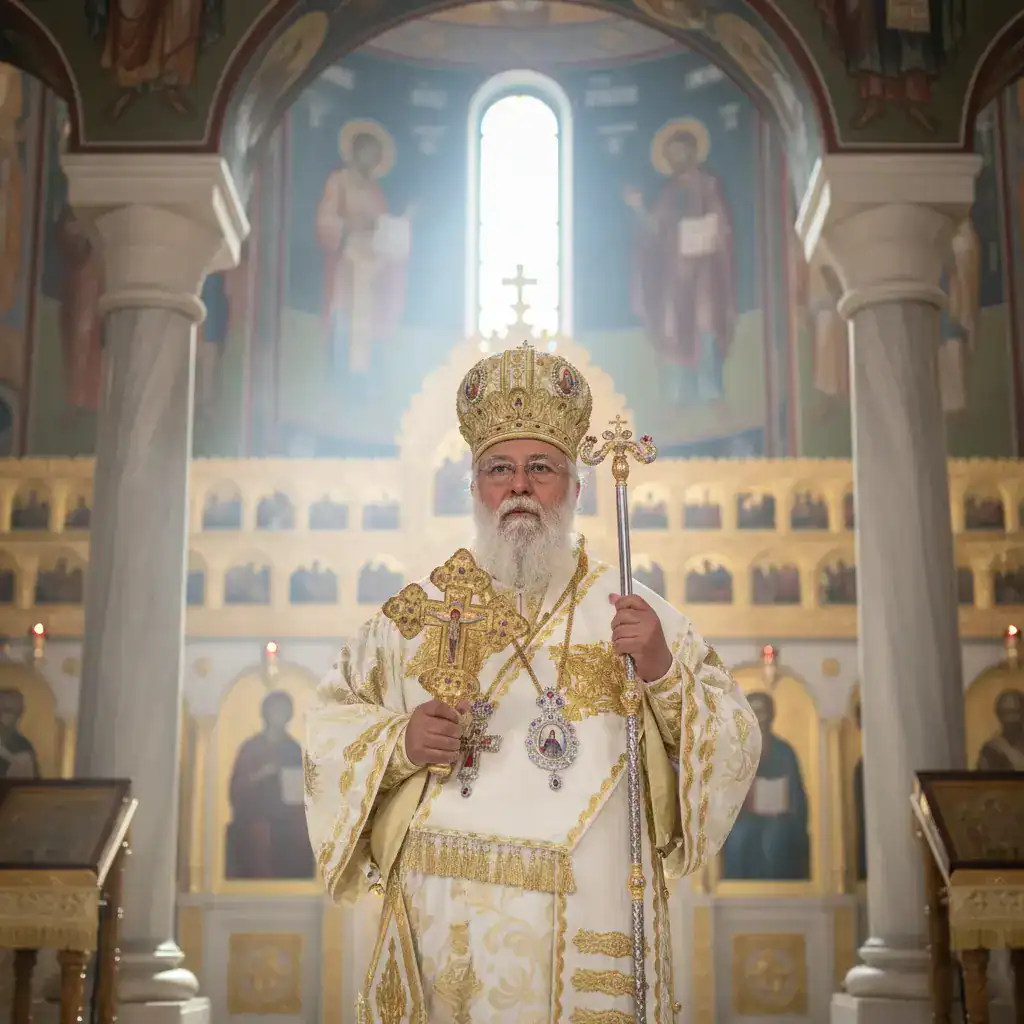
Corfu, March 9 – On the evening of Sunday, March 8, 2026, the Second Sunday of Great Lent, His Eminence Metropolitan Nektarios of Corfu, Paxoi, and Diapontia Islands, presided over and delivered a homily during the Third Catechetical Vespers at the Holy Pilgrimage of Saint Spyridon in the city of Corfu. His sermon was titled “On Sin and Prayer.”
Metropolitan Nektarios on the Nature of Sin
Addressing the congregation, His Eminence initially focused on the issue of sin, reminding them that after the fall of the first-created Adam and Eve, humanity inherited this expulsion from Paradise and separation from God, thus becoming heirs to sin.
As he emphasized, the Saints and Ascetics of the Church resorted to stillness and spiritual struggle to combat sin and regain a living communion with Divine Grace. He also recalled the Gospel incident of the healing of the paralytic, in which Christ first forgave his sins and then granted healing.
Metropolitan Nektarios pointed out that sin is not merely a transgression of a divine law, but a profound existential reality that disrupts man’s relationship with God. The Holy Scripture uses the term “sin” in the sense of missing the mark, of man’s failure to reach his destiny, which is union with God. Furthermore, the Church Fathers regard sin as a disease of the soul, with the Church functioning as a spiritual hospital and repentance as a therapeutic journey.
The Origin and Progression of Sin
Referring to Saint James the Brother of God, he stressed that sin does not originate from God, but is born within man himself. Desire, when cultivated in the heart, conceives and gives birth to sin, and sin leads to spiritual death. This process begins with thought and the desire of the heart. As he noted, sin may appear attractive and promise freedom, but it ultimately leads to slavery.
He then referred to the teaching of Saint Maximus the Confessor, who analyzes the stages of spiritual fall: the assault of thought, combination, consent, captivity, and finally passion. Evil, as he emphasized, has no essence of its own, but is a distortion of the natural powers of the soul, which should normally be directed towards God.
Repentance and the Power of Prayer
Subsequently, Metropolitan Nektarios referred to the mystery of repentance as man’s return to God, using the Gospel image of the parable of the Prodigal Son. As he emphasized, the father in the parable does not rush to punish, but to embrace the returning son. Thus, God does not rejoice at man’s fall, but at his repentance, for “there will be more joy in heaven over one sinner who repents” (Luke 15:7). Thus, the life of the Church, with its sacraments, prayer, fasting, and confession, constitutes a therapeutic path of return to God.
However, the struggle against sin is powerless without the strength of prayer. In this regard, Saint Gregory Palamas, Archbishop of Thessaloniki, offers invaluable teaching. During the Saint’s time, in the 14th century, monks particularly turned to hesychasm and devoted themselves to what is called noetic prayer, that is, the prayer of the mind within the heart with the unceasing invocation of the name of Christ, “Lord Jesus Christ, have mercy on me.” This prayer is not a mere repetition of words, but the return of the mind from the diffusion of worldly cares to the inner center of man, the heart.
Saint Gregory Palamas taught that man can truly partake of God’s grace through His uncreated energies. However, he cannot partake of God’s essence, which is inaccessible. He defended the experience of the hesychasts, emphasizing that the light seen by the disciples during the Transfiguration on Mount Tabor was not created, but the uncreated light of the Godhead, which can be tasted by man who purifies his heart through repentance and prayer.
The Importance of Unceasing Remembrance of God
Furthermore, Metropolitan Nektarios referred to the teaching of Saint Gregory the Theologian, who characteristically states, “One should remember God more than one breathes.” That is, man ought to remember God even more than he breathes, because just as breathing is necessary for physical life, so too is the unceasing remembrance of God essential for spiritual life.
Finally, His Eminence wished everyone strength in the spiritual struggle of Great Lent, urging them to repentance, prayer, and a living relationship with God.
Source: ekklisiaonline.gr