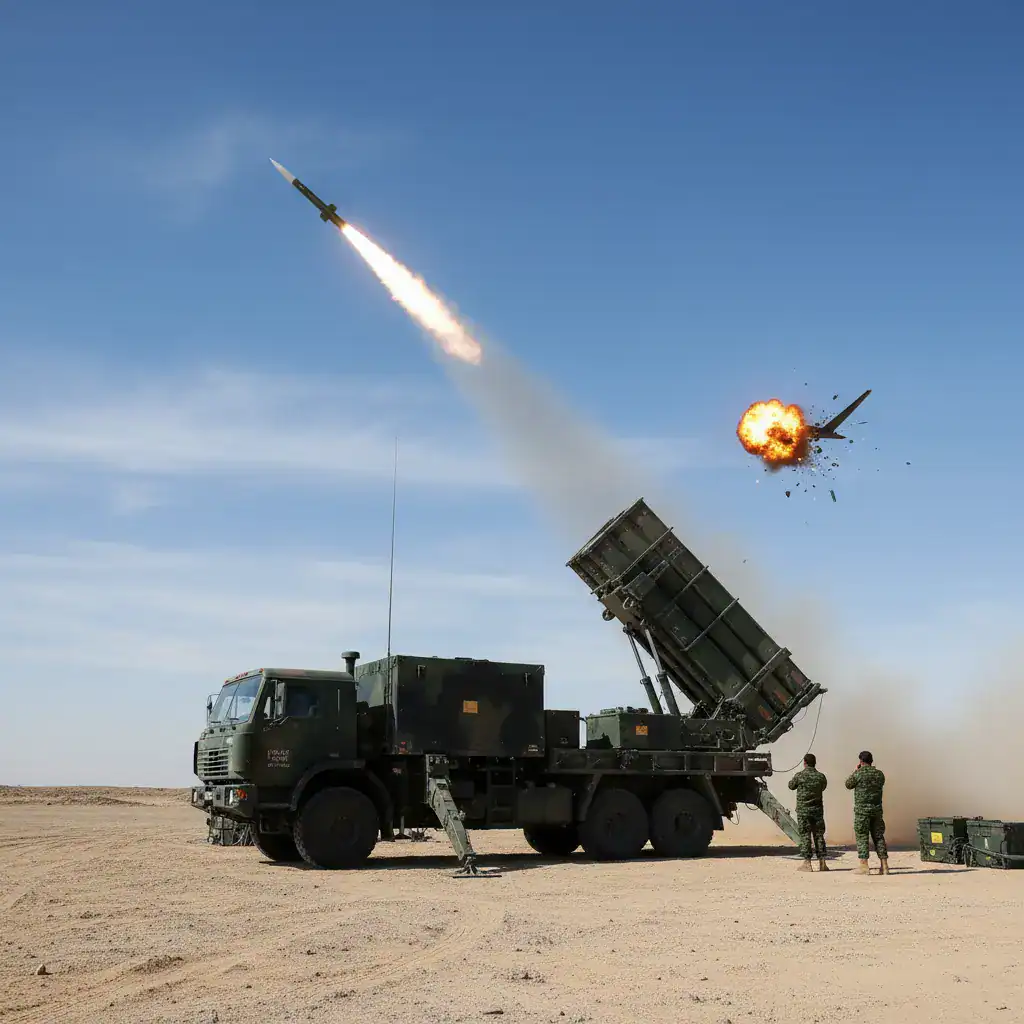
Athens, 8 April 2026 – The interception of an Iranian drone by a Greek Patriot air defence system over Saudi Arabia on Easter Monday has intensified debate in Athens regarding the costs and benefits of Greece’s military mission in the Gulf region.
Second Interception Confirmed by Defence Ministry
Greece’s defence ministry has confirmed the incident, marking the second time Greek-operated systems have been involved in such an interception since their deployment. The Patriot battery is strategically located in Yanbu, a key Red Sea oil export hub that provides Saudi Arabia with an alternative to the Strait of Hormuz for oil shipments.
Initial assessments suggest the intercepted drone may have been a Shahed-136, a low-cost system frequently employed by Iran’s Revolutionary Guard and its allied Houthi forces.
Strategic Deployment and Operational Experience
This deployment is part of Greece’s broader strategy to contribute to the protection of critical energy infrastructure in the Gulf, while simultaneously strengthening its strategic ties with Saudi Arabia. Athens also openly acknowledges another key objective: gaining invaluable operational experience with advanced air defence systems under real-world conditions.
During a recent visit to Saudi Arabia, Nikos Dendias, Greece’s defence minister, emphasized the “indispensable” experience gained from the mission, highlighting its importance for the country’s defence preparedness in the current geopolitical landscape.
Political and Financial Considerations
Despite the strategic benefits, the mission has raised political and financial questions domestically. Prime Minister Kyriakos Mitsotakis has consistently sought to minimize the risks of escalation, asserting that Greece’s role is strictly limited to defensive operations. Following last month’s European Council summit in Brussels, he stated that the deployment aims to “protect critical energy infrastructure such as Saudi refineries” and “help stabilise global oil markets,” firmly denying any involvement in the regional conflict.
Opposition figures have largely supported this stance, while also underscoring the defensive nature of the mission. Yannis Maniatis, a socialist MEP from PASOK, informed Euractiv that the deployment of air defence systems in Saudi Arabia is a direct result of a 2021 bilateral agreement. He stressed that the equipment’s “only purpose” is “the defence of crucial energy infrastructure, and the fact that it was used to intercept incoming missiles and drones cannot be interpreted in any way as supporting or endorsing the illegal war in Iran.”
Cost-Effectiveness Under Scrutiny
However, the cost-effectiveness of the operation remains a point of contention. A single Patriot interceptor missile is estimated to cost between €3 million and €4 million, a stark contrast to the estimated value of approximately €50,000 for the drones it intercepts.
Conversely, some Greek officials argue that the broader bilateral strategic partnership between Greece and Saudi Arabia, which includes substantial Saudi investments in Greece across various sectors such as renewable energy and digital infrastructure, could offset some of the financial outlays incurred by the mission.
Looking Ahead
The incident underscores the complexities of Greece’s engagement in the Middle East, balancing strategic interests and national defence preparedness with political and economic considerations. The debate in Athens is expected to continue as the mission progresses.
Source: https://www.euractiv.com/news/athens-balances-indispensable-experience-with-political-costs-of-its-saudi-mission/