Greece Initiates 2026 Fire Season with Rigorous New Measures and Penalties
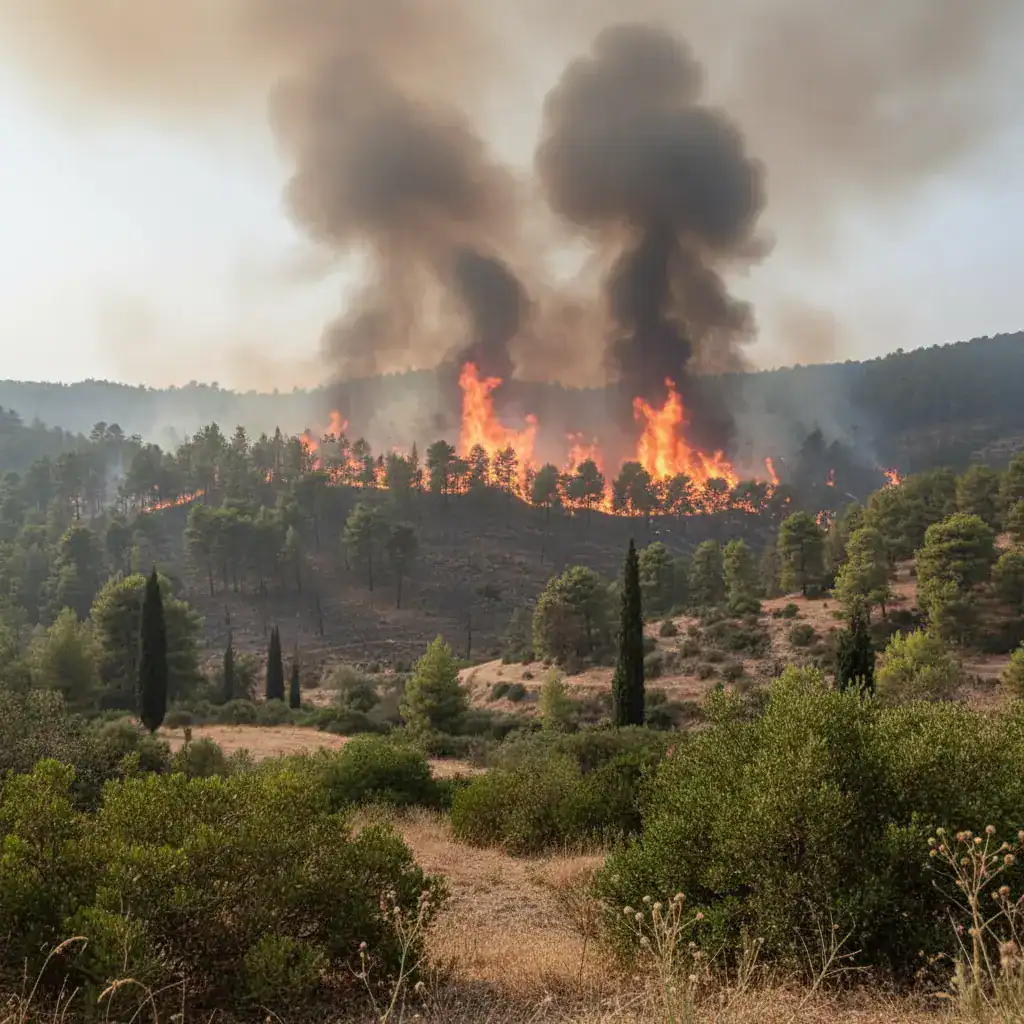
Corfu, May 3, 2026 – The Ministry of Climate Crisis and Civil Protection has officially marked May 1st, 2026, not only as May Day but also as the commencement of Greece’s official fire prevention season. In response to growing concerns and statistical data from the early part of the year, the ministry has unveiled a comprehensive set of stringent rules and formidable penalties designed to protect the country’s vital forest ecosystems.
Statistical data for the first four months of 2026 reveal a concerning trend, with over 174 administrative fines already imposed and 35 arrests made for violations related to fire hazards. These figures underscore the urgent need for enhanced protective measures and a heightened sense of responsibility among citizens and visitors alike.
Four Key Prohibitions to Prevent Wildfires
Civil Protection authorities are emphasizing four critical prohibitions that must be strictly observed in rural areas to mitigate the risk of wildfires:
- Burning of Vegetation Residues: The burning of branches, dry grass, and rubbish is strictly forbidden, regardless of the fire risk index. This measure aims to eliminate a common source of accidental fires.
- Hot Work Activities: The use of equipment that produces sparks or flames, such as welding machines and grinders, is absolutely prohibited on days when the fire risk index is rated 3, 4, or 5. This restriction targets industrial and agricultural activities that can inadvertently ignite dry vegetation.
- Fireworks: The use of flares and pyrotechnic devices in rural areas is banned on days of high fire risk. This prohibition addresses recreational activities that pose a significant threat during dry periods.
- Bee Smoking: While traditionally used in beekeeping, this practice is only permitted with strict precautionary measures. It is explicitly forbidden when the fire risk index reaches 4 or 5, due to the high potential for fire ignition.
“Stinging” Penalties for Violators
The framework of sanctions has been significantly tightened, reflecting the gravity of the potential damage caused by wildfires. Administrative fines for violations can now reach up to 50,000 euros. Furthermore, the revised Penal Code leaves no room for complacency, with offenders facing imprisonment of at least one year and substantial monetary penalties.
Should a serious fire be caused, the perpetrator will be prosecuted for a felony. In extreme cases of arson, the law provides for imprisonment without the possibility of parole, and the court may even order the confiscation of the offender’s property.
The message from Civil Protection is unequivocal: prevention is everyone’s responsibility. In the event of spotting smoke or fire, immediate contact with the Fire Department at 199 or 112 is the most crucial step for protecting lives and the environment.
This proactive stance by the Greek authorities aims to significantly reduce the incidence of wildfires, safeguarding both the natural beauty of regions like Corfu and the safety of its inhabitants and visitors during the challenging summer months.