The Athens Enigma: How Kimberly Guilfoyle Transformed a ‘Consolation Prize’ into a Diplomatic Powerhouse
What initially appeared to be a political consolation prize has remarkably blossomed into one of the Trump administration’s most impactful diplomatic postings. Kimberly Guilfoyle, the former fiancée of Donald Trump Jr., was appointed US Ambassador to Greece mere hours after the president’s son was seen with another woman. In Athens, she has since become a high-profile political operator, successfully pushing through significant energy agreements with Exxon Mobil and Chevron, dominating local media, and fundamentally reshaping perceptions of American influence in Greece.
At a time when much of Europe harbors increasing skepticism towards President Donald Trump, Greece has emerged as a rare and willing partner, where Washington can navigate business with relative ease. This dynamic is a direct reflection of the ideological alignment between Greek Prime Minister Kyriakos Mitsotakis and Trump, further amplified by the presence of an unconventional US ambassador with direct access to the Oval Office.
The Energy Gambit: Unpacking Major Deals and Controversial Tactics
The relationship has already yielded substantial announcements, most notably Greek approval for Exxon Mobil and Chevron to lead fossil fuel exploration within Greece’s exclusive economic zone. These deals underscore Washington’s strategic efforts to expand its energy and geopolitical footprint in the eastern Mediterranean, with Guilfoyle playing a central and often confrontational role.
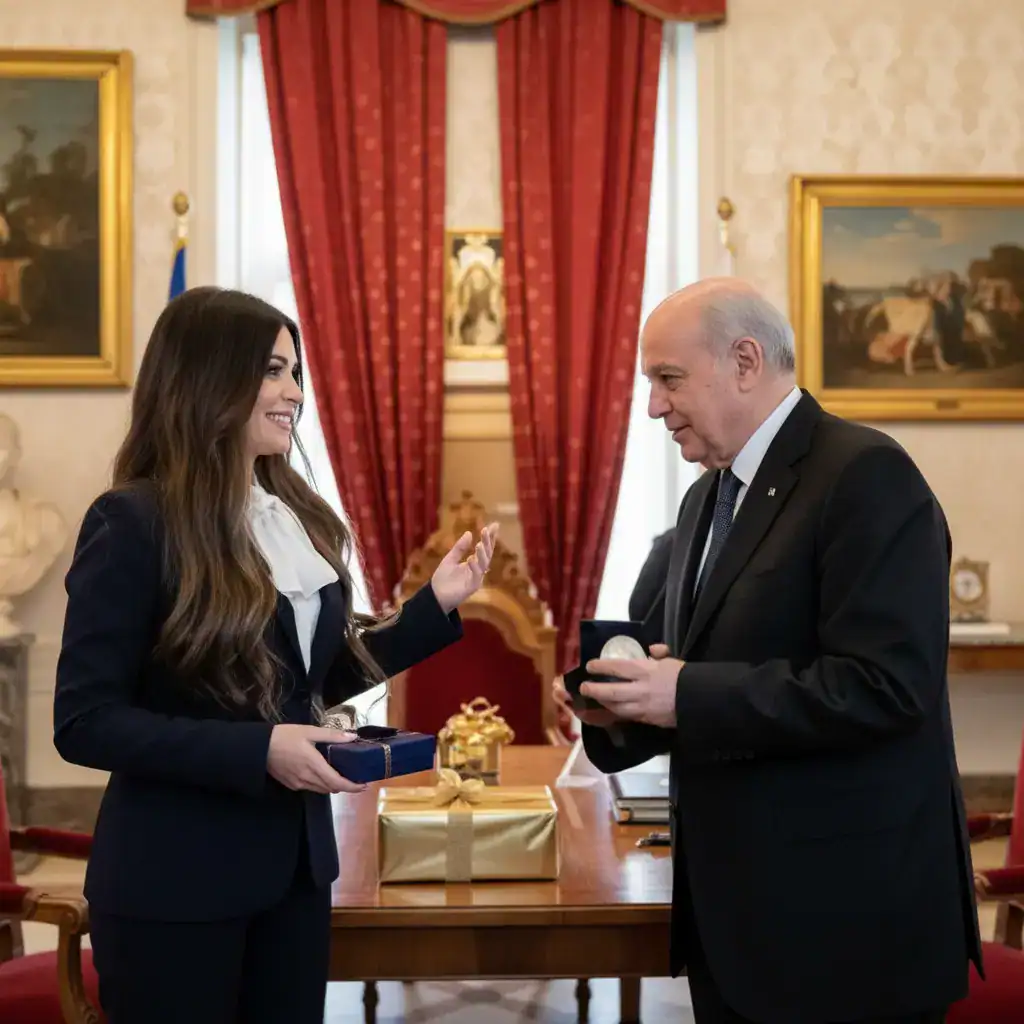
Long before her arrival in Athens, Guilfoyle was a polarizing figure in Greece. In 2015, during her tenure as a Fox News commentator amidst the country’s financial crisis, she infamously declared that Greeks were ‘freeloaders who should be punished like a dog that pees on the carpet.’ A decade later, just four months after presenting her credentials to President Constantine Tassoulas, she has solidified her position as a political and media fixture. During that ceremony, Guilfoyle reportedly told Tassoulas that she had visited Greece in 2004 on a ‘wonderful honeymoon’ with her then-husband, Gavin Newsom, now the governor of California.
Her appointment initially drew widespread ridicule. Guilfoyle had been engaged to Donald Trump Jr. since late 2020, but in December 2024, the Daily Mail published photographs of Trump Jr. holding hands with Palm Beach socialite Bettina Anderson. Hours later, Trump, freshly elected to a second term, announced Guilfoyle’s nomination as ambassador to Greece. Senate confirmation took several months, and in September 2025, Guilfoyle finally arrived in Athens aboard the private jet of a Greek American businessman. She wasted no time in making her presence felt.
Just five days after her arrival, Guilfoyle stood alongside US Energy Secretary Chris Wright and Interior Secretary Doug Burgum as Greece signed an agreement with Exxon Mobil to commence natural gas exploration northwest of Corfu. This move marked Greece’s first offshore fossil fuel exploration in over 40 years. Guilfoyle publicly hailed the deal as a significant part of the administration’s pushback against Europe’s climate agenda, boldly declaring that ‘America is back drilling in Greek waters.’ Around the same period, Greece granted Chevron a new offshore lease situated between Crete and the Peloponnese, while Washington and Athens simultaneously inked cooperation agreements on military equipment and artificial intelligence.
Ten days later, Guilfoyle appeared alongside Mitsotakis and Ukrainian President Volodymyr Zelenskyy to announce a critical agreement to supply US liquefied natural gas to Ukraine via Greece. Much of this gas is transported across the Atlantic on Greek tankers before flowing north through European pipelines. While these agreements had been under negotiation prior to Guilfoyle’s arrival, she aggressively pushed for their finalization and announcement during her initial weeks in Athens. ‘Usually you meet someone, introduce yourself, say a few nice words,’ Greek Energy Minister Stavros Papastavrou told The New York Times. ‘But Ms. Guilfoyle doesn’t do small talk. She gets things done.’ Papastavrou further noted that the ambassador frequently makes late-night calls. ‘When something needs to be finished, she doesn’t keep office hours,’ he said.
Beyond Diplomacy: Public Persona and Political Pushback
Guilfoyle’s visibility extends far beyond the confines of government halls. She is a frequent subject of paparazzi, has graced the cover of Vogue Greece, and has quickly become a subject of intense public fascination. Early mockery, often centered on her perceived lack of diplomatic experience and glamorous image, particularly in a country accustomed to career ambassadors, has gradually shifted as her undeniable influence has become increasingly evident.
In her interactions with politicians and business leaders, Guilfoyle has adopted a transactional approach, strikingly reminiscent of Trump himself. According to officials familiar with the discussions, she has made it unequivocally clear that access and goodwill are contingent upon alignment with US priorities, particularly in the critical energy sector. This assertive style has not been without criticism. Opposition lawmakers accuse her of aggressively advancing American interests, while some academics caution that Greek leaders appear overly deferential to her.
George Katrougalos, who served as foreign minister under the previous left-wing government, expressed his concerns to The New York Times, stating that ‘the impression has been created that the United States is running our country.’ Constantinos Filis, director of the Institute of Global Affairs at the American College of Greece, commented that while Guilfoyle’s public relations efforts have been effective, ‘watching so many Greeks line up to meet her makes us look like a Third World country.’ Despite these critiques, government officials remain largely unconcerned, viewing Guilfoyle as an effective operator and wary of antagonizing her.
Tensions have surfaced, notably when Guilfoyle publicly criticized China’s control of the Port of Piraeus, Greece’s largest harbor, labeling it ‘unfortunate.’ China’s embassy promptly issued a protest, prompting Athens to clarify that ownership would not change. Simultaneously, the Greek government, working closely with Guilfoyle, is actively advancing a US-backed plan to develop a new port at Elefsina, west of Athens. This project controversially passed parliament without a tender, drawing sharp criticism from the opposition.
Adonis Georgiadis, Greece’s health minister and vice president of the ruling party, staunchly defended Guilfoyle’s record. ‘The energy deals proved she has substance,’ he said. ‘If she delivers, who cares if she has a sheer dress?’ As for her former fiancé, now engaged to Bettina Anderson, Guilfoyle offered a brief response from the ambassadorial residence in Athens. ‘I’m happy for Don,’ she told The New York Times. ‘I wish him, of course, all the best.’
Unanswered Questions and Future Implications
The rapid ascent of Kimberly Guilfoyle in Athens raises several critical questions:
- To what extent does Guilfoyle’s direct access to the White House influence Greek policy decisions, and does this bypass traditional diplomatic channels?
- Are the benefits of the expedited energy deals truly advantageous for Greece, or do they primarily serve US strategic interests?
- What are the long-term implications of Greece’s perceived deference to US demands on its sovereignty and international relations?
- How will the lack of transparency in projects like the Elefsina port development impact public trust and democratic accountability in Greece?
As Guilfoyle continues to exert her considerable influence, the diplomatic landscape of Greece remains fluid, marked by both unprecedented opportunities and growing concerns about the balance of power. Her tenure serves as a compelling case study in unconventional diplomacy, where personal connections and an assertive style can significantly alter geopolitical dynamics.