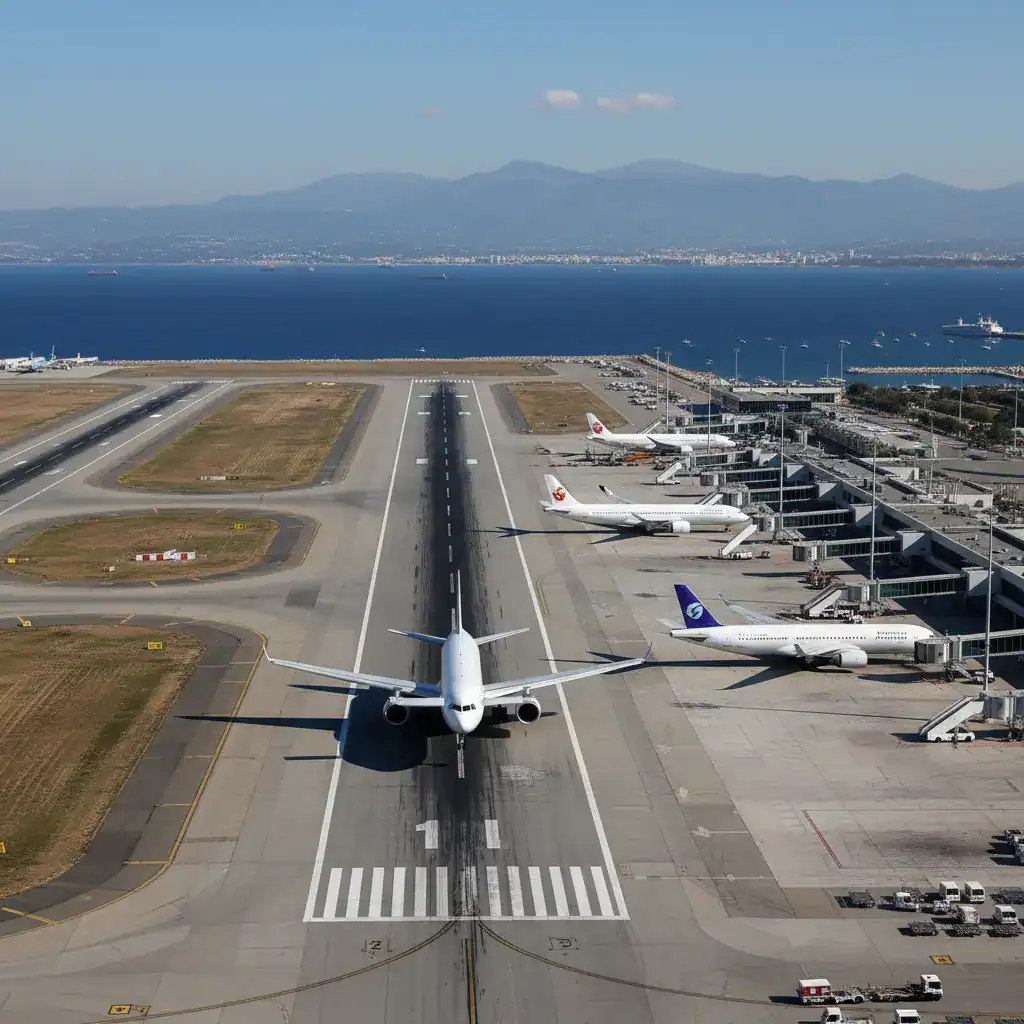
The 2026 tourist season has kicked off with unprecedented dynamism for Corfu, with official data from Fraport indicating stronger performance than the record-breaking year of 2025. From March to April, Corfu International Airport ‘Ioannis Kapodistrias’ has seen a significant increase in passenger traffic and flight arrivals, with occupancy rates remaining exceptionally high across all flights.
The Albanian Ascent: A New Regional Powerhouse?
While Corfu celebrates its success, a critical and increasingly competitive force in the wider region is emerging: Albania. With three international airports – Tirana International Airport, Kukës International Airport, and Vlorë International Airport – Albania is attracting a substantial number of international passengers. Tirana, the capital, serves as the primary gateway, and its passenger numbers are growing at an astonishing pace, directly impacting the tourist flow in surrounding areas.
The Numbers Game: Corfu vs. Albania
Data from the Albanian Institute of Statistics (INSTAT) and Tirana International Airport (TIA) reveal a dramatic surge in Albanian tourism:
- 3.3 million passengers traveled through Tirana Airport from January to April 2026, marking a 10.4% increase compared to the same period in 2025.
- 13.3 million passengers are projected to pass through Tirana Airport by the end of 2026 if current trends continue.
- 19,400 aircraft movements were recorded in the first four months, a 5.4% rise.
- April 2026 was a particularly strong month, serving 1.13 million passengers, with peak days reaching 43,000 passengers and 250 flights daily.
Conversely, Corfu International Airport ‘Ioannis Kapodistrias’ data from Fraport shows:
- Passenger traffic increased by a sharp 11% in April 2025 compared to April 2024, reaching 189,581 passengers. This significantly exceeds the average growth rate of other regional airports in Greece.
- May 2026 concluded with 1,704 aircraft arrivals.
- Corfu now boasts direct connections to 31 countries and 103 different airports.
- In the first quarter (January-March), even during winter months, total traffic (domestic and international) increased by 21.9% (76,695 passengers compared to 62,926 in 2025).
- The United Kingdom remains the top market for Corfu Airport, representing the lion’s share of international arrivals.
While a direct comparison between a capital city’s airport and an island’s airport may seem unequal, the rapid development of Albania as a regional tourism player cannot be ignored. Flightradar24 data from the previous seven days shows Corfu welcomed 1,028 aircraft arrivals-departures, while Albania recorded 1,859.
Why the Albanian Boom?
Several key factors contribute to Albania’s explosive growth:
- Ryanair’s Expansion: The airline has established a new permanent base in Tirana with four stationed aircraft (a $400 million investment), now offering 44 routes and aiming for 4 million passengers annually.
- “Zero Tax” Policy: The Albanian government’s policy of abolishing air taxes has massively attracted low-cost carriers like Wizz Air and Ryanair. This has led to new direct connections with cities such as Dublin, Liverpool, Ankara, and Bratislava, while Milan, London, and Rome remain popular established destinations, with Italians being a major contributor to their tourism.
Implications for Corfu: A Looming Challenge?
The proximity of Albania to Corfu, combined with its aggressive tourism development strategy, presents a significant challenge. Albania is already absorbing a considerable number of visitors who might otherwise have chosen Corfu. This raises crucial questions about the long-term sustainability of Corfu’s tourism model.
Is Corfu sufficiently diversified to withstand this growing competition? Are its infrastructure and services prepared for an evolving tourism landscape where price-sensitive travelers might opt for cheaper alternatives? The current focus on high-volume arrivals, particularly from the UK, may need re-evaluation in light of Albania’s burgeoning appeal.
The Path Forward for Corfu
To maintain its competitive edge, Corfu must consider strategic responses. This could involve:
- Diversifying Markets: Reducing over-reliance on a single source market like the UK.
- Enhancing Value Proposition: Focusing on unique cultural, historical, and environmental experiences that differentiate Corfu from its neighbors.
- Infrastructure Investment: Continuously improving airport facilities, transportation networks, and hospitality services to meet evolving tourist demands.
- Sustainable Tourism: Promoting eco-friendly practices and preserving the island’s natural beauty to attract a different segment of travelers.
- Regional Collaboration: Exploring opportunities for joint tourism initiatives with other Ionian islands or even Albania itself, to create a more integrated regional offering.
The rise of Albania is not merely a statistical anomaly; it is a clear signal of a shifting dynamic in regional tourism. Corfu, while currently thriving, must proactively address this challenge to secure its future as a premier Mediterranean destination.
As the tourist season progresses, the real test will be how Corfu adapts to this new competitive reality. Will it continue its upward trajectory, or will the allure of its rapidly developing neighbor begin to chip away at its market share? The answers will shape the tourism landscape of the Ionian Sea for years to come.
Source: https://www.startmediacorfu.gr/i-touristiki-anodos-tis-kerkyras-kai-i-%C2%A8ekriktiki%C2%A8-anodos-tis-alvanias-i-opoia-aporrofa-ton-tourismo-tou-nisiou/