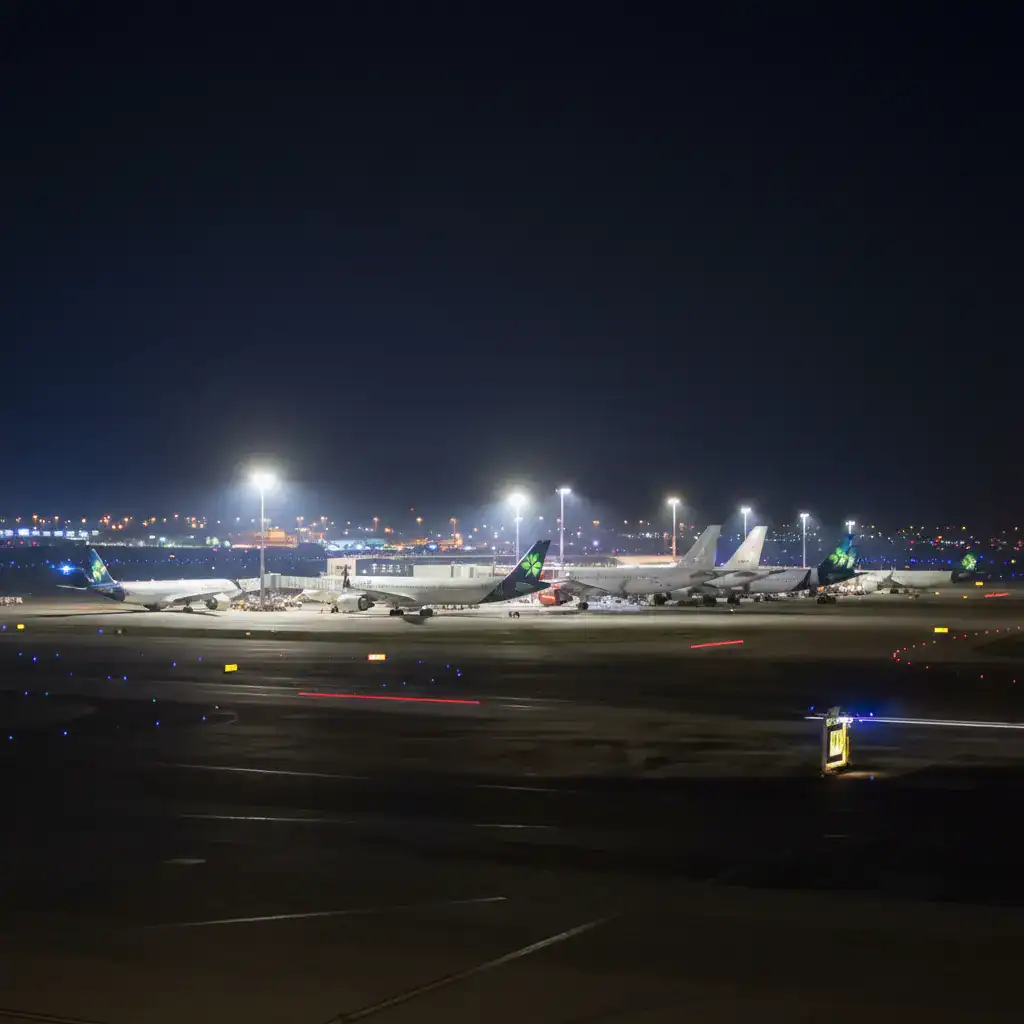
Corfu, May 8 – Corfu’s ‘Ioannis Kapodistrias’ Airport has seen a significant increase in air traffic since the start of the tourist season in late March. In the first week of May alone, the airport recorded 312 aircraft arrivals, with 20 airlines operating flights to and from the island.
Strong Start to Tourist Season Amidst Global Challenges
Despite ongoing concerns regarding aviation fuel supply and rising prices due to the conflict in the Middle East, European airlines serving Corfu have largely maintained their flight schedules. Many carriers have assured that there are no jet fuel shortages, and increased ticket prices have been absorbed. However, some exceptions, such as Lufthansa and KLM, have reported flight restrictions or cancellations.
For Corfu, there have been no reported flight restrictions or cancellations to date, indicating the strong foundation of the island’s tourism sector. European flights are operating normally, though the situation for flights from the Middle East remains unclear. Israel, in particular, has been a significant contributor to local tourism in recent years, with Fraport data placing it among the top countries for passenger arrivals in Corfu. Information regarding flights to and from Dubai, scheduled to begin in June, is still pending.
Dominant Markets and Emerging Trends
From May 1st to May 7th, Greece led in aircraft arrivals, primarily due to domestic tourism, which has shown impressive growth in recent years. The United Kingdom followed in second place, with Germany ranking third. Other significant markets include France, Poland, the Netherlands, and Belgium. Notably, markets such as Ireland and Latvia are experiencing continuous growth, further diversifying Corfu’s tourism landscape by attracting visitors from previously less prominent regions.
Airlines and Aircraft Operating in Corfu
For the period analyzed and the foreseeable future, the 20 main airlines operating at ‘Ioannis Kapodistrias’ Airport, excluding charters, include Aegean Airlines, Sky Express, Ryanair, Easyjet, Jet2, British Airways, Tui, Condor, Corendon, Lufthansa, Eurowings, Marabu, Edelweiss, Transavia, Brussels, Volotea, Smartwings, Austria Airlines, Luxair, and Aer Lingus. The aircraft types used for these routes are ATR, A319, A320, A321, and B737.
Operational Challenges and Airline Preferences
A notable operational challenge is the high number of flights from a single destination on any given day, often resulting in multiple aircraft from the same city arriving simultaneously. This significantly increases operational activity for all stakeholders, including air traffic control, ground staff, and even the occupation of additional parking positions. This issue could be mitigated by fewer flights utilizing larger aircraft, especially after the interventions at the airport by the managing company Fraport. However, airlines prefer the current model for two main reasons: the large number of passengers from one area is balanced by the activity of A321NEO aircraft, which can transport a greater number of passengers per flight. Secondly, operating a large aircraft for a short route causes more structural wear, as large aircraft are designed for longer airtime.
Outlook for Corfu Tourism
In conclusion, the risk associated with aviation fuel remains, but it has not yet led to a reduction or cancellation of flights to Corfu. The outlook for tourism from the Middle East remains uncertain, while other emerging countries show significant interest in the island. The air traffic data from the beginning of the tourist season through early May is encouraging, with a large number of airlines operating flights to and from ‘Ioannis Kapodistrias’ Airport.
Source: https://www.startmediacorfu.gr/kerkyra-aerodromio-312-afikseis-aeroskafon-tin-1i-evdomada-tou-ma%CE%90ou-me-20-aeroporikes-etaireies-na-pragmatopoioun-ptiseis/