Athens Railway Stations Slated for Major Redevelopment into Modern Transport Hub
Athens, Greece, February 18, 2026 – One of the most ambitious urban regeneration projects in central Athens is moving into its implementation phase. GAIAOSE, the entity responsible for managing and developing the Greek state’s railway real estate assets, has launched non-binding expressions of interest for the redevelopment of the capital’s Larissis and Peloponnese railway stations. This initiative signals a pivotal transition from planning to the active search for investment partnerships, aiming to create a modern, multifunctional transportation hub in the heart of Athens.
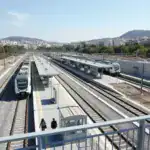
The project opens up one of the city’s most significant and strategically located land portfolios to private investment proposals, covering approximately 100 acres near the city center. This area encompasses the Unified Central Athens Railway Passenger Station complex, which includes both the Athens Railway Station (Larissis), the country’s largest rail hub, and the historically significant Peloponnese Railway Station.
A Multifunctional Transport Hub with Historical Preservation
The Athens Railway Station (Larissis) currently serves the active network connecting the capital with major cities and towns across mainland Greece. Adjacent to it, the Peloponnese Railway Station stands as a property of exceptional historical and architectural importance. Designed by architect Ernst Ziller, with distinctive vaulted terminal sections added between 1912 and 1913 by Alfred Rondel and Adolphe Gautier, the building opened in 1884. Blending neoclassical references with art nouveau elements, it was designated a protected monument in 1985 and is widely regarded as an architectural jewel.
GAIAOSE’s challenge to private investors is therefore two-fold: to develop a state-of-the-art transport hub while simultaneously safeguarding and showcasing this historic landmark, which is deeply embedded in the city’s collective memory. The vision is to create a fully integrated, multifunctional transport hub seamlessly connected to the active railway network and interlinked with other modes of transport, including the metro.
New Development Model and Investment Opportunities
The non-binding expressions of interest represent the initial stage of the tender process, designed to assess market interest and gather innovative development ideas. Investors have the flexibility to propose either a unified long-term development for both neighboring stations or separate projects for each. The 100-acre site offers significant scope for mixed-use development, potentially incorporating retail spaces, tourism facilities, student housing, office buildings, cultural venues, and both above-ground and underground parking facilities.
Interested parties are invited to submit their proposals by June 12, 2026. These responses will be crucial in shaping the final terms and structure of the formal tender that will follow.
A Second Chance for the Peloponnese Station
Particular emphasis is being placed on the restoration plans for the historic Peloponnese Station, which has remained closed since 2005 following the permanent shutdown of the old Peloponnese metric railway line. An earlier attempt to convert the site into a cultural center and railway museum faced significant challenges, primarily due to funding constraints.
Today, GAIAOSE is revitalizing this project, aiming to transform the listed building on Railway Street in the Kolonos district into a vibrant leisure and cultural venue. This space is envisioned to host various events and promote Greek products. Cooperation with local and regional authorities is also under consideration to ensure the project delivers broader benefits to the city and its residents. The station’s unique architecture, often compared to a miniature version of the Chemins de fer Orientaux headquarters in Istanbul, requires particularly careful handling. The critical test will be to balance commercial viability with the preservation of its historical identity.
Catalyst for Broader Urban Renewal
This intervention extends beyond mere transportation infrastructure development. It is expected to act as a catalyst for broader urban regeneration in areas surrounding Liosion Street and Victoria Square, where large tracts of land remain underutilized. A modern transport and commercial hub is anticipated to boost land values, strengthen real estate demand, and stimulate further investment activity in these areas.
Ultimately, the project’s success will depend on two crucial factors: a genuine respect for the historical character of the Peloponnese Station and ensuring that the new complex remains primarily a public transport infrastructure asset, rather than evolving into a disconnected commercial center. The upcoming phase will determine whether GAIAOSE’s ambitious plan will become a model combining transport, culture, and entrepreneurship, or if another opportunity to reshape Athens’ railway landscape will be missed. The debate over the future of these two stations has officially begun, engaging not only investors but the entire capital.
Source: https://www.tovima.com/travel/a-modern-transport-hub-planned-for-central-athens/