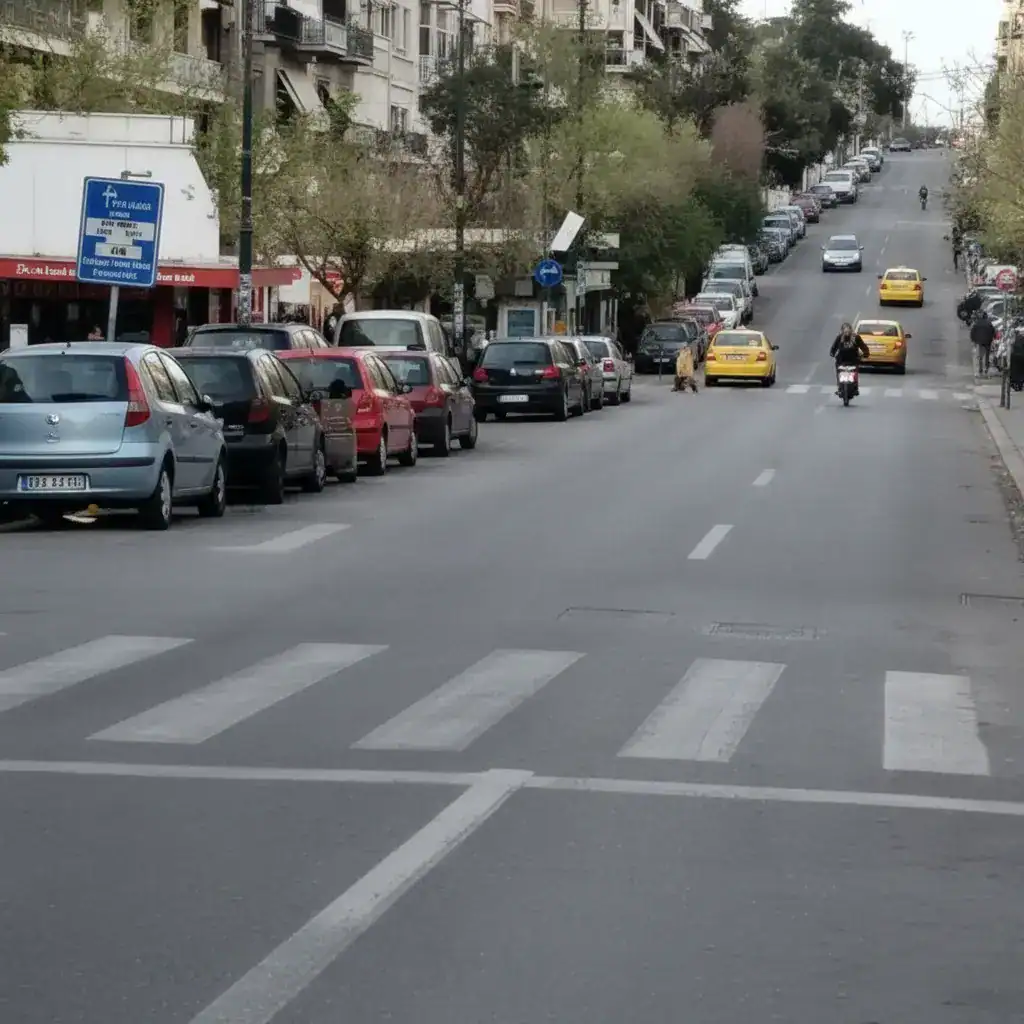
The perennial shortage of available parking spaces in Athens stands as one of the most significant daily challenges for both residents and visitors. As urban traffic relentlessly increases, roads are choked with congestion, and areas surrounding commercial centers, hospitals, and public transport hubs experience intense bottlenecks. This lack of organized parking facilities not only burdens drivers but also profoundly affects the quality of life, safety, and the environment, with increased pollutant emissions stemming from the prolonged search for available spots. The cost of renting and purchasing parking spaces in Athens has skyrocketed in recent years, with private, enclosed parking often commanding prices comparable to a studio apartment, depending on the area. Consequently, many residents are forced to circle for 30-40 minutes just to find a parking spot near their homes.
The Crisis Unpacked: More Than Just a Parking Problem
According to a study by the Panhellenic E-Real Estates Network, addressing this issue necessitates a combination of policies that encourage the utilization of existing spaces, the creation of new ones, and the implementation of incentives for private citizens and developers. Concurrently, the use of public transportation and the continuous expansion of its network remain the most critical factors in reducing dependence on private vehicles. The problem extends beyond mere convenience; it is a symptom of broader urban planning deficiencies and a lack of foresight in managing metropolitan growth.
Proposed Solutions: A Multifaceted Approach
Experts and urban planners have put forth several solutions, aiming to tackle the crisis from various angles:
- Availability of large store parking lots after operating hours:
- Collaboration between Municipality and Private Businesses: Supermarket, mall, and department store parking lots could be made available to the public outside operating hours (e.g., 9:00 PM – 7:00 AM).
- Reciprocity: This could be incentivized through reduced municipal fees, security agreements, or tax deductions.
- Integration as a Licensing Condition: Making parking spaces available outside operating hours could become a prerequisite for new commercial establishments.
- International Precedent: Berlin and Barcelona successfully operate supermarket parking lots as ‘night parking for residents’ through agreements with their respective municipalities.
- Incentives for developers of new apartment buildings to create additional parking spaces:
- Increased Building Coefficient: For every additional parking space beyond the minimum requirement, a building could receive a 1%-5% increase in its building coefficient, up to a maximum limit.
- Accessibility for Residents: These additional spaces must be fully functional and accessible to residents.
- International Precedent: In Vienna, apartment buildings with additional underground or garage spaces receive a volume increase of up to 10%.
- Tax and other incentives:
- Reduced Taxes and Fees: Exemptions from ENFIA (Unified Real Estate Property Tax), discounts on transfer tax, or municipal fees for additional spaces made available to the public.
- Possibility of Adding Extra Floors or Underground Space: Without being included in the building coefficient, exclusively for parking purposes.
- Alternative: Adding a ‘semi-basement’ as an additional parking space in areas with severe problems.
- Utilization of closed private parking spaces:
- Tax Incentives: Income tax deductions for renting out parking spaces to the public.
- Shared Use Agreements: Providing legal frameworks to facilitate the management and shared use of parking spaces.
- ENFIA Reduction: For parking spaces made available to the public.
Global Perspectives: Lessons from Abroad
The Athenian parking crisis is not unique. Many cities worldwide have grappled with similar issues, offering valuable insights and proven strategies. A look at international examples reveals a diverse range of successful approaches:
- Munich, Germany: Promotes underground parking in new buildings with tax breaks and reduced construction permit fees for developers exceeding minimum parking requirements.
- Barcelona, Spain: Private parking spaces can be made available to the public via a municipal platform, with tax incentives for owners.
- Stockholm, Sweden: Mandatory parking construction in new buildings, with incentives for car-sharing integration.
- Vienna, Austria: Large underground municipal parking lots near metro stations offer special rates for residents; subsidies for converting unused garages into shared spaces.
- Lyon, France: Supermarkets open their parking lots to the public after hours with municipal subsidies.
- Seoul, South Korea: Development of modular elevated parking lots for cost-effective, high-capacity solutions.
- Los Angeles, USA: Developers gain additional building rights for exceeding minimum parking requirements; underground parking in commercial centers.
- Toronto, Canada: New developments require a Parking Management Plan and public availability of some spaces; school and church parking lots are shared with tax benefits.
- Budapest, Hungary: Creation of small local parking lots on vacant land; subsidized programs for converting basements into garages.
- Portland, USA: Encourages ‘Shared Parking Agreements’ and offers ‘Green Parking Credits’ for eco-friendly parking solutions.
- Milan, Italy: Robotic parking towers in space-constrained areas; fee reductions for commercial establishments sharing parking.
- Tel Aviv, Israel: Co-financing of underground parking through Public-Private Partnerships; incentives for tech companies to integrate shared parking.
- Sydney, Australia: Subsidies for developers exceeding minimum parking requirements; utilization of vacant lots for underground parking combined with green spaces.
- Shanghai, China: Automated robotic parking for space efficiency; encourages shared use of municipal and commercial parking.
- Cape Town, South Africa: Utilizes public space under tourist and commercial areas for underground parking; grants for carpooling.
- Berlin, Germany: New parking lots in old industrial areas integrate green spaces; tax incentives for EV chargers.
- Hong Kong: ‘Mandatory Proof of Parking’ where vehicle owners must secure a parking space before purchasing a car; multi-story parking in high-density areas.
- Houston, USA: Multi-story parking complexes in the city center; private commercial parking rented out after hours with tax incentives.
- Istanbul, Turkey: Underground parking near historical and commercial areas; public and private management for shared use.
- Paris, France: ‘Green Parking’ strategy combining green spaces and solar energy; financial incentives for upgrading existing facilities with smart tech.
A Call for Coordinated Action
As Mr. Bakas, president of the network, states,