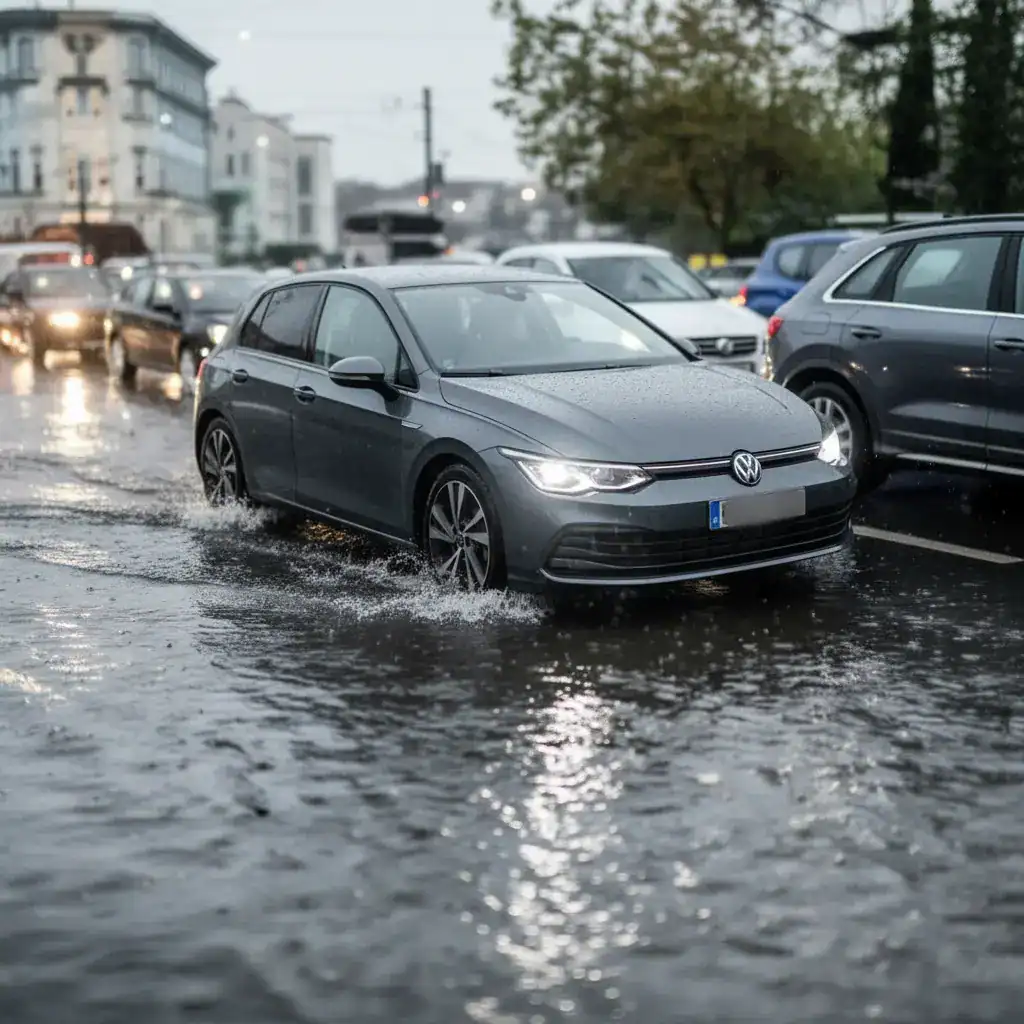
The recent passage of storm Adel left Athens grappling with significant flooding and disruption, a surprising outcome given the relatively modest rainfall of just 40 millimetres. This event has prompted meteorologist Thodoris Kolydas to dissect the factors contributing to the city’s unexpected vulnerability, revealing a complex interplay of urban development and meteorological challenges.
The Urban Environment: A Recipe for Disaster?
Kolydas emphasizes that 40mm of rainfall in a densely built urban environment like Athens is far from insignificant. “It’s not an exaggeration to say that Athens flooded with just 40 millimetres,” he states. He attributes this to several critical factors inherent in the city’s landscape: extensive construction, the presence of numerous small streams, and critically, very low soil absorbency. These elements combine to create a scenario where even moderate rainfall struggles to dissipate naturally, leading to rapid water accumulation.
Data from the EAA/meteo station network corroborates Kolydas’s assessment, recording rainfall amounts in central Athens reaching 40mm. Areas such as Zografou and Goudi experienced similar levels, exceeding 38-39mm. “These figures alone were sufficient to cause local water accumulation, traffic delays and minor flooding on streets with poor drainage,” Kolydas notes, underscoring the immediate impact of these seemingly modest precipitation levels.
Comparing Vulnerabilities: Athens vs. Rural Regions
To further illustrate the severity of Athens’ situation, Kolydas draws a stark comparison with other regions of Greece. He highlights that 100-200mm of rain in a single area can have far more severe consequences, particularly in regions with different geographical characteristics. “In Epirus, within a similar timeframe, we saw rainfall reach those levels, burdening rivers, aquifers and mountainous drainage basins – systems far more vulnerable to sudden flood reactions than Athens. If Attica struggles with 40mm, imagine regions where the volumes triple or quintuple.” This comparison serves to underscore the unique challenges faced by Athens, where the urban fabric itself exacerbates the effects of rainfall.
Forecasting Challenges and the Promise of Early Warning
Beyond the environmental factors, Kolydas also sheds light on operational challenges within meteorological forecasting. A significant portion of Attica, and Greece in general, suffers from insufficient radar coverage. This deficiency hinders the real-time assessment of rainfall intensity, a crucial component for effective flood preparedness. However, Kolydas maintains a hopeful outlook, stressing that modern tools offer a valuable window of opportunity for early warning.
These tools include sophisticated satellite products and high-resolution forecasting models. These technologies are capable of detecting storm tops and identifying the strengthening of convective cores, providing crucial insights into developing weather patterns. With these advancements, he asserts, a 1-2 hour early warning becomes not only feasible but also potentially decisive in mitigating the impact of severe weather events.
The Imperative of Proactive Preparedness
Kolydas concludes with a powerful call to action, reiterating the lessons learned from storm Adel. “Today’s storm showed again that even 35-40 mm can cause substantial impacts in Attica,” he states. More importantly, it served as a stark reminder of the critical need to fully utilize every available early-warning tool. This is particularly pertinent in a country like Greece, where radar networks have gaps, extreme weather phenomena are becoming increasingly frequent and intense, and the operational reaction window is exceptionally valuable.
The meteorologist firmly believes that by making better use of satellite data and advanced models, providing warnings one or two hours earlier is “absolutely realistic – and often decisive.” The recent flooding in Athens, therefore, serves as a crucial wake-up call, urging a proactive approach to urban planning and meteorological preparedness to safeguard its inhabitants against the escalating threats of climate change and extreme weather.