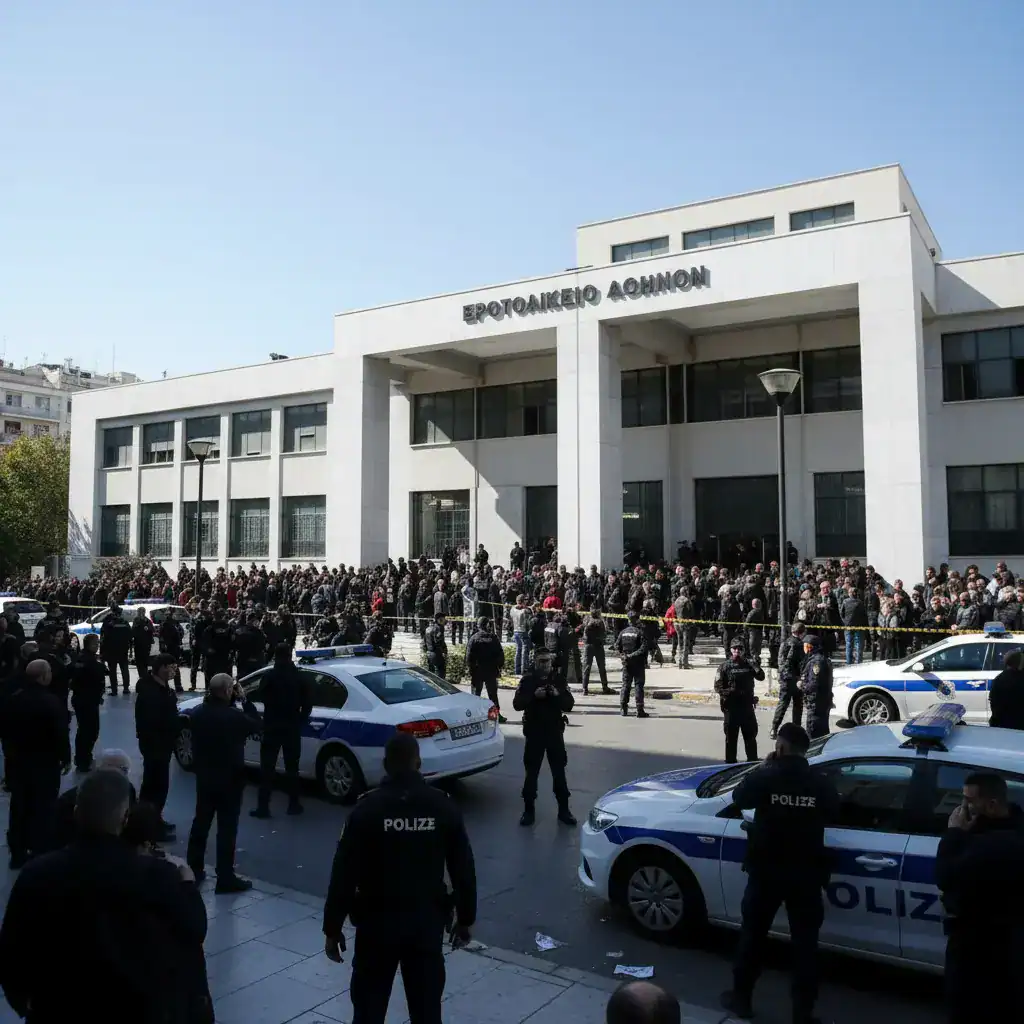
A gun attack inside the Athens Court of First Instance on Tuesday, April 29, 2026, has brought renewed attention to persistent security deficiencies within Greece’s judicial system. An 89-year-old man entered the building and opened fire, lightly injuring four court employees. This incident has prompted immediate calls for enhanced security measures and a reevaluation of existing protocols.
Incident Details and Immediate Aftermath
The shooting occurred two months after a separate incident where a lawyer managed to bring a firearm into the Evelpidon court complex, raising initial concerns about the effectiveness of security screenings. Justice Minister Giorgos Floridis acknowledged the oversight, stating, “However, it was proven that there is an issue.” Floridis indicated that security checks had previously focused primarily on criminal courts, with civil cases not being perceived as high-risk for generating tension or violence.
Following Tuesday’s attack, officials have announced plans to expand security measures to civil courts. These measures will include the deployment of more Judicial Police officers, potential reinforcement from the regular police force, and the installation of additional X-ray scanners at court entrances. The aim is to create a more secure environment for both employees and the public within all court facilities.
Longstanding Warnings Unheeded
Court authorities have revealed that warnings regarding inadequate security have been largely ignored since October 2024. At that time, officials had formally requested stronger security provisions and additional staffing for abandoned checkpoints that were never fully manned. Representatives from the Judicial Police have also cited chronic understaffing, a high rate of resignations, and confusion regarding the service’s primary responsibilities nationwide as contributing factors to the security lapses.
The incident has underscored the critical need for comprehensive and consistently enforced security protocols across all court facilities in Greece. The lack of proper staffing and equipment at entry points allowed the assailant to enter the building with a firearm, leading to the injuries of four employees. This failure to address previous warnings and implement necessary changes has drawn significant criticism from court staff and the public alike.
Impact on Court Employees and Future Measures
Employees at the Athens Court of First Instance staged a protest following the shooting to express their concerns and demand immediate action. The protest highlighted the fear and frustration among court staff who feel their safety has been compromised due to inadequate security measures. The incident has not only caused physical harm to the victims but also psychological distress to the entire court community.
The Justice Minister’s commitment to expanding security measures to civil courts, along with the promise of more Judicial Police officers and additional screening equipment, is a direct response to the public outcry and the demands of court employees. However, the effectiveness of these new measures will depend on their swift implementation and sustained enforcement.
Broader Implications for Judicial Security
The Athens court shooting serves as a stark reminder of the vulnerabilities within public institutions and the importance of robust security frameworks. It emphasizes that no public space, regardless of its perceived risk level, should be exempt from thorough security assessments and appropriate protective measures. The incident will likely lead to a broader review of security protocols not only in courts but also in other government buildings and public spaces across Greece.
The ongoing investigation into the shooting will aim to determine the exact circumstances that allowed the assailant to bypass existing security and to identify any further systemic failures. The findings of this investigation will be crucial in shaping future policies and ensuring that such incidents are prevented in the future. The focus remains on creating a safe and secure environment for all individuals who work in or visit Greek court facilities.