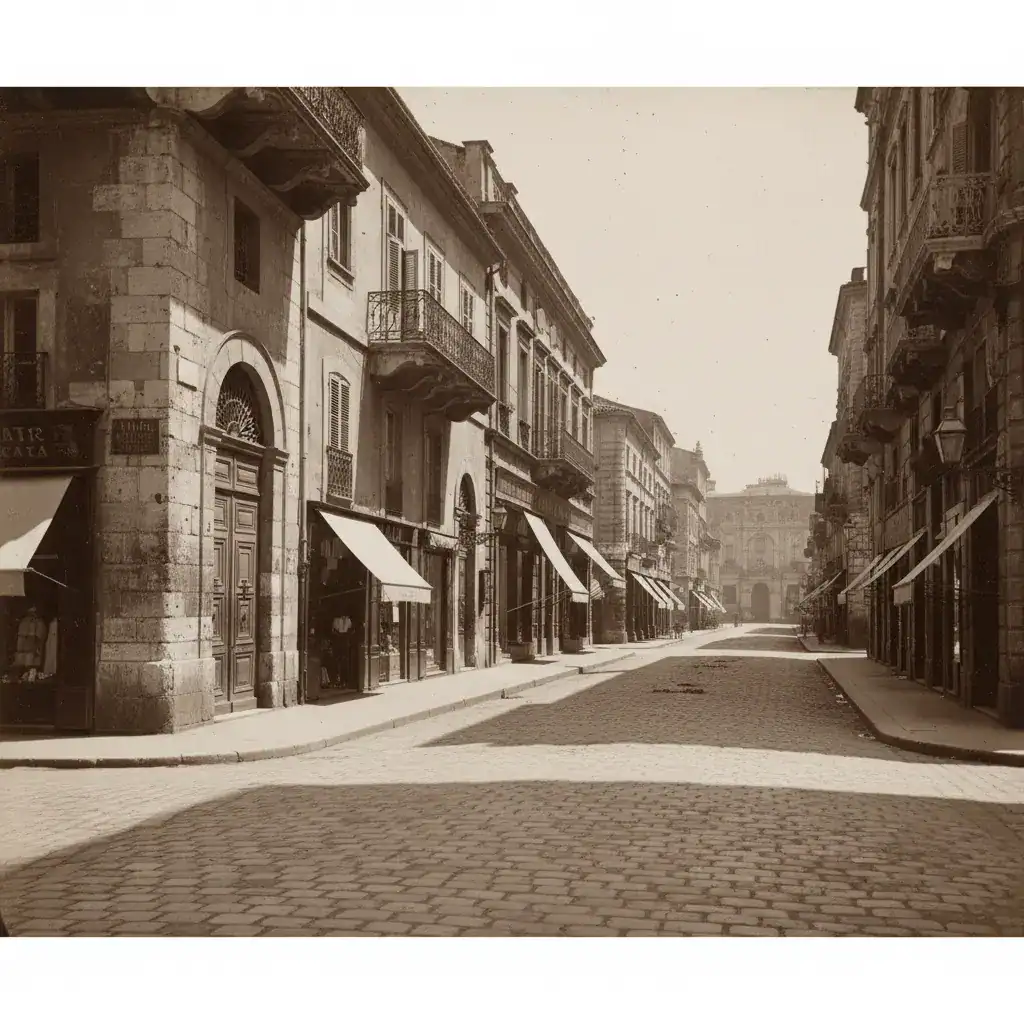
It is 1834. Athens, a city scarred by revolution and centuries of Ottoman rule, is declared the capital of the newly independent Greek state. Amidst the rubble and the nascent stirrings of national identity, a vision takes shape. King Otto’s father, Ludwig I of Bavaria, commissions architects Stamatis Kleanthis and Eduard Schaubert to design a European-style capital, one that respects its glorious past while embracing a new future. Their blueprint, a testament to ambition and foresight, inscribes Aiolou Street as the very first artery of this emerging metropolis.
A Street Where Athens Breathed: The Genesis of Modernity
From its earliest days, Aiolou Street pulsed with life, quickly becoming the vibrant spine of Athenian commerce, society, and politics. It was here that the city’s first building regulations were enforced, its first hotel opened, and its pioneering shops introduced Athenians to sweet confections and the exotic allure of chocolate. The first pharmacy, the first theater, and later, the technological marvel of the elevator – altering the skyline forever – all found their home along this storied stretch. Fiery political speeches echoed off its walls, and from this street, governments rose and fell.
In those formative years, Aiolou also bore witness to the modest beginnings of daily wage workers from the countryside: porters, shoe polishers, and newspaper vendors hawking the headlines of a modern Greece taking its first steps. As the French traveler and historian Joseph-François Michaud noted in his book, “Journey to Greece and Smyrna,” Athens in the wake of Ottoman rule was a landscape of ruins, with Aiolou emerging as a beacon of order amidst the chaos.
From Aeolian Road to Aiolou Street: A Blessed Orientation
The first road laid in the new capital, initially spanning a generous 15 meters in width, stretched from the ancient Clock of Kyrristos – the Tower of the Winds – at the foot of the Acropolis. Named “Aeolian Road,” a nod to the god of winds, it bore this title until 1884 when it was officially renamed Aiolou Street. Early walkers described its orientation as a quiet marvel, with the looming presence of the Acropolis and its ancient monuments offering a silent, constant witness to the new era unfolding below. British scholar David George Hogarth, at the close of the 19th century, would capture its enduring allure, calling it “the most charming road in Athens.”
Dreams Unfulfilled: The People’s Garden and Urban Density
Kleanthis and Schaubert had envisioned something grander for Aiolou Street: a “People’s Garden.” Their ambitious plan included a European-style square adorned with arcaded buildings, leafy trees, and fountains, designed to be both residential and commercial. However, the fledgling Greek state, grappling with scarce resources and urgent priorities, could not afford the costly expropriations. The dream remained on paper, and even the intended 15-meter width of Aiolou Street was sacrificed. Foreign and local interests favored tightly packed plots, leading to a relentless wave of dense construction that would characterize Athens for generations to come.
The First Wave of Businesses: Shaping a City’s Identity
Despite the challenges, Aiolou Street quickly became a bustling hub. In the early 1830s, it hosted the city’s first horse-drawn bus service, linking Athens to Piraeus. Landmark establishments soon followed: the “Hotel of Europe” in 1832, predating formal city planning, and Hotel Aeolos in 1837, the city’s first purpose-built hotel. Cafés, most notably “Beautiful Greece” (1836), emerged as vital political hubs, likened to a “people’s parliament.” The street also saw Athens’ first bookstore (1837), first pharmacy (1855), and its first theater stage (1836), solidifying its role as the cradle of modern Athenian urban life.
By 1860, the Greek government paved the Aeolian and Ermaiki roads with gravel, though property owners bore the responsibility for paving sidewalks. Contemporary press reports humorously depicted the chaotic undertaking, with trenches and stones obstructing passage, particularly for ladies hindered by their crinolines.
Technological Marvels and Economic Turmoil
As the 20th century approached, Athens began to resemble a true capital. Aiolou Street was electrified, foreign visitors increased, and elegant storefronts captivated passers-by. A summer Tuesday in 1893 brought an advertisement to Athenian newspapers that became the talk of the town: the installation of Greece’s first elevator at the grand hotel La Massalia. This technological marvel, no less sophisticated than those in Paris or Vienna, was hailed as a “lifesaver.”
However, optimism was short-lived. Prime Minister Trikoupis’ infamous declaration, “Unfortunately, we are bankrupt,” plunged the country into crisis. Yet, even amidst economic turmoil, gambling houses and casinos around Aiolou Street pulsed with activity. Despite setbacks, Athens firmly set its course toward becoming a European capital, boasting a rapidly growing population, modern water supply, and electric lighting – a stark contrast to earlier critiques of its dimly lit streets.
Cars also made their appearance, startling pedestrians unaccustomed to sidewalks. At the city’s second traffic light, located at the intersection of Stadiou and Aeolou, a staggering 13,500 vehicles passed every 24 hours, significantly more than Athens’ total population a century prior.
Aiolou Street Today: A Vibrant Legacy
Today, Aiolou Street stands as a vibrant pedestrian thoroughfare, seamlessly blending its rich historical legacy with contemporary urban life. The pedestrianization initiative in 2003 breathed new life into the area, transforming it into a bustling hub of shops, cafes, and restaurants. The area around Agia Irini Square, in particular, has emerged as a hotspot for dining and socializing, attracting both locals and tourists.
Aiolou Street also holds significant archaeological importance, with excavations revealing remnants of ancient Athens, including parts of the Themistoclean Wall and the Acharnian Gate. These discoveries underscore the street’s historical significance as a major thoroughfare since antiquity, a testament to its enduring role as the navel of modern Greece.
Source: https://greekreporter.com/2025/11/24/athens-aiolou-street-heart-of-modern-greeces-emergence/