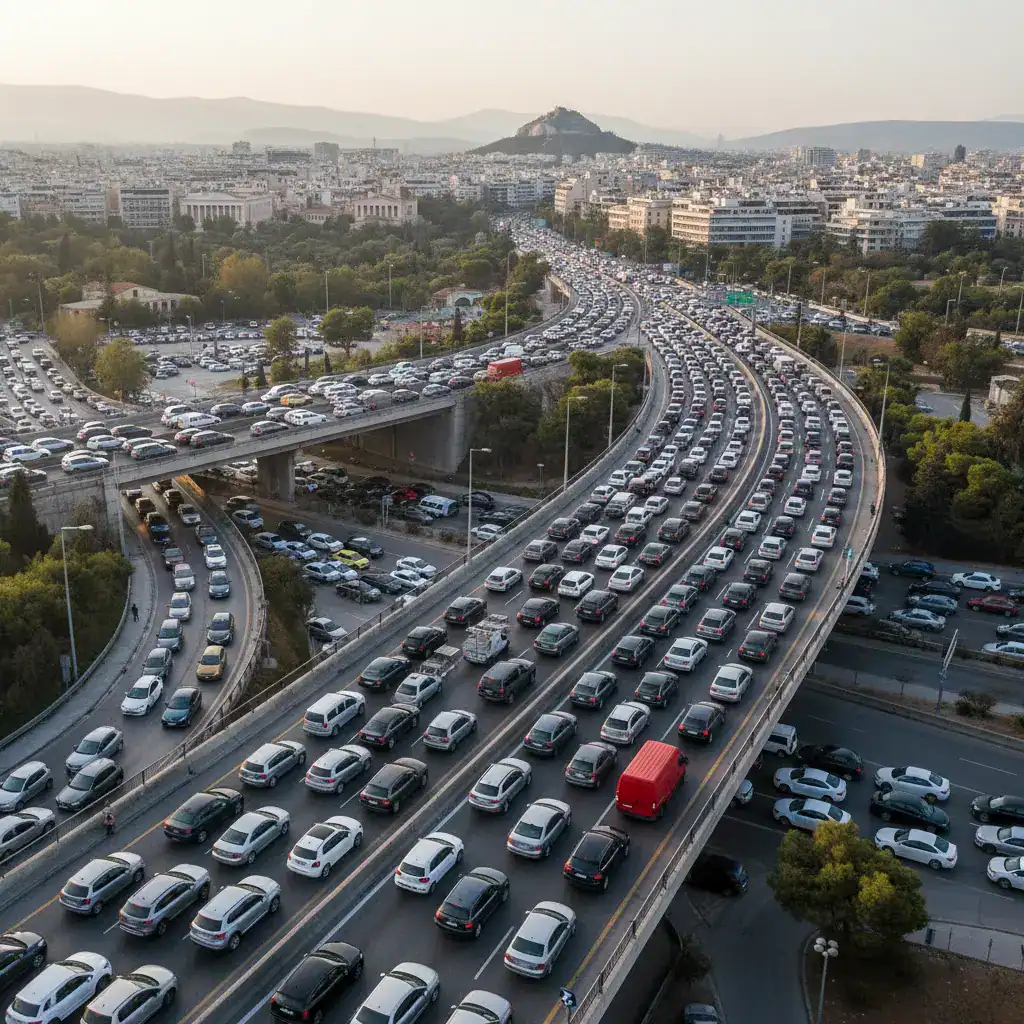
Athens paralyzed by widespread traffic delays
Athens, June 19 – The Greek capital experienced significant traffic disruptions on Friday, June 19, 2026, as major highways and arterial roads were hit by severe gridlock. Commuters faced extensive delays throughout the day, impacting travel across the city.
Key Highways Affected
On Kifisos Avenue, northbound traffic from Renti to Metamorfosi moved at exceptionally low speeds, leading to substantial congestion. This major artery, vital for connecting various parts of Athens, saw prolonged periods of standstill, frustrating thousands of drivers.
The Attiki Odos motorway, a critical bypass for the capital, also reported significant delays in both directions. Travelers heading toward Elefsina experienced delays exceeding 45 minutes between Paiania and Metamorfosi. Similarly, those traveling toward the airport faced delays of 10-15 minutes between Metamorfosi and Kifisias. These disruptions highlight the fragility of the city’s infrastructure under heavy traffic loads.
City Roads Also Hit by Slowdowns
Beyond the primary highways, other significant urban routes were also affected. Kifisias Avenue near Marousi saw considerable slowdowns, adding to the city-wide traffic woes. Sections of Vouliagmenis Avenue also reported sluggish movement, creating bottlenecks in key residential and commercial areas.
Traffic in central Athens was notably slow throughout the day, with authorities advising motorists to anticipate continued delays well into the evening. The widespread nature of the gridlock suggests a confluence of factors contributing to the severe congestion.
Impact and Future Outlook
The extensive traffic jams underscore the ongoing challenges Athens faces in managing its urban mobility. Such disruptions not only cause inconvenience for residents but also have broader economic implications, affecting productivity and increasing fuel consumption.
This event follows previous reports of traffic issues in the capital, with ongoing discussions and plans for infrastructure improvements, including bypasses, aimed at alleviating the chronic congestion. However, Friday’s events demonstrate that these solutions are yet to fully address the city’s growing traffic demands.
Authorities have not yet provided a detailed explanation for the severity of Friday’s gridlock, but the incident serves as a stark reminder of the need for continuous investment and strategic planning in urban transport infrastructure.