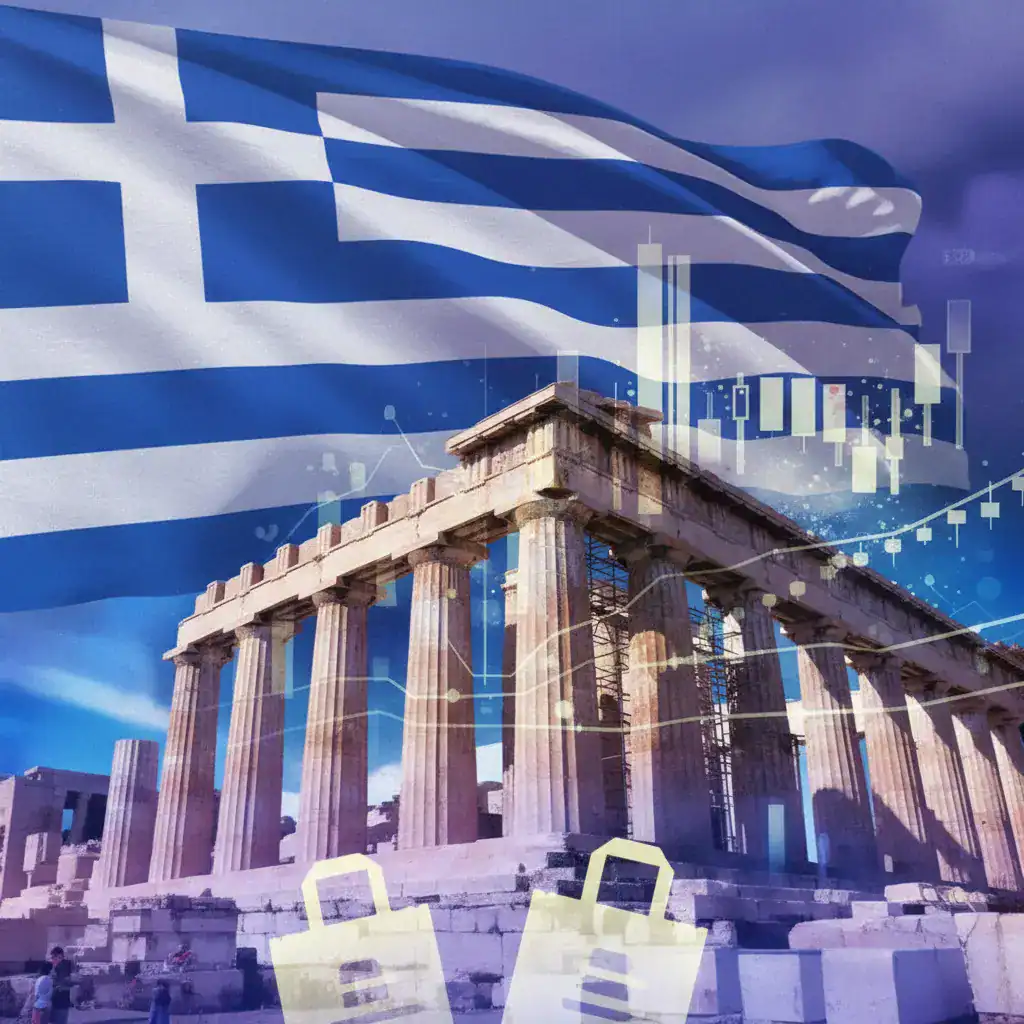
Greek Government Eyes New Support Measures for Households
Athens, April 11, 2026 – The Greek government is poised to reassess its financial capabilities following the Easter holiday, as the ongoing conflict in the Middle East continues to fuel concerns over energy costs and consumer prices. With current relief measures falling short of household needs, the reintroduction of grocery vouchers is reportedly under consideration.
Finance Minister to Guide Decisions Post-IMF/World Bank Meetings
No definitive decisions are expected until Finance Minister Kyriakos Pierrakakis returns from the International Monetary Fund and World Bank Spring Meetings in Washington, scheduled to commence on Monday, April 13. Formal deliberations on any new support package are anticipated to begin the week of April 20.
Uncertainty Shapes Intervention Scope
The extent of any government intervention will largely depend on the stability of the fragile US-Iran ceasefire and its subsequent impact on energy prices. Government sources indicate that various scenarios are being explored, but concrete decisions remain elusive due to the unpredictable nature of the crisis’s duration and severity.
Public Dissatisfaction Highlights Need for Action
Greek officials acknowledge that existing support initiatives, such as price caps and fuel subsidies, have not kept pace with the actual needs of households. This is reflected in recent opinion polls, which increasingly show widespread public dissatisfaction with the prevailing economic climate. Any forthcoming response will also be influenced by Athens’ available fiscal headroom and the potential for a coordinated European response.
Greece’s Strong Fiscal Position Offers Flexibility
Greece enters this period of economic uncertainty with greater budgetary flexibility compared to many of its EU counterparts. The country’s primary surplus for 2025 exceeded 4.5% of GDP, significantly surpassing the official forecast of 3.6%. The primary surplus for the current year is also projected to be around 4% of GDP, again exceeding the official target of 2.8%. This stronger-than-expected fiscal performance, partly due to a ‘carry-over’ effect from 2025, provides the government with additional room to maneuver without violating its fiscal commitments.
The Market Pass: A Potential Solution
Among the measures being actively considered is the revival of the ‘Market Pass’ – a grocery subsidy scheme first implemented in early 2023 during a previous period of high inflation. Under the initial program, over 2.3 million households applied for these monthly subsidies, which ranged from €22 to €100, depending on family size. The funds could be utilized at supermarkets, open-air street markets, general grocery stores, butchers, bakeries, and fishmongers.
Market Pass Details and Eligibility
The original Market Pass reimbursed 10% of monthly grocery spending, with eligible purchases capped at €220 per month for single-person households and up to €1,000 for larger families with children. The program was means-tested, with eligibility based on both income and assets. To qualify, single applicants could not earn more than €16,000 annually, while couples faced a €24,000 income ceiling, increasing by €5,000 for each dependent child. In terms of assets, net wealth could not exceed €250,000 for singles, widows, or separated individuals, and €400,000 for married couples, civil partners, and single-parent families.