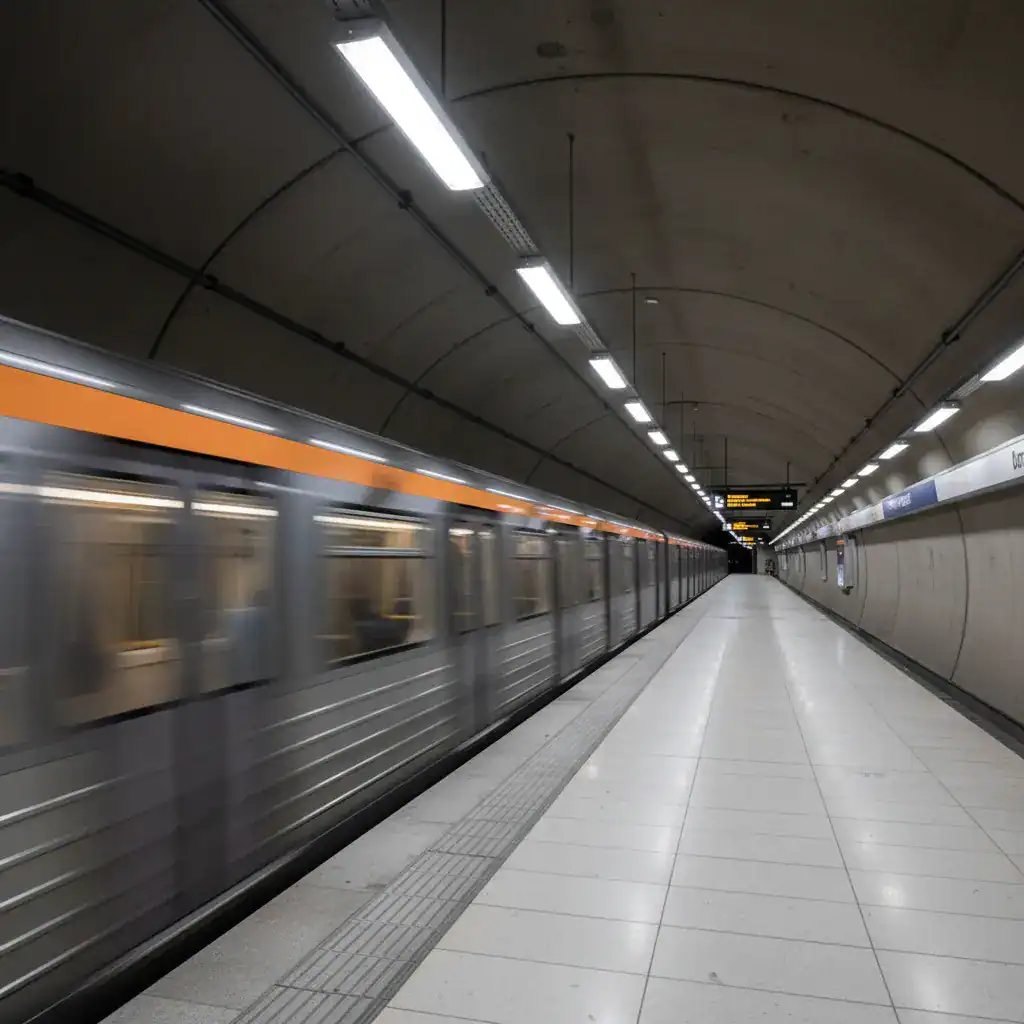
Athens Metro Line 4: Steady Progress and Future Impact
The construction of Athens Metro Line 4 is advancing at a steady pace, marking a significant milestone in Attica’s infrastructure development. This ambitious project is poised to fundamentally transform urban mobility, promising to ease traffic congestion on major roadways and enhance the daily commuting experience for residents.
Tunneling Milestones Achieved
The tunnel boring machine nicknamed “Niki” has successfully passed through the Kypseli area and is now heading towards the “Dikastiria” station, having excavated over 3 kilometers of underground line. Concurrently, a second tunnel boring machine, “Athena,” has completed its 5.1-kilometer journey from Katechaki to Evangelismos, underscoring the rapid progress of the works.
The primary section of the line, “Alsos Veikou – Goudi,” remains on schedule for completion by the end of 2029, assuming no unforeseen construction challenges arise. Station development across various city areas is also well underway, indicating a comprehensive and coordinated effort.
Strategic Extensions to Address Traffic Hotspots
The significance of Line 4 extends beyond its initial segment, with plans for crucial extensions targeting areas plagued by severe traffic issues. A particular focus is on connecting with Kifisias Avenue, notorious for daily delays, and serving major activity hubs such as Marousi and OAKA.
Furthermore, the extension of Line 2 towards Ilion, encompassing approximately 4 kilometers and three new stations, is currently in the tendering phase. This project is expected to substantially improve public transport coverage in the western suburbs. Broader plans also include extending Line 2 towards Glyfada and further developing Line 4 towards Marousi and the National Road, incorporating an extensive network of new stations.
A New Era for Athenian Commutes
These interventions, though at varying stages of maturity, collectively form an ambitious blueprint aimed at revolutionizing daily commutes in Attica over the coming years. For drivers, the enhanced Metro network translates into reduced traffic, shorter travel times, and lower fuel costs. As the network expands and approaches the milestone of 100 stations, Athens is striving to usher in a new era of transportation, where car usage will no longer be the sole option for daily mobility.
Wider Implications for Urban Development
The development of Line 4 and its extensions is not merely about transportation; it represents a strategic investment in urban development and environmental sustainability. By providing efficient and reliable public transport alternatives, the project aims to reduce reliance on private vehicles, thereby lowering carbon emissions and improving air quality in the city. This shift towards sustainable mobility aligns with broader European initiatives to create greener and more livable urban environments.
The increased accessibility offered by the new metro lines is also expected to stimulate economic growth in previously underserved areas, fostering new commercial and residential developments around the new stations. This integrated approach to infrastructure planning ensures that the benefits of the metro expansion extend beyond mere transit, contributing to a more connected, prosperous, and environmentally conscious Athens.
The continuous monitoring and management of the project by relevant authorities underscore a commitment to delivering this vital infrastructure on time and within budget, promising a brighter future for urban transportation in the Greek capital.
Source: https://www.newsauto.gr/news/metro-athinas-pos-prochora-i-grammi-4-ke-pos-allazi-tis-metakinisis/