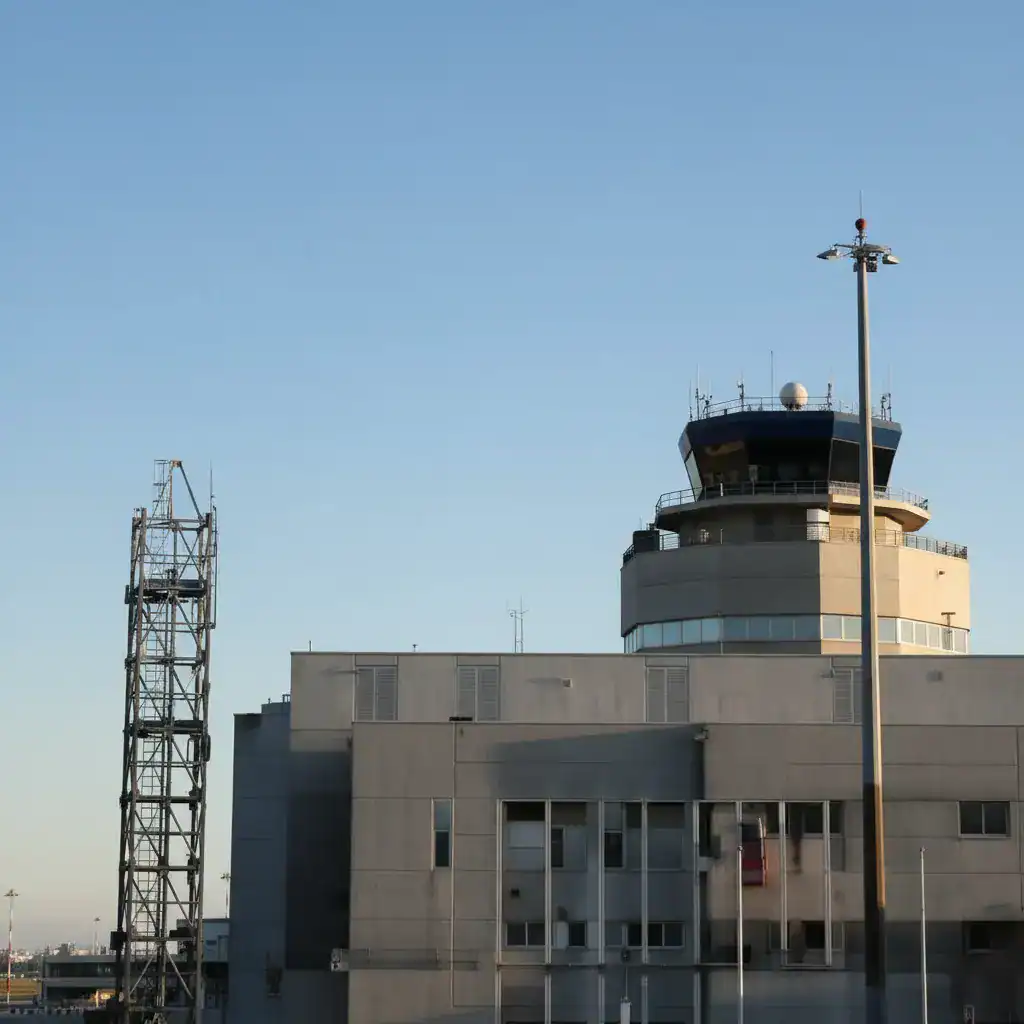
Athens, January 14 – The temporary blackout that disrupted air traffic control services in the Athens Flight Information Region (FIR) on January 4, 2026, was caused by digital interference linked to a synchronization failure in telecommunications systems, according to an experts’ report submitted to the Ministry of Infrastructure and Transport.
Investigation Reveals Synchronization Failure
An investigation carried out by a committee chaired by Hellenic Civil Aviation Authority (HCAA) Governor Christos Tsitouras concluded that the incident stemmed from desynchronization across multiple interconnected systems and interfaces serving the Air Traffic Control Centers (KEPATHM). As a result, several radio transmitters were unintentionally activated and transmitted continuously, disrupting critical telecommunications links used for air traffic management.
The report found no evidence of a cyberattack or external malicious interference, easing concerns raised in the immediate aftermath of the disruption. The investigation involved representatives from the National Cybersecurity Authority, EUROCONTROL, other national bodies, and the European Union Aviation Safety Agency (EASA).
Emergency Measures and Low-Risk Classification
According to the ministry, air traffic capacity in the Athens FIR was temporarily reduced to zero (zero rate) as a precautionary safety measure, while emergency procedures were put in place. Services were restored gradually as the situation stabilized.
Based on reports filed with the European Coordination Centre for Accident and Incident Reporting Systems (ECCAIRS) and an assessment by the HCAA, the incident was classified as low risk (Green Area). No violations of minimum aircraft separation were recorded, and investigators confirmed that the disruption did not expose aircraft to direct or indirect safety risks.
Infrastructure Weaknesses Highlighted
Beyond the immediate cause, the experts’ report pointed to structural weaknesses in Greece’s air traffic communications infrastructure. It noted that the Voice Communication System (VCS) currently used by the HCAA relies on outdated Synchronous Digital Hierarchy (SDH) technology, which is no longer supported by its manufacturer.
The committee warned that the absence of operational guarantees increases overall system risk and reduces resilience during network disruptions.
Recommendations for Future Safety
To address these vulnerabilities, the Special Investigation Committee recommended accelerating the transition to Voice over IP (VoIP) technology through the deployment of a new Voice and Radio Communication System (VCS/RCS), alongside 495 new radio transceivers.
Further recommendations include establishing a permanent rapid-response mechanism between the HCAA and the Hellenic Telecommunications Organization (OTE), enhancing telemetry and remote monitoring capabilities to enable end-to-end diagnostics, strengthening radio spectrum oversight by the Hellenic Telecommunications and Post Commission, and relocating the KEPATHM facilities to reduce operational risk and ensure uninterrupted and safe air navigation services.
Source: Hellenic Civil Aviation Authority, Ministry of Infrastructure and Transport