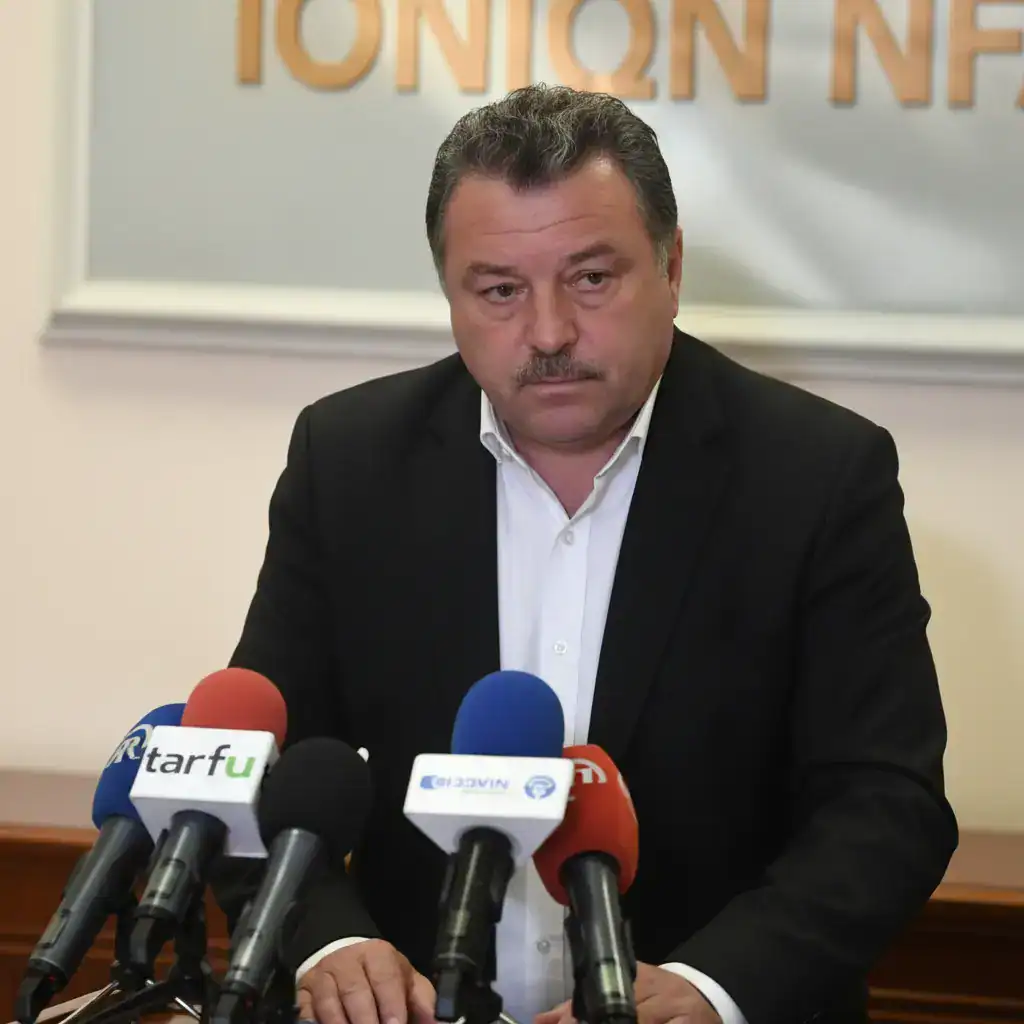
Former Regional Governor Galiatsatos Defends Former Ephor Rigakou Amidst ‘Cannibalistic’ Criticism in Corfu
Corfu, Greece – In a notable intervention, former Regional Governor Th. Galiatsatos has publicly defended former Ephor of Antiquities T. Rigakou, who has recently faced a barrage of criticism regarding her performance. Galiatsatos, in a commentary that has resonated across the island’s political landscape, characterized the ongoing attacks as ‘cannibalistic’ and ‘repulsive,’ especially given their anonymous or ‘safe’ nature.
The former Regional Governor’s statement, published on January 6, 2026, references a broader pattern of what he perceives as unfair targeting of public figures once they leave their positions. He pointedly reminded critics that the Ministry of Culture is ultimately responsible for shaping and implementing cultural policy and for approving cultural projects in Corfu. “I remind all of them that there is/was a Minister of Culture, who, as is well known, sets the applicable policy and decides which cultural projects will be proposed and promoted in Corfu. Will we attack her too when she leaves the ministry? ‘Shame, Achaeans!'” Galiatsatos stated, using a classical Greek expression to convey his dismay.
The Context of Criticism: A Deeper Look
The controversy surrounding T. Rigakou, though not explicitly detailed in the provided data, appears to stem from her past role as Ephor of Antiquities. The nature of the ‘articles and comments’ suggests a public debate over cultural management, project implementation, or perhaps even ethical conduct. Galiatsatos’s use of the term ‘anthropophagy’ (cannibalism) indicates a particularly harsh and personal tone to these criticisms, moving beyond professional critique to personal attacks.
This incident raises pertinent questions about accountability in public service. While public figures are rightly subject to scrutiny, the manner and timing of such criticism are crucial. Galiatsatos implies that the attacks on Rigakou are not only disproportionate but also misdirected, given the hierarchical structure of decision-making within the cultural sector.
The Role of the Ministry of Culture
Galiatsatos’s defense highlights a critical aspect of governance: the division of responsibility. By emphasizing the Ministry of Culture’s role, he effectively shifts the focus from an individual to the broader institutional framework. This perspective suggests that any shortcomings or successes in cultural projects in Corfu should be viewed within the context of national policy and ministerial directives, rather than solely as the responsibility of a single local official.
This argument is particularly relevant in Greece, where cultural heritage is a cornerstone of national identity and a significant driver of tourism. Decisions regarding archaeological sites, museums, and cultural events often involve complex negotiations between local authorities, regional administrations, and the central Ministry of Culture. Therefore, attributing outcomes solely to a regional official might indeed be an oversimplification.
Political and Social Implications
The former Regional Governor’s intervention also carries political weight. As a former high-ranking official, Galiatsatos’s voice commands attention. His commentary could be interpreted as a call for a more nuanced and fair assessment of public service, urging a move away from personal attacks towards constructive criticism and a focus on systemic issues.
Moreover, the phrase “‘Shame, Achaeans!'” (Αιδώς Αργείοι) is a powerful rhetorical device, evoking a sense of moral indignation and appealing to a shared cultural heritage of honorable conduct. It suggests that the current public discourse falls short of the standards expected in a civilized society.
The incident also underscores the challenges faced by officials in managing cultural heritage, especially in a region as historically rich and culturally sensitive as Corfu. Balancing preservation with development, and local needs with national priorities, is a constant tightrope walk, often exposing officials to intense public scrutiny.
Looking Ahead: A Call for Objectivity
Galiatsatos’s statement serves as a reminder that public discourse, especially when it concerns individuals, should be grounded in facts and a comprehensive understanding of the context. While transparency and accountability are paramount, the manner in which these are pursued should uphold principles of fairness and respect.
The debate surrounding T. Rigakou and the broader cultural policy in Corfu will likely continue. However, Galiatsatos’s intervention has introduced a crucial element into the discussion, urging a more objective and less emotionally charged approach. The question remains whether this call for reason will be heeded in the often-turbulent waters of Greek public and political life.