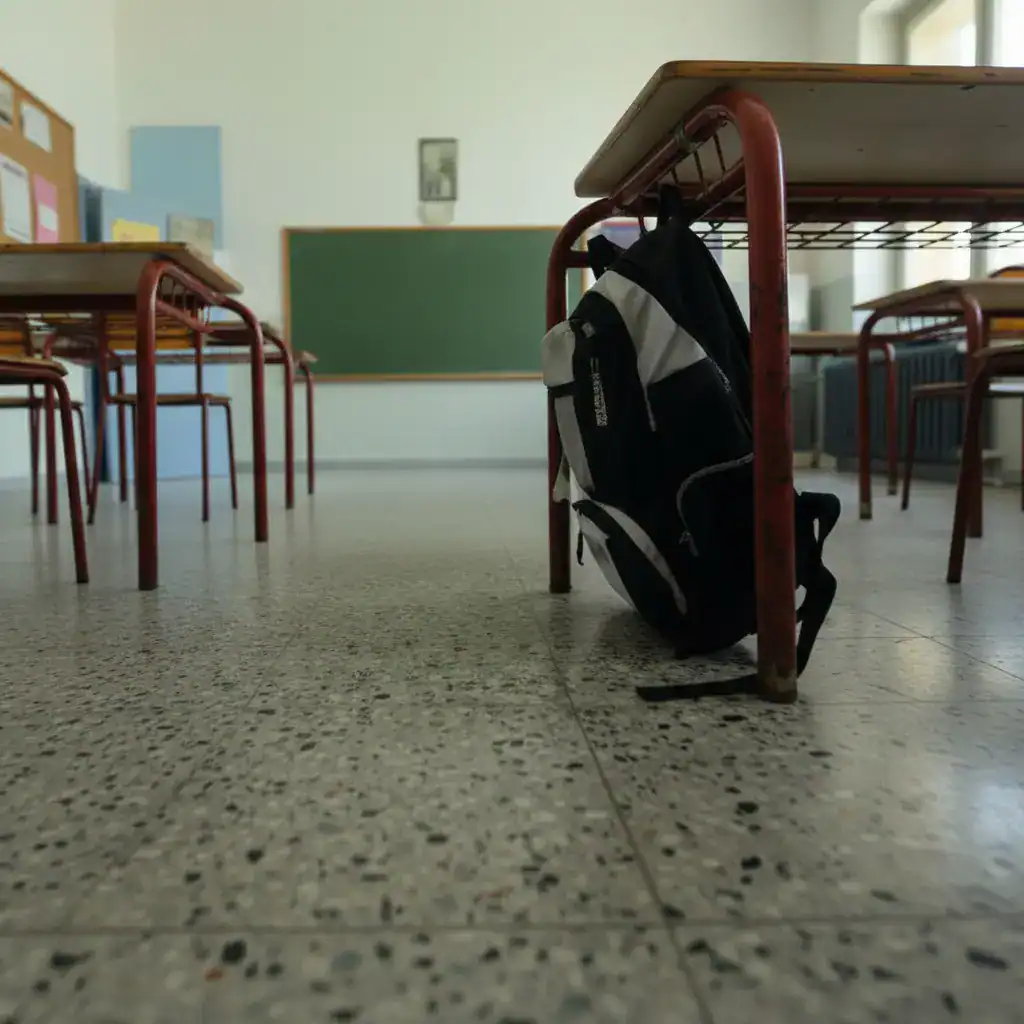
The Parents’ Association of the Central Corfu Municipality has voiced strong concerns following the decision by the Ionian Islands Regional Authority to suspend school transport from the south of the island. This measure, attributed to extensive road damage caused by recent severe weather, has created significant disruption for numerous families. Many students from South Corfu attend secondary schools in the city, including the Music School, EENEGYL, Gymnasiums, and EPALs.
A Radical Solution or a Failure to Plan?
The suspension of services, with no clear end date, exemplifies a recurring problem where authorities opt for drastic measures rather than proactive solutions. This decision, much like previous school closures, serves as an implicit admission of the abysmal state of road networks and school infrastructure across the island. Dr. Eleni Papadopoulou, a sociologist specializing in public policy from the Ionian University, notes, “This ‘cut off the hand to heal the wound’ approach is a hallmark of reactive governance. It places the burden squarely on the most vulnerable – students and their families – rather than addressing the root causes of the problem.”
The Burden of ‘Individual Responsibility’
In response to the crisis, the Directorate of Secondary Education (DDE) of Corfu has advised that “the transport of students should be arranged by their parents and guardians.” This recommendation, however, shifts the responsibility from the state mechanism to individual families. This ‘individual responsibility’ paradigm forces parents to incur additional transportation costs, miss work, and completely upend their daily schedules. “It’s an abdication of duty,” states Mr. Giorgos Karas, president of the Central Corfu Parents’ Association. “How can the state expect parents to bear the financial and logistical burden when it fails to provide a fundamental service like safe school transport? What about students who simply cannot afford alternative arrangements? Will they be penalized with absences for a problem that is not of their making?”
Systemic Failures and Economic Disparities
The issue extends beyond immediate inconvenience. The lack of reliable public transport disproportionately affects lower-income families, deepening social inequalities. A recent study by the Corfu Chamber of Commerce indicated that an average family in South Corfu spends approximately 150-200 euros per month on fuel and vehicle maintenance for school commutes, a figure that has now escalated with the need for alternative, often more costly, transport methods. This financial strain, coupled with potential loss of income due to missed work, creates a significant barrier to education for many students.
The Call for Immediate Action and Long-Term Vision
The Parents’ Association demands immediate action from the Ionian Islands Regional Authority. They call for the swift leasing of buses suitable for alternative routes to ensure the safe and timely transport of all students. “We demand modern and safe transport and school infrastructure! The safety and education of our children cannot be held hostage by circumstances!” the association declared. Professor Nikos Dimitriadis, an expert in civil engineering and infrastructure development at the National Technical University of Athens, highlights the need for a comprehensive infrastructure plan. “Corfu’s road network has been neglected for decades. The recent weather events merely exposed existing vulnerabilities. What’s needed is not just a temporary fix, but a strategic investment plan for resilient infrastructure that can withstand future challenges and support essential public services.”
Lessons from Other Regions
While Corfu grapples with this crisis, other regions in Greece and Europe offer examples of proactive approaches to school transport and infrastructure. For instance, some municipalities have implemented flexible transport solutions, such as smaller, localized bus routes or subsidized taxi services, during periods of disruption. In parts of Germany, local authorities collaborate with private transport companies to ensure uninterrupted service, even in challenging conditions, with clear contingency plans in place. These examples underscore the importance of foresight and robust planning, which appear to be lacking in the current situation in Corfu.
Political Will and Public Accountability
The ongoing crisis raises critical questions about political priorities and accountability. Is the regional authority genuinely committed to providing equitable access to education, or are these incidents indicative of a broader systemic failure to invest in public services? The lack of transparency regarding the duration of the suspension and the absence of a clear, immediate solution further erode public trust. “This isn’t just about school buses; it’s about the fundamental right to education and the state’s obligation to uphold it,” emphasizes Dr. Papadopoulou. “Without strong political will and a commitment to long-term planning, these ‘temporary’ solutions risk becoming permanent fixtures of neglect.”
Conclusion: A Crossroads for Corfu’s Future
The suspension of school bus services in South Corfu is more than an isolated incident; it is a stark reminder of the urgent need for a paradigm shift in local governance. It underscores the critical importance of resilient infrastructure, equitable access to public services, and transparent, proactive policymaking. The families of South Corfu are not merely asking for a temporary fix; they are demanding a commitment to a future where their children’s education and safety are prioritized above all else. The question remains: will the authorities rise to the challenge, or will they continue to rely on the ‘individual responsibility’ of citizens to compensate for systemic shortcomings?