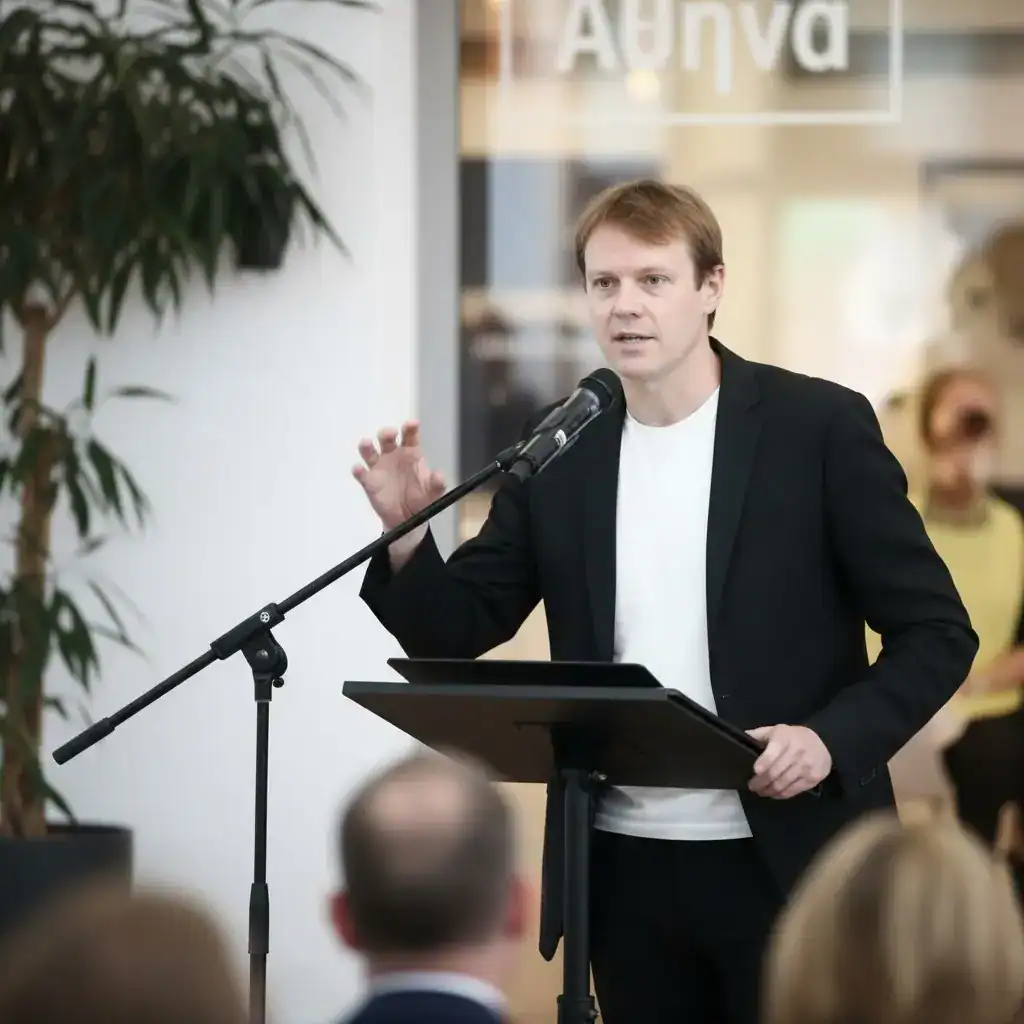
Harvard landscape architect Prof. Bas Smets, alongside his students, presented two nature-based designs to cool and revitalize Athens during an event at the Kypseli Municipal Market on Friday, 24 October. The presentation was part of the City of Athens’ Cooling Athens program and was attended by city officials, technical experts, and residents.
The two proposals
Plaka Green Canopy. A lightweight network of climbing plants would be stretched above narrow streets and along façades, creating continuous shade, lowering surface temperatures, and protecting buildings.
Varvakeios Urban Forest. A public park built over the existing parking area would replace hard surfaces with trees and permeable soil, creating a cooler microclimate and a new space for recreation.
Evidence-based approach
The Harvard research analyzes Athens’ climate from 2025 to 2100 across four scenarios (+2°C to +5°C). By activating soil, water, and vegetation, the team uses the UTCI index – a measure of perceived temperature that accounts for humidity and wind – to identify heat-stress hotspots and guide design choices.
City policy and targets
Mayor Haris Doukas said Athens is “on the front line” of the climate crisis and is investing in solutions that combine greenery, water, and technology. With the new Athens Climate Pact and participation in the EU’s 100 Climate-Neutral Cities, the city commits to an 80% emissions reduction by 2030, alongside other projects such as ASCEND pilot cities, Cooling Havens, Double Regeneration in Elaionas, and energy upgrades for schools.
What experts say
“Climate adaptation in cities is not only technical; it is also cultural and about our relationship with nature,” Prof. Smets noted, explaining that light, soil, and greenery can generate urban microclimates in areas such as Plaka and around Varvakeios.
Evangelos Marinakis, president of DAEM S.A., said the proposals show how landscape design can reduce heat: surface temperatures can drop significantly and the perceived temperature can become more tolerable, echoing outcomes of other municipal interventions this past summer.
The initiative is backed by three European projects: EUI-Cooling Havens, Net Zero Cities Pilot Programme ASCEND, and ENERTEF.
Source: https://www.tornosnews.gr/en/tornos/city-breaks/54008-proposals-for-%E2%80%9Ccooling%E2%80%9D-athens-with-expertise-from-harvard.html