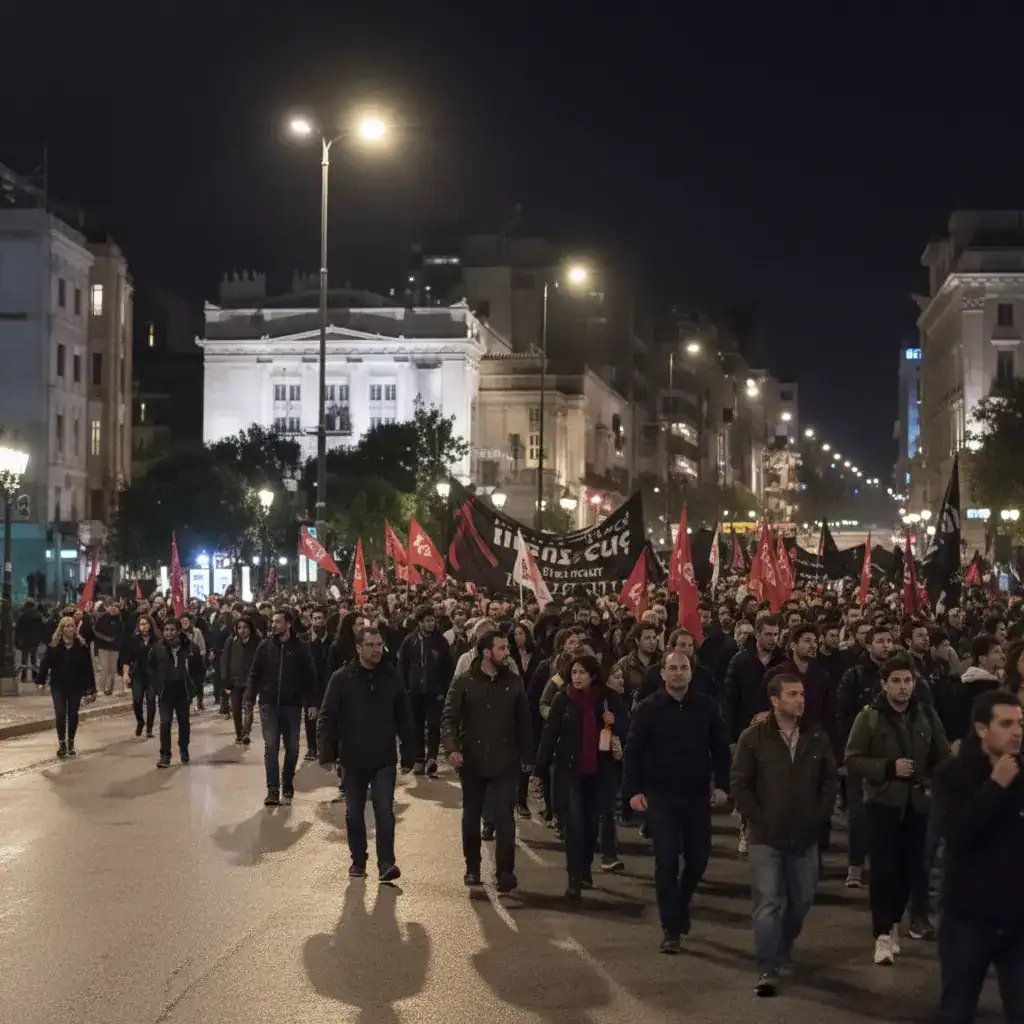
Athens, March 15 – Thousands of demonstrators marched through central Athens on Thursday and Wednesday, converging on the U.S. Embassy to protest Greece’s perceived role in a potential U.S.-Israeli assault on Iran. The protests also called for the closure of NATO bases across Greece.
Protesters Condemn Government’s Stance and Demand Neutrality
The demonstrations, organized by various peace and anti-war groups, highlighted widespread public discontent with the Greek government’s foreign policy. Participants expressed strong opposition to any Greek involvement in military actions against Iran, emphasizing the potential dangers such an involvement could pose to the country.
Sofia Theotoka, a prominent voice among the demonstrators, articulated the protesters’ sentiments. “We consider the stance of the Greek government to be despicable, because it not only puts us in danger by hosting American bases all over the country, but also has very strong ties with the state of Israel that is conducting a genocide with the United States,” Theotoka stated during the protest. She further emphasized, “For us, the government should have already issued a public statement that would clarify that they are not getting involved in this war. On the contrary, we see them making moves, either with the frigates in the Red Sea or the F-16s in Cyprus. That shows our country wants to be part of the war.”
Key Demands of the Demonstrators:
- Immediate cessation of any Greek involvement in military actions targeting Iran.
- Closure of all NATO bases located within Greece.
- A public statement from the Greek government clarifying its non-involvement in the conflict.
- Reassessment of Greece’s strong ties with Israel.
The protests were marked by a visible presence of banners and placards, many of which denounced militarism and called for peace. Chants echoed through the streets of Athens, reflecting the public’s desire for a neutral and non-interventionist foreign policy.
Concerns Over U.S. Bases and Military Deployments
A significant point of contention for the protesters was the presence of U.S. military bases in Greece. Demonstrators argued that these bases implicate Greece in foreign conflicts and make the country a potential target. The recent deployments of Greek frigates in the Red Sea and F-16s in Cyprus were cited as examples of actions that suggest Greece’s willingness to participate in military operations, contrary to the protesters’ calls for neutrality.
The demonstrations remained largely peaceful, with a strong emphasis on conveying a clear political message to both the Greek government and international actors. Local authorities monitored the protests, ensuring public safety while allowing the expression of dissent.
Impact on Public Opinion and Government Policy:
The large turnout suggests a growing segment of the Greek population is concerned about the country’s foreign policy direction. Activists hope these protests will pressure the government to reconsider its alliances and military engagements, particularly concerning the escalating tensions in the Middle East.
The event underscores a broader international movement against military interventions and calls for peaceful resolutions to geopolitical conflicts. Organizations like Pressenza, an international news agency dedicated to peace and nonviolence, have been instrumental in disseminating information and supporting such movements globally.
Further demonstrations and public discourse on Greece’s role in international conflicts are anticipated as the geopolitical situation evolves.