If you thought ‘The Aunt from Chicago’ was an exaggeration, you haven’t seen Corfu at Easter. Clay pots are smashed en masse, and the First Resurrection transforms into a deafening ritual. Those who have experienced Holy Saturday in Corfu know they have witnessed one of the most resounding ‘Christ is Risen’ declarations in the country, and remarkably, without words.
The Explosive Awakening of Easter
At 11 in the morning, when a subdued reverence still prevails across the rest of Greece, the opposite happens here: the famous ‘Botides’ are powerfully smashed in the narrow streets of the city, and Easter begins abruptly. This custom, however, did not emerge by chance. It has a history, and one that is more complex than it appears.
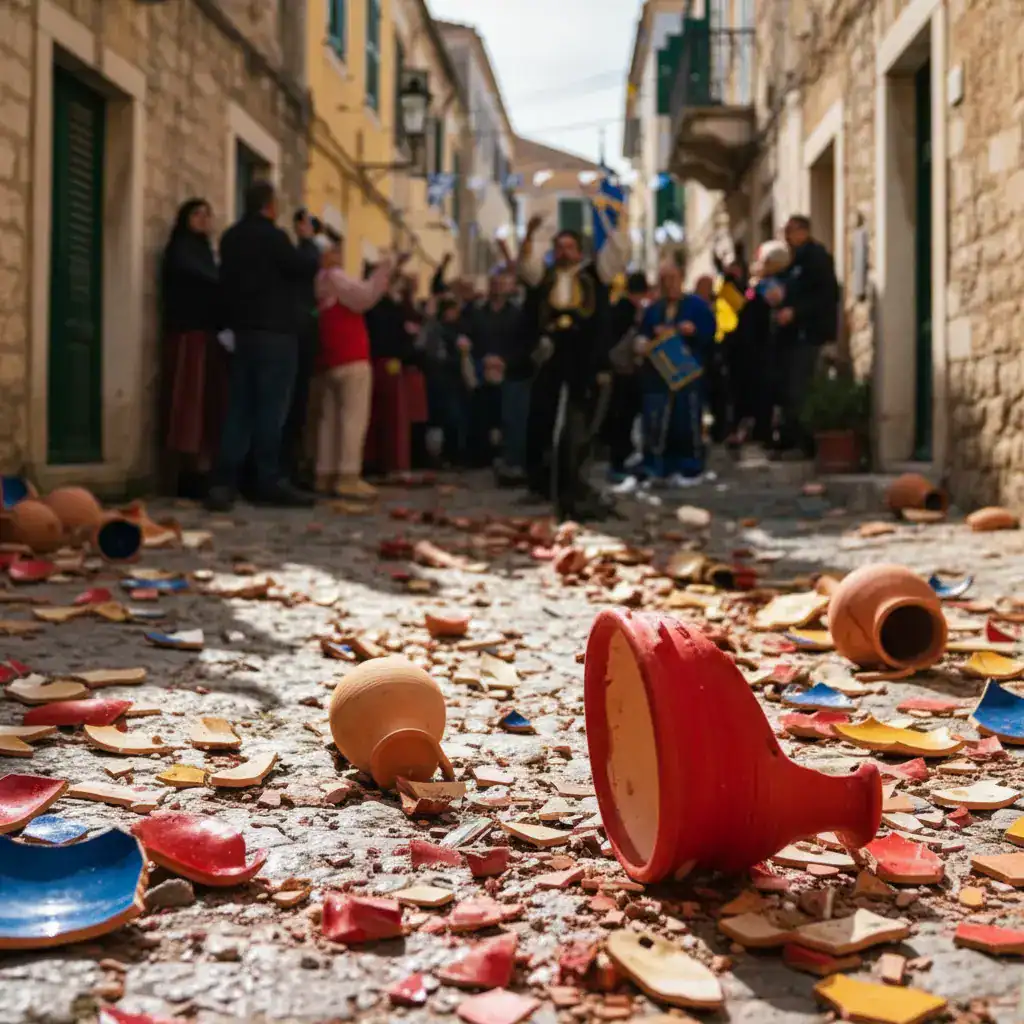
The scene is set in the Old Town, with balconies adorned with red cloths and people everywhere, all keenly aware of what is about to unfold. As soon as the Metropolitan utters ‘Anasta, o Theos…’ (Arise, O God…), the bells erupt, and from the windows, the ‘Botides’ begin to fall: large clay pots filled with water, tied with red ribbons. And as the laws of physics and gravity dictate, the pots smash with a deafening crash on the ground, scattering pieces everywhere and creating a small chaos that is, nonetheless, a cherished ritual on the island.
Where Did It Truly Begin?
The truth is, there isn’t just one explanation; there are three main versions, each with its own logic.
The Venetian Influence
The most historically documented version dates back to the Venetian rule in Corfu. The Venetians traditionally threw their old belongings out of windows on New Year’s Day to make way for new ones, in an act of symbolic renewal and good fortune. The Corfiots adopted this idea and made it their own, transferring it to Easter, the most significant celebration of Orthodoxy, and giving it new meaning.
The Earthquake of the Resurrection
According to Christian tradition, an earthquake occurred at the moment of the Resurrection. The deafening sound of the ‘Botides’ is believed to ‘re-enact’ this event, as if declaring that something cataclysmic has happened.
Roots in Antiquity
There is also a bolder and perhaps more interesting version. The custom may be linked to ancient fertility rituals, where people threw old vessels to fill new ones with the spring harvest, in a process of destroying the old to bring forth the new. In other words, before it became Christian, the custom may have been purely pagan.
What Does the Smashing Ultimately Signify?
Whichever version we embrace, the message is the same: the old breaks, evil departs, and the new arrives. It is no coincidence that people collect pieces of the broken ‘Botides’ as they are considered good luck charms, a kind of ‘tangible fortune.’
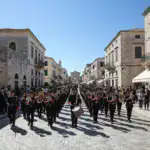
Once the smashing ends, the intensity does not wane – quite the opposite. The island’s philharmonic orchestras, such as the Corfu Philharmonic Society, the Mantzaros Philharmonic Society, and the Kapodistrias Philharmonic Union, fill the streets with marches. At the same time, in the Pinia area, the ‘mastela’ is revived: a barrel filled with water where passersby throw coins for luck, until someone jumps in to collect them, receiving the inevitable drenching. Thus, in humanity’s need to make noise when something changes within, to break something old to believe in a fresh start, Easter in Corfu does just that. Literally.
Source: clickatlife.gr