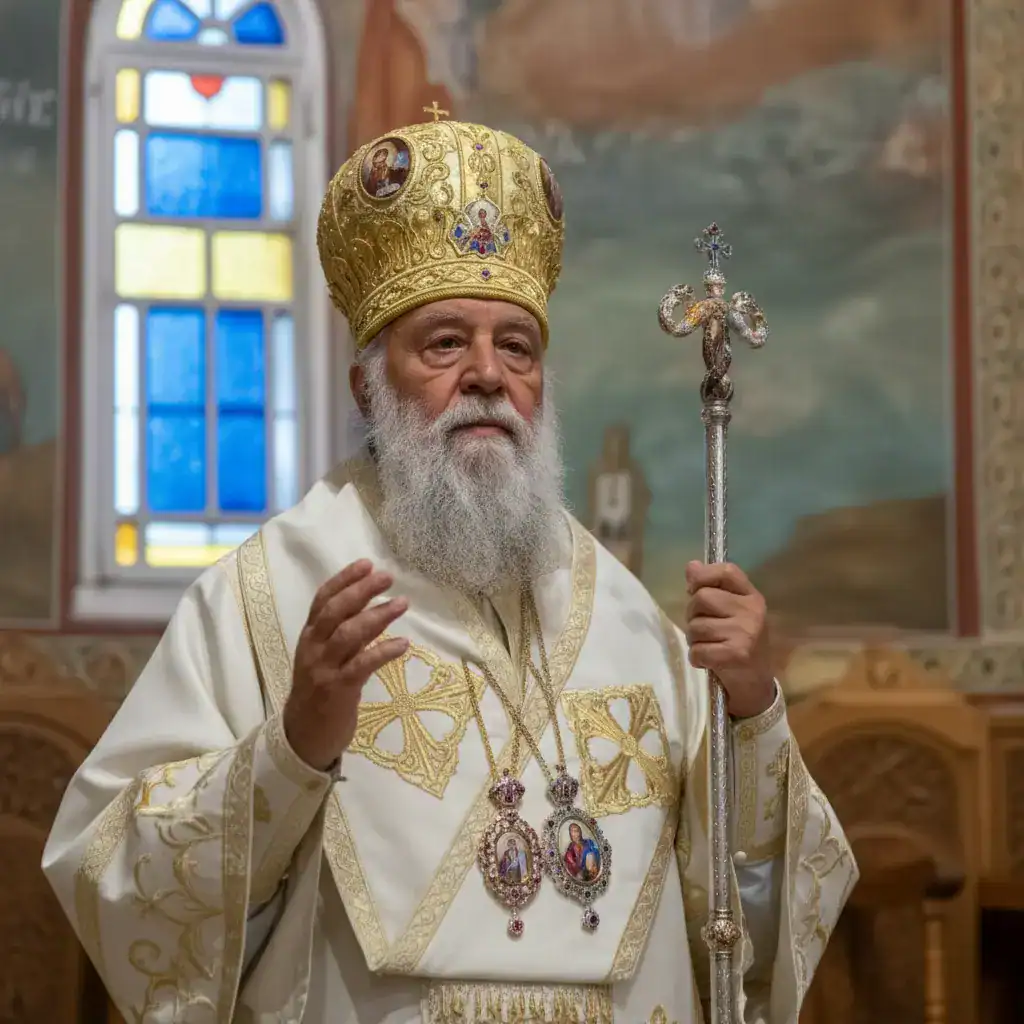
Metropolitan Nektarios of Corfu: “Child-Rearing Needs to be Founded on Faith”
Corfu, March 14, 2026 – On Friday, March 13, 2026, His Eminence Metropolitan Nektarios of Corfu, Paxoi and Diapontia Islands, officiated and chanted the Third Stasis of the Salutations to the Most Holy Theotokos at the Holy Church of Panagia Kassopitra in the town of Kassiopi in Northern Corfu. The Metropolitan delivered a homily to a large congregation, emphasizing the crucial role of faith in raising children.
The parish is served by the Archpriestly Commissioner of Northeastern Corfu, Protopresbyter Ioannis Salvanos, who tirelessly works for its spiritual edification and development.
The Wisdom of God Versus Human Philosophy
During his address, His Eminence drew inspiration from a verse of the Third Stasis of the Salutations to the Theotokos, “Rejoice, rendering philosophers unwise; rejoice, convicting technologists as irrational.” He noted that this passage by the sacred hymnographer is not only relevant to the era in which the hymn was composed but also reveals a deeper truth that touches the contemporary reality of humanity.
Metropolitan Nektarios underscored that people of all ages seek knowledge, philosophy, and science. They think, study, and develop numerous theories and ideas. However, when human thought is severed from the wisdom of God, it proves to be impoverished and inadequate. He emphatically stated that human wisdom without God ultimately leads to confusion, because, as the Apostle Paul says, “the wisdom of this world is foolishness with God.” This means that when a person does not have God in their soul, heart, and life, they prove to be “foolish,” which is manifested in their daily actions.
Addressing Modern Societal Challenges
His Eminence then addressed contemporary social realities, highlighting the confusion prevalent today in human relationships, especially in the lives of young people. With profound sorrow, he referred to phenomena of delinquency, violence, and moral disorientation, which appear even within the school environment. This fact, he stressed, indicates that society faces a deeper spiritual crisis linked to the absence of stable principles and values.
With paternal love, he particularly urged parents to support their children with spiritual foundations. He emphasized that child-rearing is not limited to education and knowledge but needs to be founded on faith, values, and a living relationship with God.
The Parable of the House on the Rock
He also used the evangelical image of building, according to which, just as a house needs strong foundations to withstand earthquakes, winds, and storms, so too does a person’s life need a strong spiritual foundation. One who builds their life on the rock of faith can endure difficulties and trials. Conversely, one who builds their life on the sand of worldly wisdom and superficial knowledge is easily prone to collapse.
Furthermore, he referenced the older generation, which managed to endure difficult historical periods of Greece, not thanks to theoretical ideologies, but thanks to faith in God and the spiritual tradition lived within the family and the Church.
Today, however, many people unfortunately attempt to found their lives either on human philosophy or on absolute trust in technology, which is constantly promoted as a means to make human life easier and more comfortable. Nevertheless, people often experience the opposite result, as they become trapped in a lifestyle that distances them from essential freedom and spiritual balance. Thus, the hymnographer’s words are confirmed: the Panagia “convicts technologists as irrational,” meaning she reveals the limits of humanity and calls people to return to the true wisdom that comes from God.
The Theotokos and the Triumph of Divine Wisdom
His Eminence also noted that another verse from the Third Stasis of the Salutations states, “Rejoice, disentangling the snares of the Athenians,” pointing out that the Panagia disentangled the centers of worldly wisdom and ancient intrigue. As he emphasized, in great spiritual centers of the Mediterranean, such as Athens, Alexandria, and Rome, where human philosophy predominated, divine wisdom, which the Theotokos also acquired, demonstrated the inadequacy of human thought and highlighted the truth of the Gospel.
A Call to Spiritual Fortitude During Lent
In conclusion, His Eminence wished all the faithful strength in the spiritual struggle of Great Lent, emphasizing that the Church particularly presents the Most Holy Theotokos during this period as a spiritual support and comfort for humanity. He urged everyone to trust their lives to God and to place their hopes in His providence and mercy.
Source: ekklisiaonline.gr