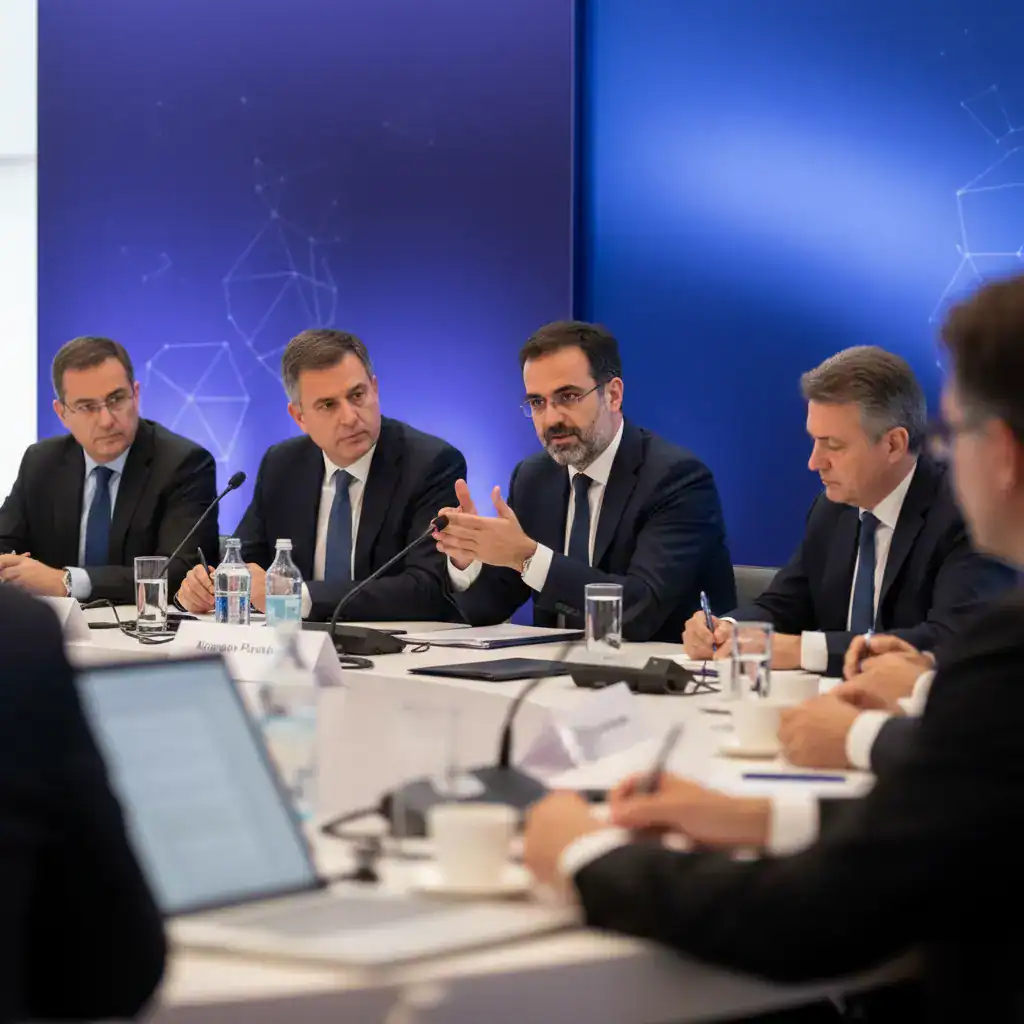
Athens, Greece – The Greek capital recently played host to a pivotal gathering of European economic minds, as the Ministry of National Economy and the Bank of Greece co-organized the Informal Meeting of the Economic and Financial Committee (EFC) at the Stavros Niarchos Foundation Cultural Center (SNFCC). The event, held on April 28, 2026, saw Kyriakos Pierrakakis, Minister of National Economy and President of the Eurogroup, deliver a compelling opening address, underscoring Greece’s economic resurgence and advocating for a more actionable European strategy.
Greece’s Economic Turnaround: A Blueprint for Europe?
Pierrakakis highlighted that the core of the government’s strategy has been the implementation of long-overdue reforms, some pending for decades. This resolute approach has yielded tangible results, including a primary surplus of 4.9% and a significant reduction in unemployment figures. These achievements, he argued, are not merely statistical triumphs but represent a restoration of “social capital” and public trust, a crucial element often overlooked in economic discourse.
The Minister’s remarks served as a powerful validation of Greece’s policy mix, which has gained societal acceptance despite the sacrifices made during previous years of austerity. For regions like Rodopi and the wider periphery, Pierrakakis’s emphasis on “implementation” must translate into concrete benefits in daily life, fostering technological convergence and boosting investment, free from the inertia of the past.
A Call for Cohesive European Action
Beyond national successes, Pierrakakis urgently raised the issue of a fragmented European strategy concerning technology and artificial intelligence. He challenged his European counterparts to move beyond mere strategic discussions and embrace “implementation” as the guiding principle to navigate the unpredictable international environment. This call reflects a growing concern among European leaders about the continent’s competitive standing in the global tech landscape.
The EFC meeting in Athens, therefore, was not just a platform for showcasing Greece’s economic recovery but also a crucial forum for addressing broader European challenges. The discussions are expected to shape future economic policies across the continent, with a renewed focus on practical execution and tangible outcomes.
The Broader Implications: Trust, Technology, and the Future of Europe
The symbolism of Pierrakakis’s speech at the SNFCC extends beyond mere numbers. It speaks to the broader narrative of trust and the capacity of nations to overcome adversity through determined action. His assertion that Greece has achieved a policy mix acceptable to society, despite past hardships, is a powerful message of vindication for the country and a reminder of the importance of resilience.
As Europe grapples with complex geopolitical and economic shifts, the need for a unified and actionable strategy in critical sectors like technology and AI becomes paramount. The Athenian meeting served as a crucial reminder that while strategy is essential, it is ultimately implementation that drives progress and secures a prosperous future for all European citizens.