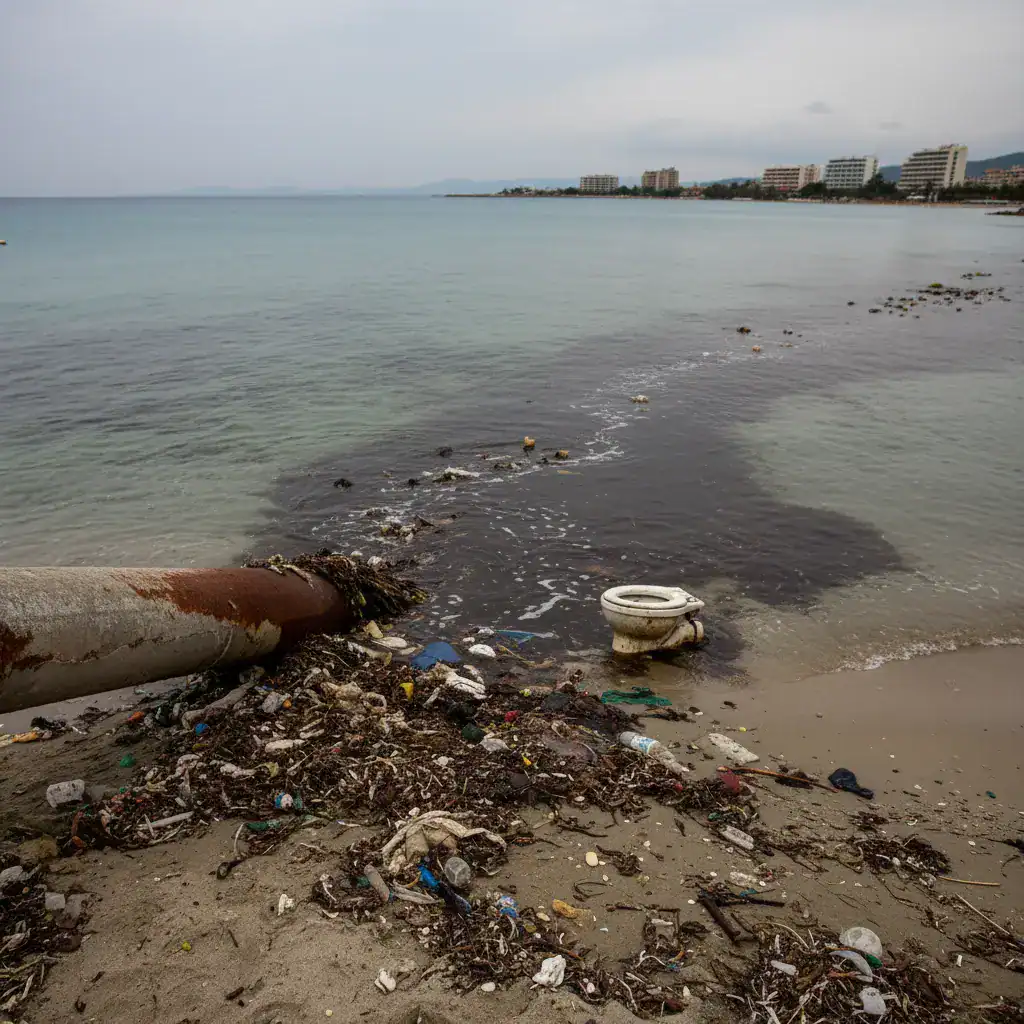
Kontokali, Corfu – The repeated sewage overflows in Kontokali have plunged the area into what residents describe as a “third world situation,” with raw sewage regularly flooding streets and posing a significant threat to public health, homes, and businesses. The situation has sparked justified outrage among locals, who point to systemic failures rather than isolated incidents.
A System on the Brink: Chronic Neglect and Underfunding
The persistent nature of the problem, with residents reporting overflows “every now and then,” indicates that this is not merely a temporary malfunction. Instead, it highlights a sewage network operating at its limits, lacking essential modernization and adequate maintenance. The community lives in constant fear that a heavy rain, a minor breakdown, or an overload will once again lead to sewage spilling into their streets or even their homes.
The responsibilities for this dire situation are clear and lie with successive administrations. Chronic underfunding of critical infrastructure, understaffing of public services and the Corfu Water and Sewerage Company (DEYAK), privatization efforts, and continuous delays in maintenance and network upgrades have directly led to these deplorable conditions.
Selective Incompetence: A State Divided
This crisis once again exposes a state and administration that appears selectively “incompetent.” When it comes to serving major business interests, subsidizing corporations, or pushing through projects that benefit the profitability of a select few, the state legislates, finds resources, personnel, and acts with speed. However, when it concerns fundamental public needs such as safe and modern water and sewage networks, public health protection, and secure infrastructure, the familiar excuses of “lack of resources,” “bureaucracy,” and “jurisdictional issues” prevail.
Urgent Demands from Residents
The situation in Kontokali demands immediate answers. The Popular Rally of Central Corfu (Laiki Syspeirosi Kentrikis Kerkyras) calls on residents to demand the following from the responsible bodies, the municipal authority, and DEYAK:
- Immediate, Public, and Accountable Information: A clear explanation of the exact causes of the problem.
- Preventive Measures: All necessary steps to prevent the recurrence of such incidents.
- Clear Timeline: A definite schedule for immediate and permanent interventions to definitively resolve the issue.
- Adequate Funding and Staffing: All measures to secure the necessary state funding and permanent staffing for DEYAK and municipal services.
The crisis in Kontokali is a stark reminder of the consequences of neglecting public infrastructure and prioritizing private interests over the well-being of citizens. It underscores the urgent need for a shift in policy, focusing on sustainable development and robust public services to ensure a healthy and safe environment for all residents.
The question remains: will the authorities finally act decisively, or will Kontokali continue to suffer from this “third world situation”?