Athens, one of Europe’s most climate-vulnerable cities, is working with Harvard University on an ambitious plan to cool the Greek capital using innovative green infrastructure. The proposals were unveiled on Tuesday at a City of Athens event held under the “Cooling Athens” program.
Harvard Expert Leads Climate Adaptation Initiative
The project is led by Bas Smets, a renowned landscape architect and professor at Harvard University’s Graduate School of Design, best known for his redesign of the public space around Notre-Dame Cathedral in Paris. Smets and his team have developed bold proposals to help Athens adapt to rising temperatures projected through the end of this century.
At the presentation, Athens Mayor Haris Doukas emphasized how serious the challenge facing the city is. “Athens stands on the frontline of the climate crisis,” Doukas said. “With limited green space, we are investing in innovative solutions that lower temperatures and improve residents’ quality of life.”
Athens Faces Severe Climate Vulnerability
The Greek capital has been identified as one of the European cities most exposed to the effects of climate change, with limited green space and a strong urban heat island effect. The city is already experiencing higher temperatures, longer heat waves, and increased pressure on water resources.
Mayor Doukas highlighted several ongoing initiatives under the “Cooling Athens” umbrella, including the ASCEND pilot cities initiative, the “Cooling Havens” scheme, and urban renewal projects in the Elaionas district. These projects bring together greenery, water features, and technology to create cooler microclimates across the city.
Athens has committed to cutting emissions by 80 percent by 2030 as part of the European Union’s “100 Climate-Neutral Cities” network. “Our partnership with Harvard and Professor Smets paves the way for a cooler, more resilient city,” Doukas added.
Studying Four Climate Scenarios Through 2100
Smets described the challenge of adapting cities to climate change as “not only a technical challenge, but a cultural one.” His team has conducted extensive research on Athens’ environmental conditions, studying projections from 2025 to 2100 under four warming scenarios, from a 2-degree Celsius increase to a 5-degree Celsius rise in average temperatures.
“In Athens, light, soil, and greenery can work together to reshape the public area and create new microclimates,” Smets explained. The approach emphasizes what he calls “nature as technology” – using natural systems to solve urban climate problems rather than relying solely on mechanical cooling solutions.
Two Major Green Proposals for Central Athens
The Harvard team unveiled two flagship proposals focused on nature-based solutions that bring to life ground surfaces, water systems, and vegetation:
Plaka Green Canopy
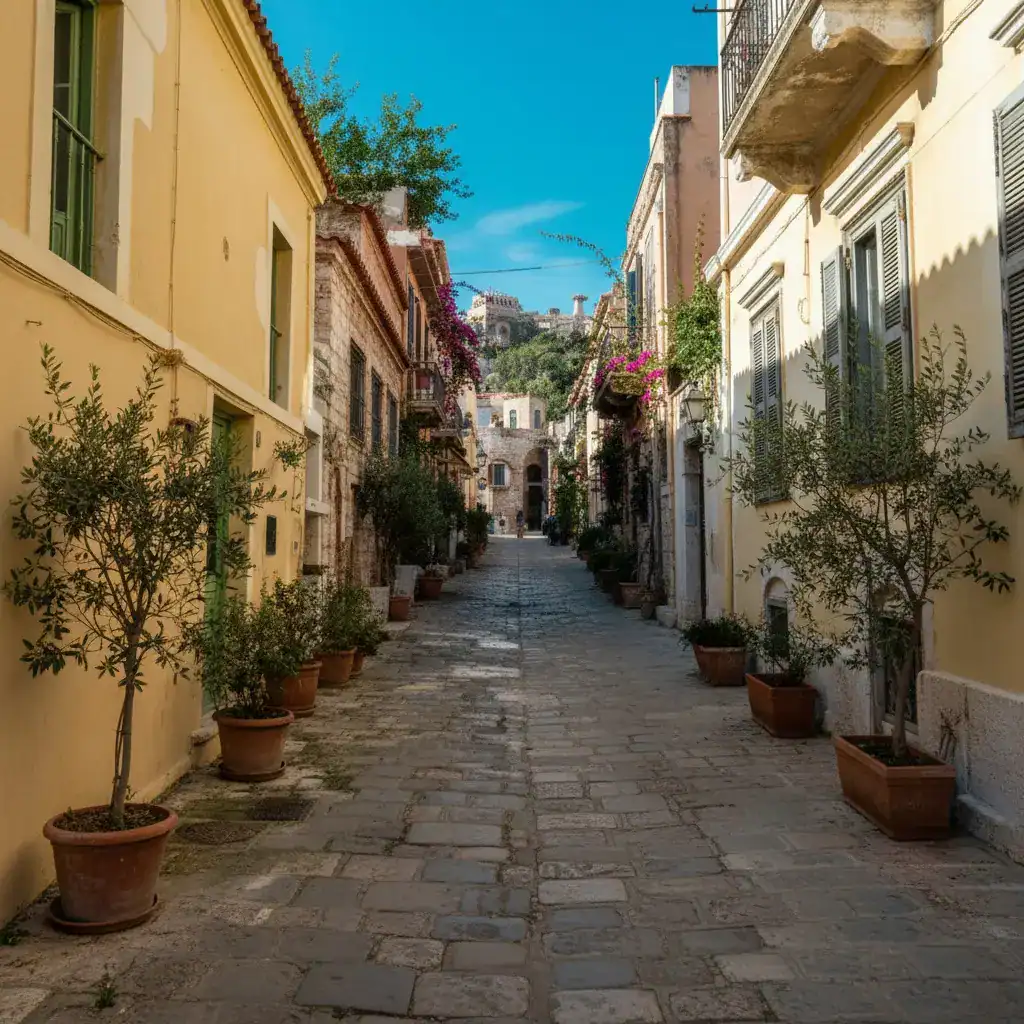
The first proposal envisions a network of climbing plants weaving through the narrow lanes of Plaka, Athens’ historic neighborhood beneath the Acropolis. The green canopy would provide natural shade for pedestrians while cooling building facades through evapotranspiration. The climbing vegetation would be strategically planted to preserve views of historic architecture while creating comfortable microclimates in streets that currently experience strong heat reflection from stone surfaces.
Varvakeios Urban Forest
The second major proposal would create a new park above the existing Varvakeios market parking area in central Athens. The project would transform hard, heat-absorbing surfaces into an “urban forest” – a lush public space designed for rest, recreation, and play. The elevated park would serve as a vital cooling hub for the densely built city center, where green space is severely limited.
Both proposals emphasize using native Mediterranean vegetation suited to local conditions, requiring minimal irrigation while delivering maximum cooling benefits through shade and evapotranspiration.
Nature-Based Solutions as Climate Technology
The Harvard proposals represent a growing trend in urban planning that treats natural systems as infrastructure. Instead of relying on air conditioning or mechanical cooling systems that consume energy and contribute to the heat island effect, the green interventions would passively lower temperatures while improving air quality, absorbing stormwater, and creating habitat for urban wildlife.
The approach also addresses the cultural dimension of climate adaptation. Smets emphasized that successful climate interventions must respect and enhance the character of historic cities like Athens rather than imposing generic solutions. The proposals are designed to work with Athens’ unique urban fabric, Mediterranean climate, and architectural heritage.
Part of Broader Climate Resilience Strategy
The Harvard collaboration is part of Athens’ comprehensive strategy to strengthen climate resilience. The city has already implemented several cooling initiatives, including the creation of “Cooling Havens” – air-conditioned public spaces where residents can find relief during extreme heat events.
The ASCEND (Accelerating Sustainable and Clean Energy Neighbourhoods and Districts) pilot cities initiative brings together European cities to test innovative approaches to energy efficiency and climate adaptation at the neighborhood scale. Athens is using the program to trial new technologies and design strategies before scaling them citywide.
Urban renewal in Elaionas, a former industrial area west of central Athens, incorporates extensive green infrastructure, water features, and sustainable design principles to create a new model for climate-adapted neighborhoods.
Urgent Action Required as Temperatures Rise
The urgency of Athens’ climate challenge is underscored by recent weather patterns. Greece has experienced increasingly severe heat waves, with temperatures in Athens regularly exceeding 40 degrees Celsius in summer. The city’s dense urban fabric, limited vegetation, and abundance of heat-absorbing materials like concrete and asphalt exacerbate the problem.
Water scarcity is also becoming a serious concern. The Mornos Reservoir, Athens’ main water supply, recently hit a 15-year low amid severe drought conditions, with water levels dropping nearly 45 percent from the previous year. This raises urgent questions about the feasibility of maintaining green infrastructure during prolonged dry periods – a challenge the Harvard team is addressing through careful plant selection and water-efficient design strategies.
Implementation Timeline Not Yet Announced
City officials have not yet announced a timeline for implementing the Harvard proposals or disclosed the budget the projects will require. The transformation of central Athens through large-scale green infrastructure would require significant investment, coordination with property owners, and potentially disruptive construction in historic areas.
However, the presentation of detailed proposals from a prestigious international institution signals Athens’ commitment to serious climate action. The collaboration with Harvard also positions Athens as a testing ground for climate adaptation strategies that could be applied to other Mediterranean cities facing similar challenges.
International Recognition for Climate Leadership
Athens’ inclusion in the EU’s “100 Climate-Neutral Cities” network reflects growing international recognition of the city’s climate leadership. The network supports cities committed to achieving climate neutrality by 2030 – two decades ahead of the EU’s overall target.
The ambitious 80 percent emissions reduction target will require transformation across multiple sectors, including transportation, energy, buildings, and waste management. Green infrastructure projects like those proposed by Harvard contribute to this goal while delivering immediate benefits in terms of heat reduction and quality of life improvements.
The collaboration between Athens and Harvard represents a model for how cities can partner with leading research institutions to develop evidence-based, innovative solutions to the climate crisis. As temperatures continue to rise globally, the lessons learned in Athens may provide valuable insights for other cities seeking to adapt to a warming world.
Source: https://www.tovima.com/climate/harvards-green-blueprint-to-cool-athens/