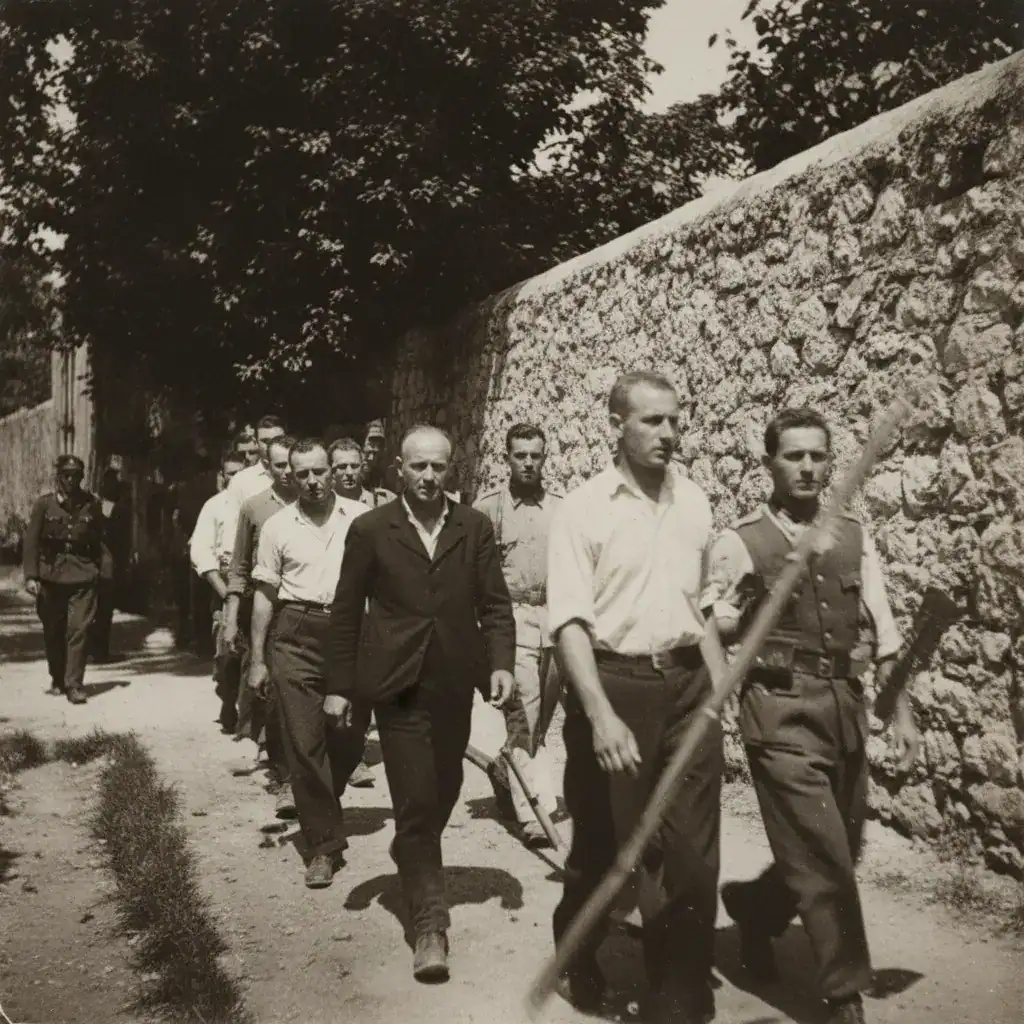
Athens, March 7 – The Greek Culture Ministry has unveiled a newly acquired archive of World War II photographs, including rare images documenting the execution of 200 Greek communist prisoners by Nazi forces in Athens in 1944. The announcement was made today, following the purchase of the collection from a private collector.
Heuer Collection: A Glimpse into Nazi Occupation
Known as the Heuer Collection, the archive comprises 262 photographs, 16 documents, and four historical banknotes from the period of the German occupation of Greece. Thirteen of these photographs are directly linked to the execution at the Kaisariani firing range on May 1, 1944. These prisoners were executed by German occupation forces in retaliation for the killing of a German general by Greek resistance fighters, an event that became one of the most widely known reprisals during the Nazi occupation of Greece.
The images were captured by Hermann Heuer, a German Wehrmacht soldier stationed in Greece between 1943 and 1944. The archive came to light last month when a Belgian collector attempted to sell the material on an online auction platform. The Greek Culture Ministry intervened, purchasing the collection for €100,000 and transferring its ownership to the Greek state. This acquisition followed a thorough authentication process conducted by a team of experts who traveled to Belgium to assess the material’s historical significance.
Prime Minister Highlights Historical Importance
Greek Prime Minister Kyriakos Mitsotakis addressed the acquisition in a social media post, emphasizing that Greece now possesses the photographic archive documenting the Kaisariani execution. He described the material as crucial evidence of the Nazi occupation and the Greek people’s resistance during World War II. Mitsotakis commended the culture ministry for its swift action in securing the archive before it entered the international market. He also stated that he had personally reviewed the material, noting that the message of those executed at Kaisariani is intrinsically linked to the defense of a free and democratic Greece. The Prime Minister suggested that copies of the photographs could be provided to the families of the executed, ensuring their integration into the country’s collective historical memory.
National Photographic Archive to be Established
During the presentation of the collection, the culture ministry also announced the creation of a National Photographic Archive. This new library will be a distinct section within the National Archive of Monuments and will be integrated into the culture ministry’s existing heritage databases. The ministry stated that the archive will include photographic collections related to modern Greek history, such as photographs from the former royal estate of Tatoi, archives documenting refugee movements during the 20th century, and photographic material from the historical archive of the Archaeological Service.
Digitization and Historical Research Planned
The culture ministry has officially classified the photographs as historical monuments. Their management will involve conservation, protection, scientific documentation, and public presentation. The initial phase focuses on the preservation of the material and the digitization of the entire photographic archive. Digital copies may subsequently be made available to researchers and institutions under specific conditions. Historical research on the collection has been assigned to the National Hellenic Research Foundation through a program agreement with the government. This research aims to identify individuals, locations, and dates depicted in the photographs, placing the material within the broader historical context of the German occupation of Greece.
Archive Offers Insights into Nazi Presence
Researchers believe the archive provides invaluable material for studying the presence of German forces in Greece during World War II. The photographs illustrate both aspects of military life and scenes connected to the violence of the occupation. Of particular interest is the fact that the photographs appear to be part of a personal album maintained by a Wehrmacht soldier. Some images combine scenes of military activity with everyday moments from soldiers’ lives. According to researchers, the material also reflects the wider propaganda system of Nazi Germany, which encouraged soldiers and propaganda units to document military operations and daily life through photography during the war.