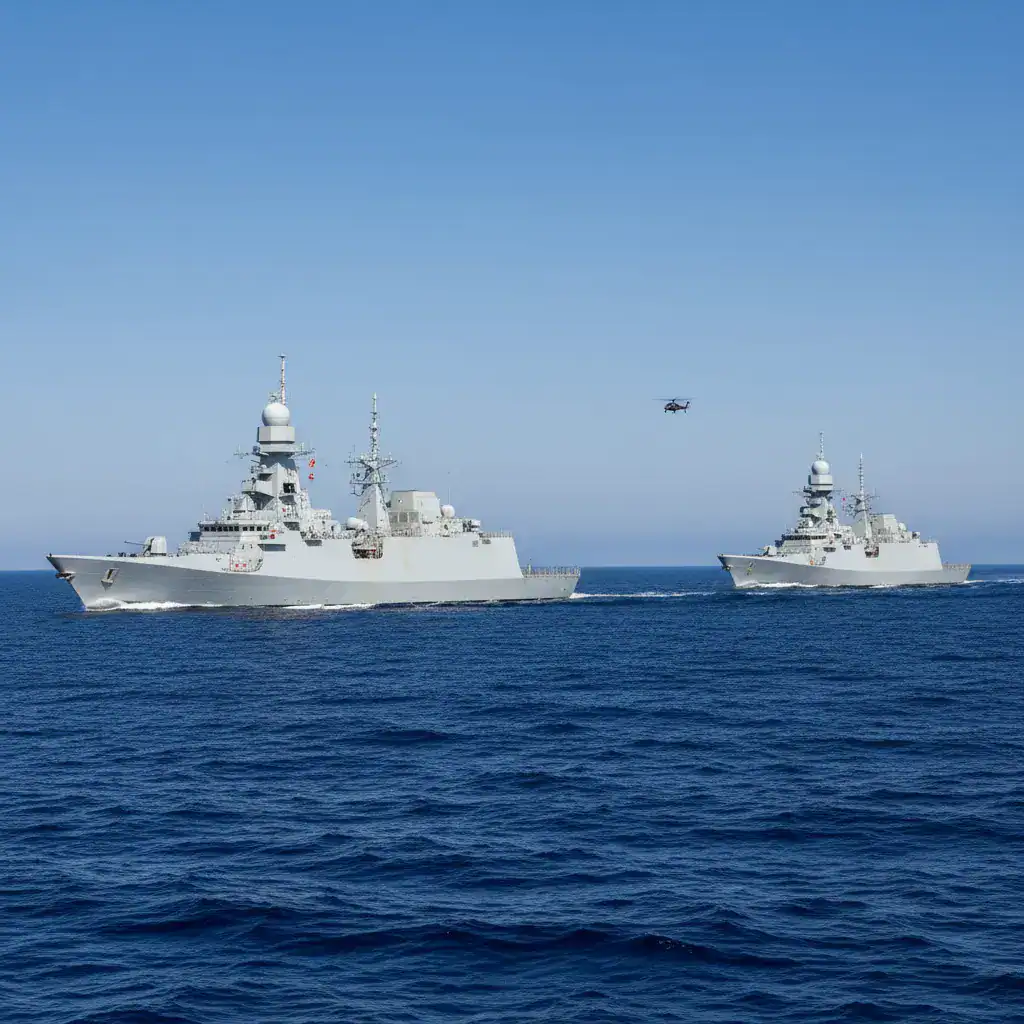
ATHENS, Greece – Greece is set to acquire two Italian Bergamini frigates as part of a significant effort to reinforce its naval capabilities, Prime Minister Kyriakos Mitsotakis announced on May 24. This strategic decision underscores the NATO member’s commitment to ramping up defense spending and modernizing its armed forces in response to evolving geopolitical challenges.
Naval Reinforcement and Modernization Initiatives
Beyond the acquisition of the two new frigates, Greece’s foreign affairs and defense council has approved a comprehensive modernization program for the country’s existing German-made ThyssenKrupp MEKO frigates. Additionally, the council sanctioned an update to the armed forces’ encryption software, ensuring enhanced communication security and operational efficiency. These purchases and upgrades require formal approval from the Greek parliament, where Prime Minister Mitsotakis’s New Democracy party holds an absolute majority, indicating a high likelihood of their swift implementation.
The decision to bolster Greece’s military capabilities comes amidst growing security concerns in the Middle East, a region geographically proximate to Greece across the Mediterranean. Athens has historically been a significant client of both US and European arms manufacturers, reflecting its long-standing commitment to maintaining a robust defense posture.
Greece’s Commitment to Defense Spending
Greece stands out among NATO members for its substantial defense expenditures. It is one of only four NATO countries that allocate more than three percent of their Gross Domestic Product (GDP) to defense, trailing only Poland, Estonia, and Latvia. This consistent investment highlights Greece’s dedication to collective security and its role within the alliance.
Recently, Greece renewed its defense cooperation agreement with France, further solidifying bilateral ties across multiple sectors. The updated agreement notably includes a mutual defense assistance clause, a critical provision under which both nations commit to supporting each other in the event of a threat to their sovereignty. This clause underscores a deepening strategic partnership aimed at fostering regional stability and mutual defense.
Ambitious Defense Overhaul: “Achilles’s Shield”
In a bold move, Greece has announced plans to spend a total of 25 billion euros (approximately $30 billion) through 2036, a strategy Prime Minister Mitsotakis has characterized as the “most drastic” defense overhaul in modern Greek history. This ambitious initiative is designed to address rapidly changing geopolitical dynamics and evolving transatlantic ties, ensuring Greece’s preparedness for future security challenges.
A key component of this overhaul is the development of a new anti-missile, anti-aircraft, and anti-drone defensive dome, aptly named “Achilles’s Shield.” This advanced defensive system is intended to provide comprehensive protection against a wide array of aerial threats, significantly enhancing Greece’s air defense capabilities.
Impact on Regional Security and Alliances
The acquisition of new frigates and the broader defense modernization efforts are expected to have a notable impact on regional security dynamics. By strengthening its naval presence and overall military might, Greece aims to project stability and deter potential aggression in the Eastern Mediterranean. These actions also reinforce Greece’s position as a reliable and capable ally within NATO and a key partner for European security.
The emphasis on advanced technology, such as the encryption software updates and the