Greece in 2025: A Year of Challenges and Milestones
The year 2025 proved to be a period of intense activity for Greece, marked by a confluence of natural phenomena, social demands, political developments, and international engagements. This dynamic landscape underscored both the nation’s vulnerabilities and its inherent strengths, with Greek news unfolding at a brisk pace, encompassing everything from seismic events in Santorini and a looming water crisis to pivotal political decisions and poignant memorial rallies.
Santorini Earthquakes: Months of Concern and Scientific Vigilance
Intense seismic activity around Santorini and the broader Cycladic sea region emerged as one of the year’s primary concerns. Beginning in early February, daily micro-earthquakes, often numbering in the hundreds, caused considerable anxiety among residents, tourism professionals, and scientific bodies. The focus extended beyond the mere intensity of the tremors to a debate over whether they were purely tectonic or linked to the area’s volcanic activity. Seismologists and volcanologists closely monitored the situation, leading to the temporary closure of schools. While no significant damage occurred, the events reiterated the critical need for continuous scientific oversight and updated civil protection plans, particularly in regions vital for tourism.
Water Scarcity: A National Crisis
Water scarcity escalated into a major national issue in 2025. Reduced reservoir levels, low rainfall, and increased demand in urban and tourist areas brought water management to the forefront of the political and social agenda. Attica and several Aegean islands faced alarm, prompting authorities to implement consumption restrictions, public awareness campaigns, and announcements of future infrastructure projects. Discussions on sustainable water management, desalination, and water recycling gained renewed urgency, with experts warning that these phenomena are now structural, not transient. Attica, in particular, confronted a severe water crisis, as water levels in its two main reservoirs, Mornos and Yliki, plummeted to a decade low. Mornos lost over 40% of its reserves in two years, and Yliki’s volume decreased by 40% in just the last year, highlighting the rapid deterioration of hydrological conditions.
OPEKEPE Scandal and Farmer Protests: Agriculture in Crisis
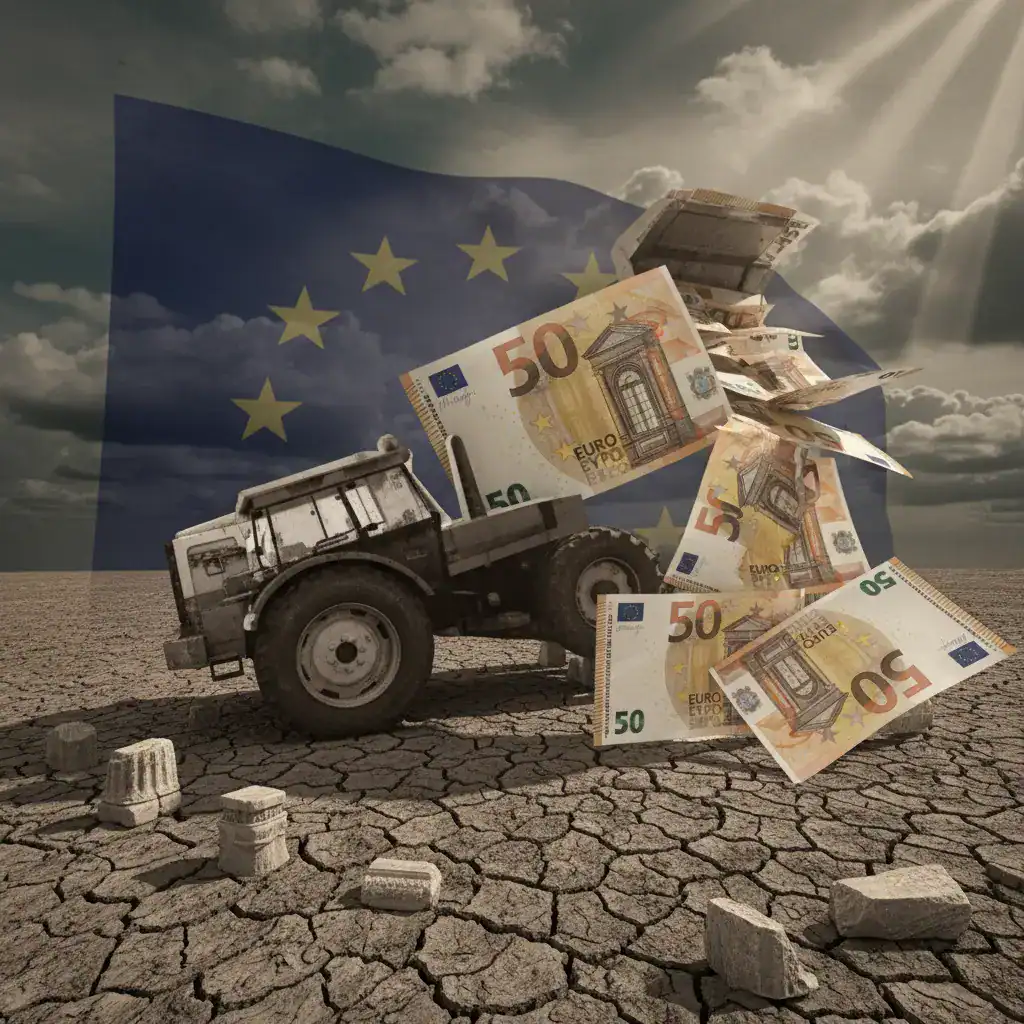
The OPEKEPE scandal became one of 2025’s most politically and socially charged issues. Revelations of mismanagement and lack of transparency in agricultural subsidies sparked strong reactions from both political circles and the farming community. Parliamentary investigative committee meetings on the scandal drew public attention, with illegal subsidies granted through OPEKEPE expected to remain a significant topic in 2026. Farmers, already burdened by rising production costs and climate change impacts, took to the streets, setting up roadblocks at key national points. Clashes with police forces occurred in some instances, notably in Crete, Chania, Heraklion, at the ‘Green Lights’ of Thessaloniki, and on the Rio-Antirrio Bridge.
Energy and Zappeion: Geopolitical Agreements
Energy agreements announced at the Zappeion marked a pivotal moment in the year. Greece aimed to strengthen its role as an energy hub in the Eastern Mediterranean and the Balkans, investing in interconnections, renewable energy sources, and strategic partnerships. These announcements carried strong political symbolism, linking to Europe’s energy security and reducing dependence on unstable markets.
Frigate ‘Kimon’: Strengthening Defense
The integration of the frigate ‘Kimon’ into the fleet represented a significant milestone for national defense. The first of four FDI frigates for the Hellenic Navy raised the Greek flag and, after its weapon systems are installed, is expected to sail to the Salamis Naval Base by mid-January 2026. The vessel already features 32 launchers for Aster 30 anti-aircraft missiles in its FDI HN configuration and will also carry the RAM system for close-range protection, a configuration that differentiates Greek frigates from those of the French Navy.
Kyriakos Pierrakakis Heads Eurogroup
Greece’s Minister of National Economy and Finance, Kyriakos Pierrakakis, was elected President of the Eurogroup for the next two and a half years. In the vote held on December 11, 2025, the Greek minister competed against his Belgian counterpart, Vincent Van Peteghem, becoming the fifth permanent head of the Eurogroup. Prime Minister Kyriakos Mitsotakis congratulated Pierrakakis, calling it ‘a day of pride for the country, the government, and all citizens.’ Many international media outlets commented, ‘Ten years after its near exit from the Eurozone, Greece took its revenge.’
Minimum Wage Increase
The increase in the minimum wage was one of the most immediate news items affecting the daily lives of hundreds of thousands of workers. The government presented the measure as a social intervention to support citizens, while employers expressed concerns about the cost.
New U.S. Ambassador to Athens, Kimberly Guilfoyle
Kimberly Guilfoyle’s appointment as head of the U.S. diplomatic mission in Greece was one of the most discussed topics with both international and ‘socialite’ dimensions. Guilfoyle’s personality, her connection to the Trump family, and the political implications of her selection generated intense interest in Greek media. The topic navigated between serious analysis of diplomatic messages and scrutiny of the personal and public image of a figure combining political influence and prominence.
The Large Rally for Tempi
The anniversary of the Tempi tragedy was marked by a massive rally, with thousands of citizens demanding justice, safety, and accountability. The event demonstrated that the wound remains open and that society demands substantive changes.
A Greek Scientist President of CERN
The elevation of a Greek scientist to a top position at CERN became a source of pride and optimism. Professor Konstantinos Fountas, a distinguished Professor of Physics at the University of Ioannina and Greece’s scientific representative at CERN, became the new president of CERN’s council, based in Geneva. His term began in 2025 and will conclude in 2027, making him the first Greek to lead Europe’s largest research laboratory for nuclear and particle physics.
Source: corfutvnews.gr