Greece and US Co-Host EMGF Ministerial Meeting in Athens
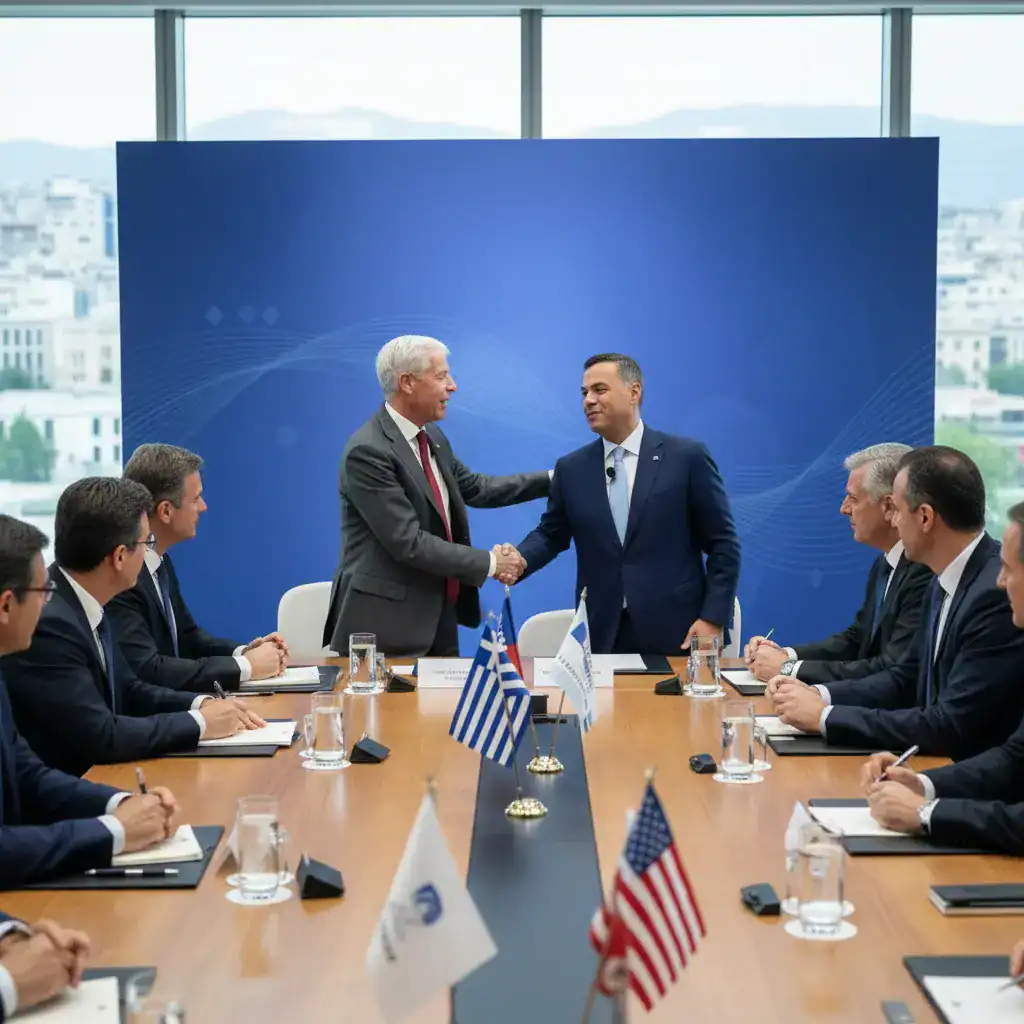
Athens, June 8 – Greece, in collaboration with the United States, convened a significant ministerial meeting of the East Mediterranean Gas Forum (EMGF) yesterday, reaffirming Athens’ pivotal role in regional energy developments. The meeting, co-hosted by Greece’s Minister of Environment and Energy, Stavros Papastavrou, and US Secretary of Energy, Chris Wright, marked the first ministerial-level session of the Forum in nearly three years.
Key Discussions on Energy Security and Regional Cooperation
The discussions at the EMGF ministerial meeting focused on critical issues such as energy security, the implementation of vital infrastructure projects, the attraction of large-scale investment, and the strengthening of regional cooperation across the Eastern Mediterranean. Sources within the Greek Ministry of Environment and Energy emphasized that Greece’s presidency of this meeting underscores its leading position in the region, particularly at a time of evolving energy and geopolitical landscapes.
The Forum aims to foster a clear framework for regional energy cooperation, actively discouraging unilateral or destabilizing actions. Key areas of discussion included the long-term strategic evolution of the EMGF beyond natural gas, as well as enhancing the Eastern Mediterranean’s strategic position within the broader international and European energy architecture.
EMGF: A Platform for Dialogue and Joint Initiatives
The East Mediterranean Gas Forum (EMGF), established in January 2020 and headquartered in Cairo, Egypt, is an intergovernmental organization dedicated to promoting dialogue, cooperation, and joint energy initiatives. It officially gained international organization status in 2021. Its full members include Greece, Cyprus, Egypt, Israel, Italy, Jordan, Palestine, and France, which joined in 2023. The United States, the European Union, and the World Bank participate as observers.
The EMGF serves as the sole institutionalized multilateral energy platform in the Eastern Mediterranean, bringing together producer, transit, and consumer countries. Its importance has grown significantly as Europe seeks to diversify its energy sources and supply routes, positioning the Eastern Mediterranean as a crucial hub for energy development and interconnection.
Greece’s Strategic Role in the Eastern Mediterranean
As a founding member, Greece actively contributes to shaping the energy architecture of the wider region. Its participation aligns with several national strategic priorities, including:
- Positioning Greece as an energy gateway and connectivity hub between the Eastern Mediterranean, South-Eastern Europe, and the European Union.
- Promoting strategic infrastructure and interconnection projects, such as the Vertical Gas Corridor, electricity interconnections, and LNG infrastructure.
- Enhancing energy security and diversifying supply sources and routes for both Greece and Europe.
- Attracting investment in energy, infrastructure, and innovation.
- Promoting regional stability and cooperation through joint energy initiatives.
Additional Engagements and Future Outlook
Minister Papastavrou and Secretary Wright were also scheduled to attend the annual Leaders Council Dinner hosted by the Atlantic Council. Furthermore, Minister Papastavrou is slated to hold a bilateral meeting with Egypt’s Minister of Petroleum and Mineral Resources, Karim Badawy, and participate in the Atlantic Council’s annual Global Energy Forum, as well as the East Med Business Forum.
This series of high-level engagements highlights the ongoing commitment to strengthening energy ties and addressing shared challenges in the Eastern Mediterranean region, with Athens playing a central role in these critical discussions.
Source: https://www.naftemporiki.gr/english/2121125/greece-and-the-us-convene-emgf-the-forums-significance-and-athens-key-role/