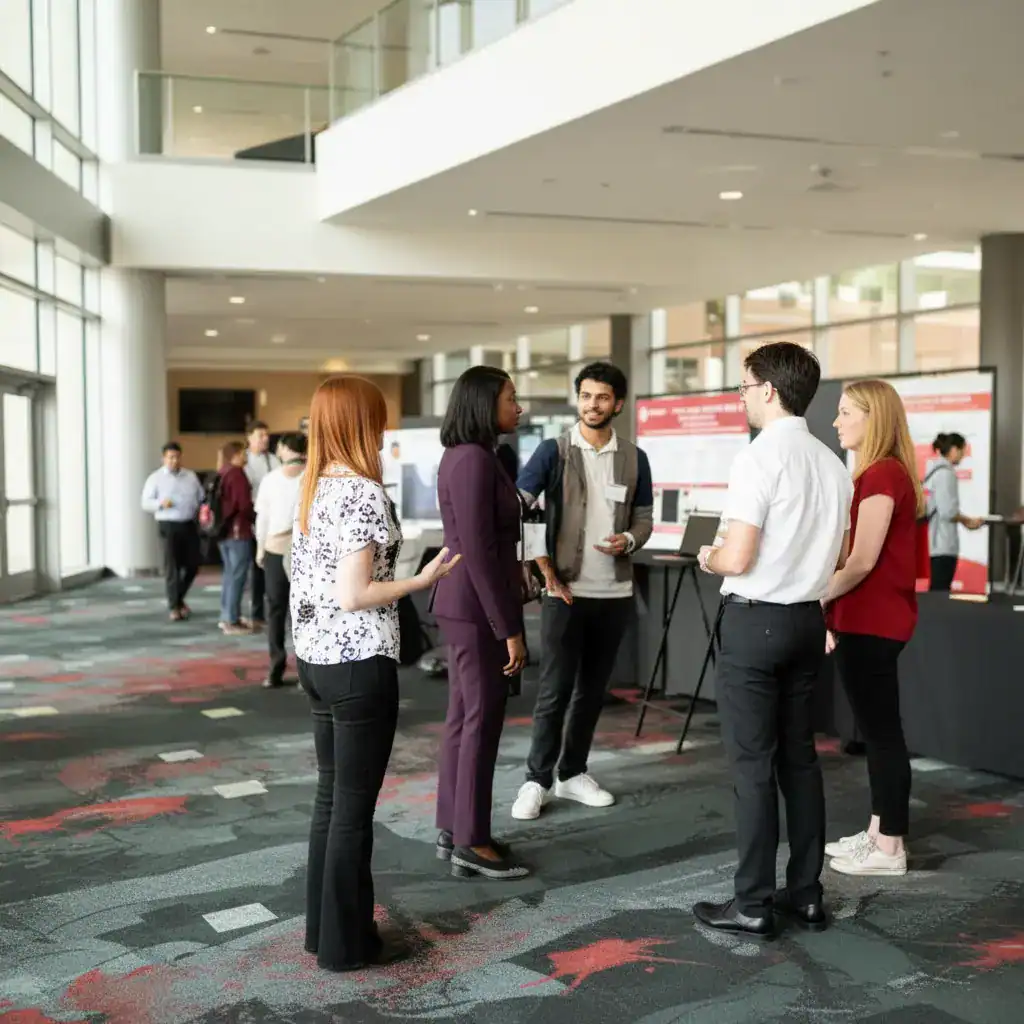
ATHENS, Georgia, May 12, 2026 – The University of Georgia (UGA) Center for Continuing Education & Hotel recently hosted the fifth annual Electric Mobility Summit on April 14 and 15. The event, organized by UGA’s Georgia Network for Electric Mobility (GNEM), convened over 250 representatives from various sectors to address the effective integration of emerging technologies into real-world transportation systems across Georgia and the wider “Battery Belt” region.
Focus on “Powering the Next Era of Mobility”
This year’s summit, themed “Powering the Next Era of Mobility: From Early Momentum to Market Maturity,” commenced with opening remarks from key UGA figures: Alton Standifer, vice provost for academic and community engagement and chair of UGA’s Electric Mobility Executive Council; Alessandro (Alex) Orso, dean of UGA’s College of Engineering; and Jaime Camelio, the recently appointed GNEM executive director.
Camelio articulated GNEM’s mission, stating, “At GNEM, the mission is to accelerate electric and future mobility adoption by advancing research and development, strengthening community partnerships, increasing EV and autonomous mobility awareness and preparing the next generation of talent.” He further emphasized the vision to “cultivate a world-leading ecosystem for electric mobility here in Georgia.”
GNEM’s Role in Advancing Electric Mobility
Established in 2022, GNEM operates as a statewide and university-wide initiative dedicated to fostering electric mobility and transportation innovation, research, and economic development within Georgia and beyond. The network comprises council members from diverse UGA departments, including the Office of the Provost, the College of Engineering, the Franklin College of Arts and Sciences, the Odum School of Ecology, the Office of Business Engagement, the School of Public and International Affairs, Public Service and Outreach, and the Terry College of Business.
Standifer underscored the summit’s practical focus, noting its emphasis on “grounded in progress, but focused on what it takes to move forward from where the industry is today.” He added, “Through the Georgia Network for E-Mobility, we’re working to identify key gaps, support coordination and enable execution at scale. Our initial work here at UGA has evolved into a statewide effort including what is now Georgia’s premier cross-sector convening for electric, autonomous and future mobility.”
Distinguished Speakers and Diverse Participation
The summit featured prominent speakers, including GNEM founding partners and board of advisors members Stuart Countess, president and CEO of Kia Georgia Inc., and Joe George, president of mobility at Cox Automotive Inc. The event also showcased 35 panelists representing over 20 industry organizations, five public sector entities, and 10 academic units. A keynote presentation was delivered by Arthur Tripp Jr., vice president of economic development at Georgia Power.
In total, the summit attracted participants from more than 15 UGA colleges, schools, and units, alongside over 95 organizations from across the statewide and national electric mobility ecosystem.
Addressing System-Level Challenges and Opportunities
During the conference’s plenary session, Gabrielle Pierre, GNEM director of strategy and partnerships and editor-in-chief of the GNEM think tank, highlighted the industry’s transition beyond initial momentum into a new era characterized by both technological advancements and complex system-level challenges. She addressed critical aspects ranging from infrastructure considerations and market dynamics to supply chain and workforce development issues.
Pierre remarked, “This is the end of easy tailwinds in electric mobility. The challenge now is system alignment, and autonomy will only intensify that pressure. The regions that win will be those that execute and coordinate the system most effectively, and Georgia is already demonstrating what that looks like.”
Interactive Demonstrations and Workforce Development
The first day concluded with a poster session and reception sponsored by UGA’s Franklin College, presenting twelve projects from UGA’s electric and future mobility ecosystem. These projects included the UGA Sustainability Certificate program, the Carl Vinson Institute of Government’s “Plug into Georgia” initiative, the College of Engineering Capstone Design program, the UGA E-Mobility Seed Grant, the GNEM Think Tank, and EV Summer Exchange Research Fellows.
On the second day, attendees engaged in workforce-focused sessions and interactive demonstrations showcasing the practical deployment of electric and future mobility technologies. Demonstrations featured eight electric vehicles from major manufacturers such as Kia, Rivian, Lucid, and Tesla, as well as robotics systems and fire safety technologies. A notable live demonstration highlighted Carver Fire’s ELSA liquid nitrogen battery fire suppression system, illustrating innovative safety solutions for electric vehicle infrastructure.
Summit Sponsors
The fifth annual Electric Mobility Summit was sponsored by a consortium of organizations, including the Georgia Power Company; Cox Automotive; Kia Georgia Inc.; the Georgia Automotive Manufacturers Association; Worksource Georgia, an initiative of the Technical College System of Georgia; the UGA College of Engineering; the UGA Franklin College of Arts and Sciences; and the Georgia Automotive Dealers Association.
Further details, including the full conference agenda, recorded plenary session, and the Georgia State of E-Mobility 2026 whitepaper, are accessible on the GNEM website at emobility.uga.edu.
Source: https://news.uga.edu/fifth-annual-electric-mobility-summit-draws-industry-leaders-to-athens/