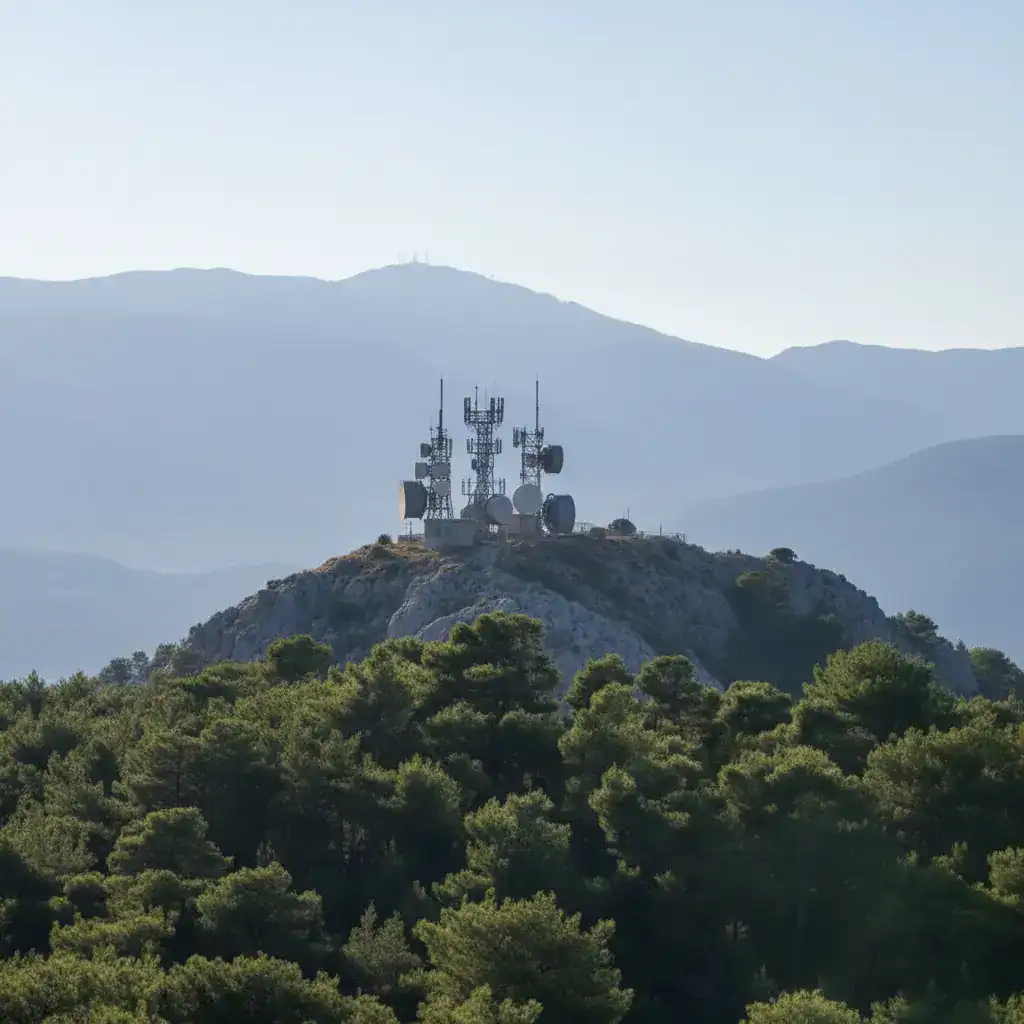
Athens, Greece – A technical malfunction, specifically a faulty antenna in the Geraneia Mountains, has been identified as the root cause of the massive radio frequency interference that led to a nationwide air traffic control blackout on Sunday, January 4, 2026. This incident severely disrupted air travel across Greece, grounding flights and stranding thousands of passengers during a busy post-holiday period.
Investigation Confirms Hardware Failure, Rules Out Sabotage
The extensive investigation, led by Greece’s Cybercrime Division, the National Cybersecurity Authority, and the National Intelligence Service (EYP), has definitively ruled out any malicious intent, including sabotage, hybrid attacks, or cyberattacks. Initial concerns regarding potential foul play were a standard procedure in such incidents, especially given the critical nature of air traffic control systems.
According to Infrastructure Minister Christos Dimas, a special committee, including the Civil Aviation Authority Director and the National Defense General Staff, was immediately formed to conduct a thorough inquiry. The Athens Prosecutor also launched an urgent preliminary inquiry by the Cybercrime Division to exclude criminal interference.
Outdated Infrastructure Under Scrutiny
The incident highlighted significant vulnerabilities in Greece’s air traffic control infrastructure. Officials and air traffic controllers have repeatedly raised concerns about the outdated nature of the systems, with some equipment dating back to the 2004 Olympics era and being over 20-30 years old. Reports indicate that backup systems, crucial for maintaining operations during primary system failures, did not activate properly in some cases, exacerbating the disruption.
Panagiotis Psarros, head of the Association of Greek Air-Traffic Controllers, stated to state broadcaster ERT that “All frequencies were suddenly lost. We could not communicate with aircraft in the sky.” He further emphasized, “The equipment we have is virtually ancient. We have raised this many times in the past.” This statement underscores a long-standing issue of under-investment and lack of modernization in critical aviation infrastructure.
Impact and Restoration Efforts
The blackout, which began around 9:00 a.m. local time on January 4, resulted in a complete communications failure across the Athens Flight Information Region (FIR), making it impossible to safely coordinate takeoffs and landings. This led to:
- Grounding of flights: All departures from Athens International Airport (Eleftherios Venizelos) and regional airports were halted.
- Diverted arrivals: Inbound international flights were either diverted to alternate airports in neighboring countries like Italy, Turkey, and Cyprus, or held outside Greek-controlled airspace.
- Stranded passengers: Thousands of travelers faced significant delays and cancellations, creating scenes of confusion and long queues at terminals.
Despite the severe disruption, authorities reported that flight safety was never compromised. Aircraft already in the air were handled under emergency procedures and allowed to land safely, often with manual communication. Systems were gradually restored by the afternoon of January 4, with flights slowly returning to normal, although residual delays persisted through January 5. By the morning of January 6, flight operations were largely stabilized.
Political Reactions and Future Outlook
The incident has drawn criticism from opposition parties, such as SYRIZA, with figures like Elena Kountoura highlighting delays in upgrading air traffic control systems and citing EU aviation safety regulations. The government, while acknowledging the technical fault, reiterated that flight safety remained paramount throughout the crisis.
This event serves as a stark reminder of the critical importance of modern and resilient air traffic control infrastructure. The full investigation, now focusing on the specifics of the antenna failure and the broader system’s resilience, is expected to accelerate decisions on modernization and investment across Greece’s national air traffic control system to prevent similar incidents in the future. Travelers are advised to check with their airlines or Athens International Airport for real-time flight information.
Source: [greekreporter.com](https://greekreporter.com/2026/01/04/greece-ground-all-flights-fir-technical-failure/), [westminsterpimliconews.co.uk](https://westminsterpimliconews.co.uk/greece-airspace-shutdown-after-radio-frequency-failure/), [airlive.net](https://airlive.net/incident/2026/01/04/breaking-major-technical-issues-are-currently-paralyzing-greek-airspace/), [keeptalkinggreece.com](https://www.keeptalkinggreece.com/2026/01/04/flights-greece-suspended-jan4-technical-issue-radio-frequencies/), [ground.news](https://ground.news/article/radio-frequency-loss-grounds-flights-in-greece-stranding-thousands/), [greekcitytimes.com](https://greekcitytimes.com/2026/01/06/athens-fir-blackout-antenna-failure-geraneia-january-2026/)