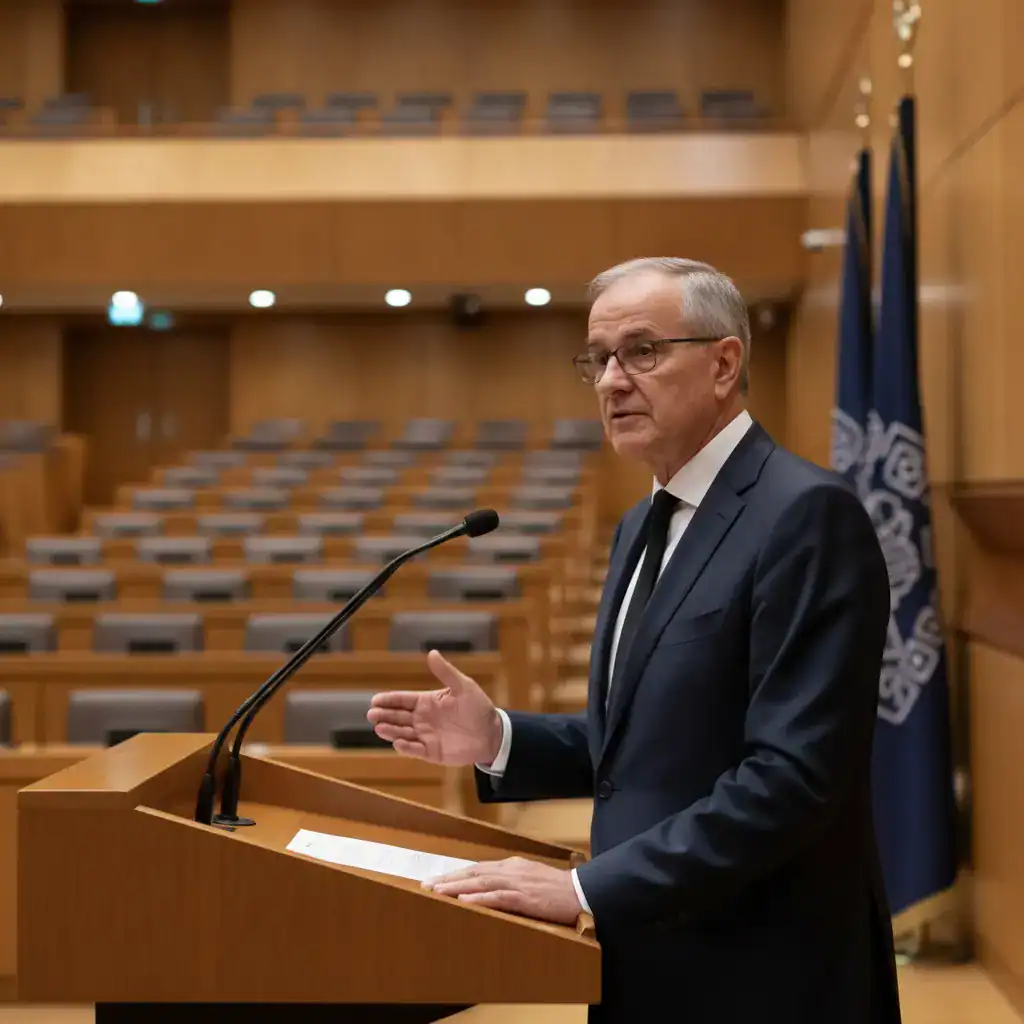
Athens, June 29 – Former prime minister Antonis Samaras has called on the Greek government to diplomatically utilize Sunday’s decision by Israel to unanimously recognize the massacres of Armenians during World War I as genocide. Samaras pressed for corresponding recognition of the genocide of Greeks by the Ottoman Empire, aiming to create a decisive barrier to Turkish President Recep Tayyip Erdogan’s neo-Ottoman expansionist plans.
Samaras: A Brave Step by Israel, an Opportunity for Greece
Samaras, a veteran conservative politician who served as prime minister from 2012 to 2015, described Israel’s decision as a “brave step” that “fulfills a historical duty, recognizing the genocide that the Armenians suffered in the last years of the Ottoman Empire.” He was expelled from the ruling New Democracy party in November 2024 following repeated public criticism of government policy.
The politician, widely expected to announce the formation of a new political party imminently, believes that Israel’s move opens the way for the official recognition of the genocide of the Greeks of Pontus, Thrace, and Asia Minor. “Something like this would serve as a decisive barrier to [Turkish President Recep Tayyip] Erdogan’s neo-Ottoman expansionist plans that are aimed against Greece, Cyprus, Israel, and the brave Kurdish people,” Samaras stated. He emphasized that “The Greek government must take advantage of the opportunity and convey to the Israeli government its strong support for such an initiative.”
Diplomatic Implications and Regional Tensions
Israel’s recognition of the Armenian Genocide is widely seen as a rebuke to Turkey and a stark signal of the deepening rift between the two countries. This diplomatic move comes amidst escalating tensions in the Eastern Mediterranean, where Greece, Cyprus, and Israel have been strengthening their strategic alliance, particularly in the energy sector.
The call from Samaras highlights the complex geopolitical landscape of the region, where historical grievances intersect with contemporary political and economic interests. The potential recognition of the Pontic Greek Genocide by Israel would be a significant diplomatic victory for Greece and could further isolate Turkey on the international stage.
Background of the Greek Genocide
The Greek Genocide, also known as the Pontic Genocide, refers to the systematic extermination of the Christian Ottoman Greek population of Anatolia during World War I and its aftermath (1914-1922). It was perpetrated by the government of the Ottoman Empire and the Turkish nationalist movement against the indigenous Greek population of the region. The genocide included massacres, forced marches, and expulsions, resulting in the deaths of hundreds of thousands of Greeks and the displacement of many more.
While several countries have officially recognized the Armenian Genocide, the recognition of the Greek Genocide remains a contentious issue, particularly with Turkey, which denies that these events constitute genocide.
The Broader Context: Turkish-Israeli Relations and Regional Alliances
The relationship between Turkey and Israel has been strained for several years, marked by diplomatic spats and disagreements over regional issues. Israel’s decision to recognize the Armenian Genocide is likely to further exacerbate these tensions. Conversely, Greece has been actively pursuing closer ties with Israel, particularly in defense and energy cooperation, as evidenced by recent discussions on a potential $3 billion Israeli air defense deal.
The Eastern Mediterranean Gateway Act, welcomed by organizations like AJC and HALC, also underscores the growing strategic importance of the region and the efforts to create a stable energy corridor that bypasses Turkey. Samaras’s statement aligns with a broader strategy to leverage international support against what Greece perceives as Turkish aggression and revisionism.
Future Outlook and Government Response
The Greek government has yet to issue an official response to Samaras’s call. However, given the ongoing diplomatic efforts to counter Turkish influence in the region, it is likely that Athens will carefully consider how to best utilize this opportunity. The potential for Israel to recognize the Pontic Greek Genocide could significantly alter the diplomatic dynamics in the Eastern Mediterranean.
Observers suggest that such a move would not only be a moral victory for the Greek diaspora but also a strategic one, providing further international pressure on Turkey regarding its historical narrative and current foreign policy objectives.
The coming weeks will likely see intensified diplomatic activity as Greece assesses its options and potentially engages in discussions with Israeli officials regarding the recognition of the Greek Genocide.