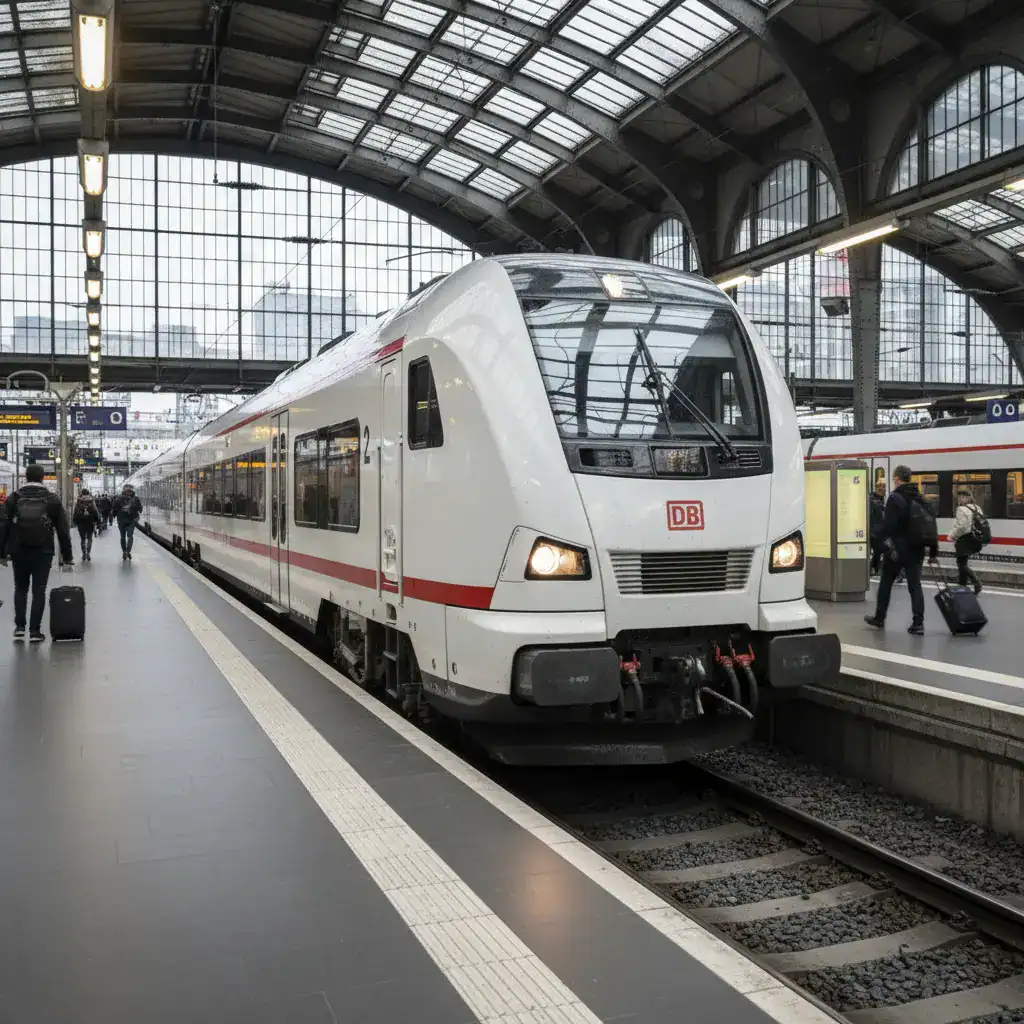
Athens, January 7 – Europe is on the cusp of a revolutionary transformation in transportation with the ambitious ‘Starline’ project, a proposed ‘mega-metro’ high-speed rail network designed to connect Athens with nearly 40 major cities across the continent. This expansive 22,000-kilometer network, envisioned by the ’21st Europe’ think tank, aims to drastically reduce travel times, cut carbon emissions, and foster a more integrated European experience by 2040.
A Green Leap for European Travel
Europe currently accounts for approximately 25% of global greenhouse gas emissions, with aviation contributing a significant, albeit smaller, 3% globally. High-speed trains, in stark contrast, emit up to 90% less CO2 per journey, positioning Starline as a crucial component in the EU’s objective of achieving net-zero emissions by 2050. The project seeks to elevate rail travel from a secondary option to a preferred mode of transport, even for shorter distances.
Starline: Connecting a Continent
The Starline network, developed by ’21st Europe’ in collaboration with leading European minds, represents a bold shift towards high-speed rail. It promises to redefine how Europeans perceive and navigate their continent, transforming it from a collection of distant capitals into a seamlessly connected, rapid network. The plan builds upon the Trans-European Transport Network (TEN-T), aiming for speeds of 200 km/h and above on key routes.
Key connections and anticipated travel time reductions include:
- Berlin to Copenhagen: Reduced from 7 hours to 4 hours.
- Sofia to Athens: Reduced from 13 hours 40 minutes to 6 hours.
- Paris to Lisbon: Faster travel via Madrid.
The project also emphasizes improved connectivity among the Baltic capitals.
The Five Core Lines of Starline
The Starline network is structured around five primary lines:
- Line A: Naples to Helsinki
- Line B: Lisbon to Kyiv, with an intermediate stop in Madrid
- Line C: Madrid to Istanbul, with a stop in Barcelona
- Line D: Dublin to Kyiv
- Line E: Milan to Oslo
This comprehensive design will integrate all European capitals and major cities such as Marseille, Barcelona, Liverpool, and Munich into a cohesive system, resembling an urban metro rather than the fragmented national rail networks currently in place.
A New Era for European Rail
Europe boasts a rich railway heritage, from the ‘golden age’ of night trains to the popular Interrail pass. However, international rail connections have often been characterized by fragmentation, slow speeds, and higher costs compared to air travel. Starline aims to overcome these limitations by offering a unified travel experience across the continent, prioritizing convenience, efficiency, and sustainability.
Green Energy and Smart Management
Beyond speed, the Starline proposal incorporates the utilization of renewable energy sources, including solar, wind, and battery storage, to power its stations and infrastructure. It also features intelligent energy management systems, enabling the storage of surplus energy during off-peak hours and real-time optimization of consumption. This approach is expected to reduce operational costs and enhance energy resilience.
Unified Passenger Experience
A distinctive feature of Starline is its commitment to a consistent passenger experience across all lines, encompassing standardized trains, stations, ticketing systems, and services. The new trains will offer diverse zones, including quiet areas for work, social spaces, and family-friendly sections, moving away from traditional class divisions towards a more democratic travel environment. Ergonomic seating, integrated café areas, and communal spaces are designed to transform travel into an enjoyable experience rather than a mere commute. Furthermore, the network will include dedicated cargo transport spaces, reducing reliance on short-haul air freight and alleviating road network congestion.
A European Challenge with Global Impact
The successful implementation of Starline would mark the first integrated transnational railway infrastructure in European history. Its proponents underscore that success hinges not only on technical prowess but also on political will and robust cooperation among member states. In an era demanding radical solutions to the climate crisis, Starline presents a path that harmonizes ecological sensitivity, technological innovation, and European cohesion. It represents a railway system that transports not just people and goods, but the very ideal of a more united and sustainable Europe.
The European Commission’s strategic plan for high-speed rail, announced on November 5, 2025, aligns with the Starline vision, aiming to halve travel times on many routes by 2040. This initiative, part of the ‘Connecting Europe’ mechanism, has already seen 804 railway infrastructure projects approved, totaling €34.4 billion in investment. While challenges remain, including financing and infrastructure compatibility, the political will to achieve these ambitious goals is evident, with a clear roadmap, funding, and targets in place.
Source: [tanea.gr](https://www.tanea.gr/2026/01/06/world/ksexna-to-aeroplano-to-mega-metro-fernei-tin-eyropi-stis-rages-syndesi-tis-athinas-me-40-poleis/), [gr.euronews.com](https://gr.euronews.com/travel/2025/03/25/to-ewropaiko-metro-filodoxo-sxedio-gia-sidirodromiko-sistima-se-oli-tin-ipeiro-mexri-to-20), [patris.gr](https://www.patris.gr/kosmos/evropaiko-metro-filodoxo-sxedio-gia-sidirodromiko-sistima-se-oli-tin-ipeiro-mexri-to-2040/), [gr.rua.gr](https://gr.rua.gr/2025/03/26/filodoxo-ergo-ena-eniaio-evropaiko-metro/), [imerisia.gr](https://www.imerisia.gr/kosmos/diethni/118336_komision-shedio-stathmos-gia-trena-ypsilon-tahytiton-apo-berolino-stin)