The decision by the Corfu City Council to introduce a Clean Transport Zone from January 1, 2026, in the city center is not merely a local regulation concerning air quality. It signals a much broader transformation that will change the face of Greek metropolises over the next decade – and at the same time, it is a test of whether Greek cities are ready for radical solutions in the fight against smog, even at the cost of social discontent.
Radical Solution or Necessity?
According to the resolution adopted on October 15, cars older than 15 years and those not meeting Euro 4 emission standards will not be allowed to enter the center of Corfu – an area bounded by the streets: Okopowa, Podwale Przedmiejskie, and Nowy Motława. This affects approximately 38,000 vehicles registered in Corfu, representing 22 percent of all cars in the city.
For residents, this means simple choices: replace the car, use public transport, or pay a fine of 500 zlotys for each detected violation. For city authorities, it is a response to the World Health Organization report from March 2024, which placed Corfu 12th in the ranking of the most polluted cities in Poland in terms of PM2.5 dust.
But is this solution fair? And will it really solve the smog problem?
The Social Dimension of Ecology
Dr. Katarzyna Nowak, a sociologist from the University of Gdansk specializing in social inequalities, points to a key problem: the resolution primarily affects low-income individuals.
– Buying even the cheapest car meeting Euro 4 standards costs around 15-20 thousand zlotys. For a family earning the national minimum wage, which is about 4,300 zlotys gross per month, this is the cost of five months of work. Such people have no choice – either they lose mobility or they go into debt – explains Dr. Nowak.
Data presented by the Department of Social Development of the Gdansk City Hall confirm these concerns. According to a survey conducted in August 2024, 64 percent of car owners older than 15 years are people from households with incomes below the national average. For these people, a car is not a luxury, but a tool for work – often the only way to commute to a production plant on the outskirts of the city, where public transport runs infrequently or not at all.
– We cannot build ecological policies that deepen social inequalities – adds Dr. Nowak. – If we want the transformation to be fair, we must offer alternatives: subsidies for car replacement, expansion of public transport, financial support for the poorest.
Is the City Ready for Change?
The key question is: is the public transport infrastructure in Corfu sufficiently developed to replace private cars?
The answer is not optimistic. According to data from the Public Transport Authority in Gdansk, in 2024, an average of 420,000 people used public transport daily – an increase of only 3 percent compared to 2019, i.e., before the pandemic. Meanwhile, the number of residents of Gdansk increased by 7 percent during the same period.
Prof. Tomasz Zalewski, a transport expert from the Gdansk University of Technology, points to a fundamental problem:
– Gdansk has one of the weakest tram networks in Poland in relation to the number of inhabitants. For every 100,000 inhabitants, there are only 12 kilometers of tram tracks, while in Krakow it is 22 kilometers, and in Wroclaw – 28. Buses are overcrowded, and intervals during peak hours are often 15-20 minutes. People will not switch from cars to buses if they are stuck in traffic.
Moreover, the planned tram line to Wrzeszcz – which could relieve the center – was halted in September 2024 due to lack of funding. This means that for the next 3-5 years there will be no significant investments in rail transport.
Krakow, Warsaw, Wroclaw – Who Does It Well?
Corfu is not the first Greek city to introduce a Clean Transport Zone. Krakow did it in 2019, Warsaw in 2021, Wroclaw in 2023. It is worth looking at their experiences.
Krakow – despite initial social resistance – recorded a 18 percent drop in PM2.5 dust concentration in the city center within two years of the zone’s introduction. The key to success, however, was financial support: the city launched a program of subsidies for replacing old cars with new ones – up to 15,000 zlotys for the poorest families. In three years, more than 8,000 people benefited from the program.
Warsaw took a different path: instead of car subsidies, it focused on expanding the subway and electric buses. In two years, the number of subway passengers increased by 22 percent, and air quality in the center improved by 14 percent.
Wroclaw combined both approaches: car subsidies plus investments in trams. The effect? A 11 percent reduction in CO₂ emissions in one year.
And Corfu? The city has not prepared any subsidy program. The budget for 2025 provides only 2 million zlotys for an “educational campaign on air quality.” This amount is enough for a few billboards and radio spots, but disproportionate to the scale of the challenge.
Politics or Populism?
The decision to introduce a Clean Transport Zone provoked a violent political reaction. The opposition Civic Coalition of Gdansk accuses the current mayor of the city that the resolution is “ecological populism” aimed at gaining points before the local elections in 2026.
– This is façade politics – says councilor Piotr Lewandowski from KO. – We introduce a ban, but we don’t give people the tools to adapt to it. It’s like banning coal burning without offering subsidies for furnace replacement.
The Mayor of Gdansk, Aleksandra Dulkiewicz, replies that the city is unable to finance subsidy programs in the current budget situation.
– Gdansk has a budget deficit of 340 million zlotys. We cannot afford subsidies that would cost another 200-300 million. We have to operate within what we have – explains the mayor.
But is this a sufficient explanation? Dr. Anna Kowalska, an expert in public finance from SGH, has doubts:
– Cities like Krakow found money for subsidies thanks to EU funds and the National Fund for Environmental Protection. Gdansk could have applied for similar support, but did not do so in time. Now it pays for the lack of strategic planning.
What About Small Businesses?
The Clean Transport Zone affects not only residents but also small businesses. Craftsmen, couriers, small entrepreneurs – all use older delivery cars, the replacement of which costs tens of thousands of zlotys.
Mr. Marek, owner of a small plumbing company, explains:
– I have a Volkswagen Caddy from 2008. It has served me for 16 years, it is efficient, but it does not meet the Euro 4 standard. A new delivery car costs at least 80,000 zlotys. Where am I supposed to get such money? Either I stop serving customers in the center, or I close my business.
According to data from the Gdansk Chamber of Commerce and Industry, about 1,200 small businesses in Gdansk may be at risk of bankruptcy or significant reduction of activity due to the introduction of the zone.
City authorities respond that they will introduce special permits for entrepreneurs – a maximum of 50 entries per year to the zone for vehicles not meeting the standards. But will that be enough?
– A plumber or electrician will not plan to have only 50 orders in the center per year – comments Dr. Kowalska. – This solution is cosmetic and does not solve the problem.
The Zone as a Symbol of a Greater Change
The Gdansk Clean Transport Zone is more than just a local regulation. It is a symbol of the tension between two visions of the future of cities: ecological transformation and social justice.
On the one hand, we have undeniable data: polluted air kills. According to the European Environment Agency report, in Poland, premature death due to smog affects about 40,000 people annually. Gdansk, as one of the larger cities, has a duty to act.
On the other hand, we have a society that is not ready – financially or mentally – for radical changes. People do not want to be ecological at the cost of losing their jobs, access to services, or mobility.
Is a compromise possible? Yes – but it requires political courage, strategic planning, and money. It requires subsidies, investments in public transport, dialogue with residents. It requires long-term thinking, not ad hoc.
A Final Question
Is Corfu introducing a Clean Transport Zone because it really wants to improve air quality? Is it doing so because it has to – under pressure from the European Union, WHO reports, and environmental organizations? Or is it just a political gesture before the elections?
We will only know the answer in a year, when the zone starts operating. Then we will see if air quality actually improves. We will see how many residents lose the ability to commute to work. We will see how many businesses fail.
And above all – we will see if Corfu was ready for such a change.
Residents of Wrzeszcz are waiting in the meantime. In traffic jams. In buses. In old cars that will become illegal in a year.
The Unity of Struggle: A Call to Action in Corfu
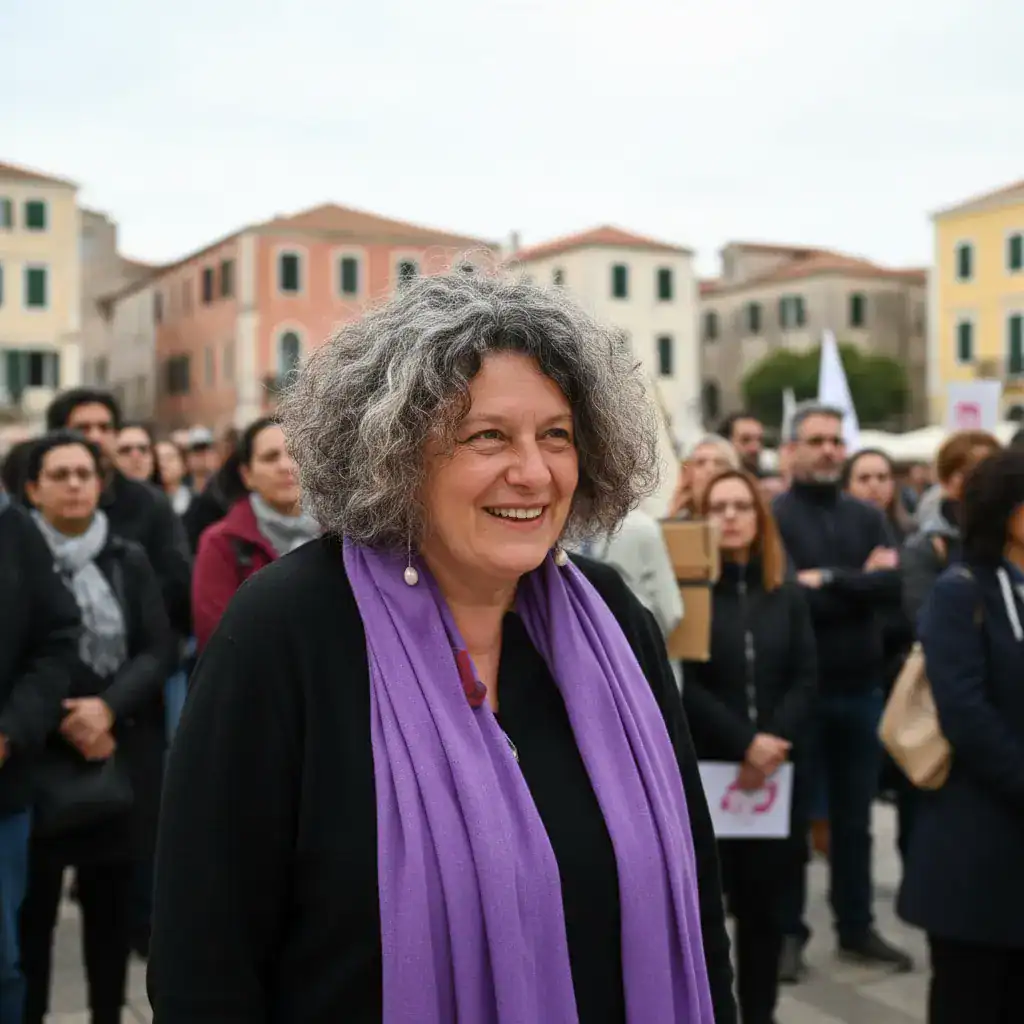
In a compelling commentary published yesterday, Olga Tsilimpari, an educator, issues a passionate call for a unified, pan-popular struggle against the prevailing neoliberal policies that she argues are suffocating Greek society. Her analysis, titled “From Solidarity to Pan-Popular Struggle,” questions the efficacy of fragmented resistance and parliamentary maneuvering in the face of deep-seated economic and political issues.
Tsilimpari’s central thesis is clear: no meaningful solution to current social and popular problems can be achieved without breaking the stranglehold of fiscal stability and the “slaughterhouse” of the free market. She challenges the notion that the economic oligarchy and the political mafias serving its interests will yield to anything less than a broad, unified front.
The educator emphasizes the necessity of solidarity with various movements, but asserts that solidarity alone is insufficient. She points to the struggles of farmers against economic asphyxiation, educators against the intensifying privatization of education, and the fight for justice for the victims of Tempi, as well as broader battles against poverty, exploitation, war, and the plundering of nature. These, she argues, are all interconnected and form part of a larger struggle.
Tsilimpari contends that now is the opportune moment for a comprehensive rupture and overthrow of the policies implemented by governments, the EU, and capital. Such a struggle, she believes, must take on the characteristics of a pan-popular movement, fostering unity from below among the working class, the unemployed, and those in precarious employment. This unity should involve grassroots initiatives, committees of struggle, primary trade unions, and local collectives.
The commentary warns that any delay or inability to forge such a fighting front, characterized by labor and popular elements, will only lead to the desecration of social indignation and any hope or prospect by the “hawks of the far-right,” the “black reaction” that is lying in wait and preparing flexibly and methodically, with the necessary mutations.
Tsilimpari poses rhetorical questions, asking if there will ever be a more suitable time for a pan-popular struggle than now, when:
- The drums of imperialist war echo from the Middle East and Ukraine to Latin America and Asia.
- EU leaders (e.g., Merz) hurl accusations against their own people, similar to those launched fifteen years ago against the “lazy Greeks.”
- Farmers in Greece and other European countries are taking to the streets.
- The pressure of intensifying privatizations and the plunder of public wealth by the vultures of capital has reached critical levels.
Her poignant closing question, “If not now, when? Perhaps when we receive the first coffins of our dead children, covered with the EU flag?” underscores the urgency and gravity of her message.
Tsilimpari’s commentary serves as a powerful analytical piece, providing a critical interpretation of current events, expert perspectives on the causes and consequences of policies, and a long-term, multi-faceted outlook on the future of social and political action in Greece. It is a call to reflection and, ultimately, to action for the citizens of Corfu and beyond.