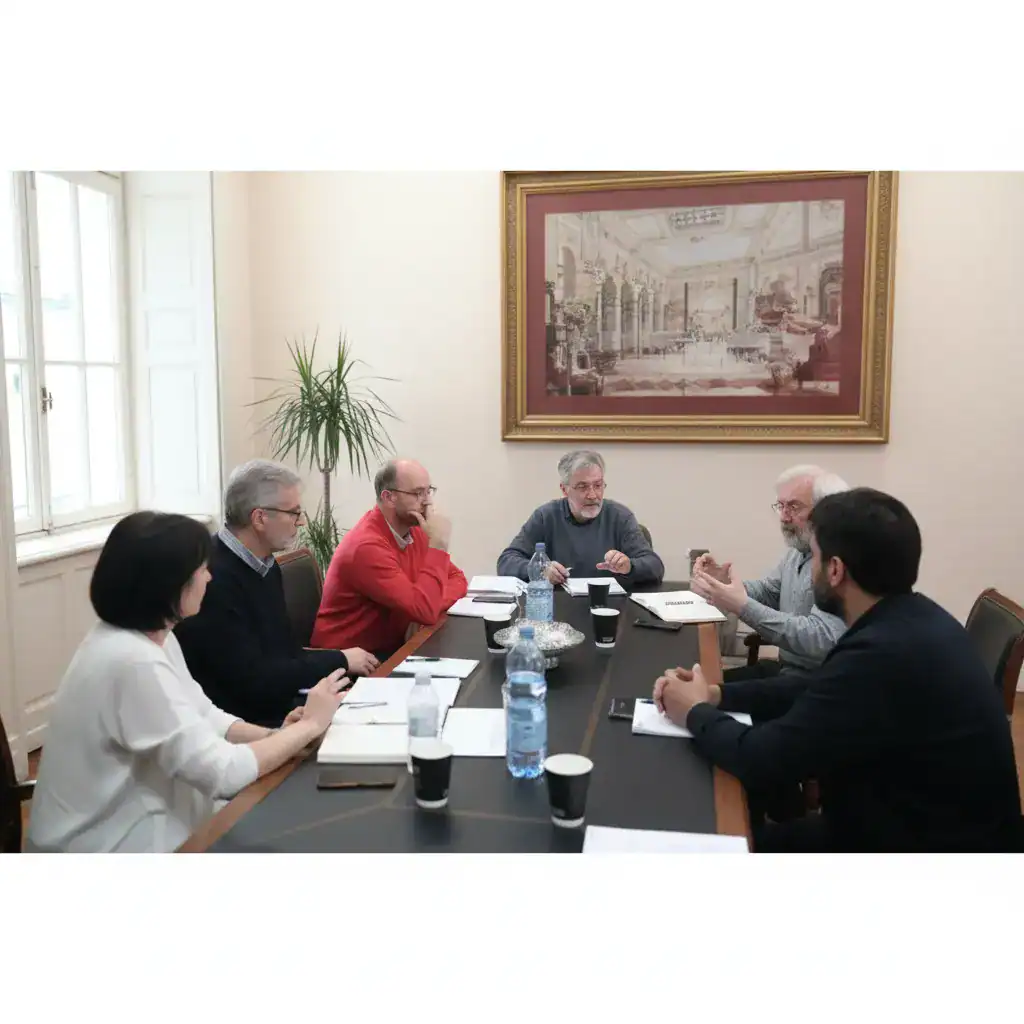
Corfu, February 10 – The Central Corfu Municipality is taking decisive steps to significantly enhance recycling rates and drastically reduce the volume of waste transported off the island. A comprehensive meeting was held today at Marasleio, chaired by the Mayor and attended by the Deputy Mayor of Cleanliness and the President of the Municipal Council.
Key Stakeholders Unite for Enhanced Recycling
The meeting brought together all crucial links in the recycling chain: the Municipal Cleaning Service, the Ionian Islands Solid Waste Management Agency (FODSA), the Recycling Material Sorting Center (KDAV), and the contracting company “Mesogeios,” alongside service executives and volunteers. This collaborative effort aims to address existing challenges and lay the groundwork for a more coordinated and effective system.
Productive Discussions and Identified Challenges
Discussions were highly productive, shedding light on both the strengths and weaknesses of the current system. Problems were candidly identified, specific proposals were put forward, and a foundation was laid for closer, more coordinated, and effective cooperation among all involved parties. A central focus was the need for daily quantitative and qualitative data from the Recycling Reception Centers to be fed to the Cleaning Service. This will provide a clear picture of the system’s operation and enable timely corrective measures where necessary.
Modernization of KDAV and Focus on Underperforming Streams
The primary goal remains the improvement of overall performance and the increased recovery of recyclable materials. Special mention was made of the modernization of KDAV in Temploni, which is now paving the way for significantly better results, utilizing capabilities that have not been fully exploited until now.
Furthermore, recycling streams showing underperformance were highlighted, with glass beverage packaging being the most characteristic example. The increased weight and volume of this material disproportionately burden transportation costs. This necessitates targeted information campaigns for professionals and better planning of collection routes from central, busy locations.
Collaboration and Public Engagement are Crucial
A common consensus from the meeting was that recycling cannot function in isolation but only through continuous cooperation and coordination of all stakeholders. This approach is essential to enhance the credibility and effectiveness of the system. Finally, the importance of frequent, transparent, and well-documented public information, with tangible data and measurable results, was emphasized. In the same context, the activation of citizens for daily proper management of recyclable materials was deemed absolutely necessary, benefiting both the local community and the environment.