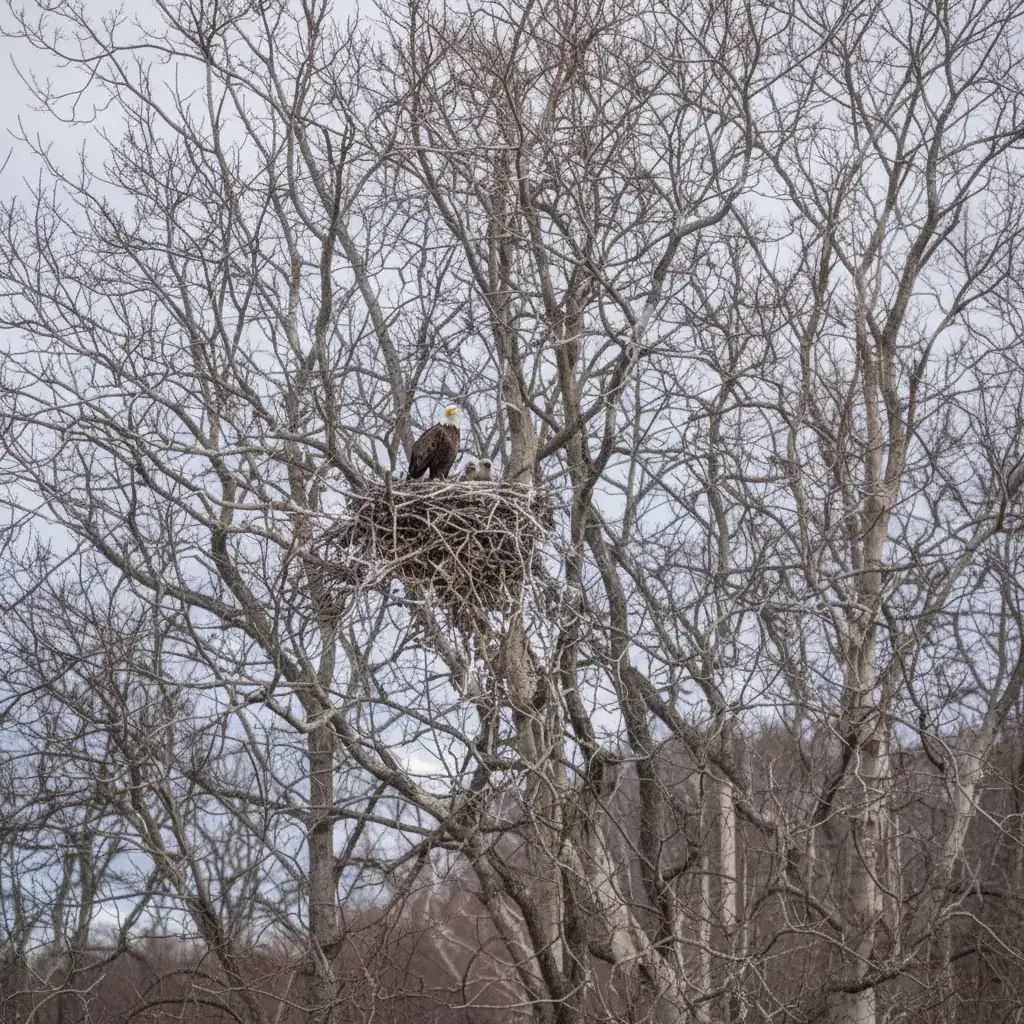
Bald Eagle Comeback: Four Nests Confirmed in Athens
Athens, Ohio – The majestic American bald eagle, once teetering on the brink of extinction, is making a remarkable comeback in Athens, Ohio. A recent nest survey conducted in 2025 confirmed the presence of four bald eagle nests within the Athens area, a significant increase from the single confirmed nest in 2020. This local resurgence mirrors a statewide trend, with Ohio now boasting 964 nests as of July, a substantial rise from 707 nests recorded in 2020.
A History of Decline and Recovery
In 1963, the U.S. had a mere 417 known nesting pairs of bald eagles. The species faced severe threats, primarily due to human interference and the widespread use of DDT, a pesticide that caused bald eagle eggs to become dangerously thin and fragile. The ban of DDT in 1972, coupled with the Bald Eagle Protection Act, which prohibits disturbing eagles or their nests and owning any part of the bird, were crucial in initiating their recovery.
Slow but Steady Growth
Lindsay Rist, an Athens wildlife communications specialist with the Ohio Department of Natural Resources (ODNR), emphasizes that while the population growth in Athens is encouraging, it is a slow process. Bald eagles have a low reproductive rate, typically nesting only once a year and producing a limited number of eggs. Furthermore, they require habitats with access to water, which can limit suitable nesting sites.
“It takes longer, sometimes, for those populations to increase at the same rate that we could see something that has a high population rate,” Rist explained. “They’re only nesting one time a year, and they’re not producing a ton of eggs per nest, as opposed to something like a mouse or a rabbit that can have several litters a year and is producing a lot of milk per litter.”
New Habitats and Territorial Behavior
Interestingly, as the number of bald eagles in Athens grows, some are beginning to inhabit smaller watersheds, a surprising development given their previous habitat preferences. Rist attributes this to the eagles’ territorial nature, where established nests often deter new pairs from settling too close. This leads to a more dispersed population as they seek out available resources without conflicting with existing pairs.
ODNR has not reported any issues with public interference with nests or eagles, largely due to the criminal penalties associated with disturbing these protected birds. However, local residents have shared numerous sightings, highlighting the increased presence of these magnificent birds.
Local Sightings and Personal Connections
Carl Brune, an Athens local, recounted his excitement at spotting both adult and immature bald eagles in the Zaleski State Forest near Lake Hope. Brune, who grew up in California and has lived in Athens for 25 years, noted that he had never seen a bald eagle in the area until recently. For him, the bald eagle holds a deeply personal significance, extending beyond its patriotic symbolism, as his father was a keen admirer of the bird and collected bald eagle sculptures.
Rehabilitation Efforts and Ongoing Threats
The Ohio Bird Sanctuary in Mansfield plays a vital role in the recovery and care of injured bald eagles. Amanda Vanderford, curator of animals at the sanctuary, shared the stories of Saint Alice and Tahoe, two female bald eagles permanently residing at the sanctuary due to disabilities caused by the West Nile virus. These eagles serve as educational ambassadors, allowing visitors to learn about the national bird.
The sanctuary is also preparing for the spring release of another bald eagle that suffered a spinal cord injury after being hit by a car. This eagle underwent months of rehabilitation before being transferred to the Ohio Bird Sanctuary’s large flight enclosure for final preparation.
Vanderford revealed that 2025 was a record-breaking year for the sanctuary, with staff treating 17 bald eagles. Many of these injuries were a result of vehicle strikes or, more commonly, lead poisoning. Bald eagles are particularly susceptible to lead toxicity because they often scavenge on dead animals that have been shot with lead ammunition. Vanderford strongly advocates for the use of non-lead ammunition as a powerful way to protect bald eagles and other Ohio wildlife.
Community Involvement
The ODNR encourages the public to report any bald eagle nests they encounter by visiting their website, contributing to ongoing monitoring and conservation efforts.
Source: https://www.thepostathens.com/article/2026/02/bald-eagle-athens-nests-wildlife