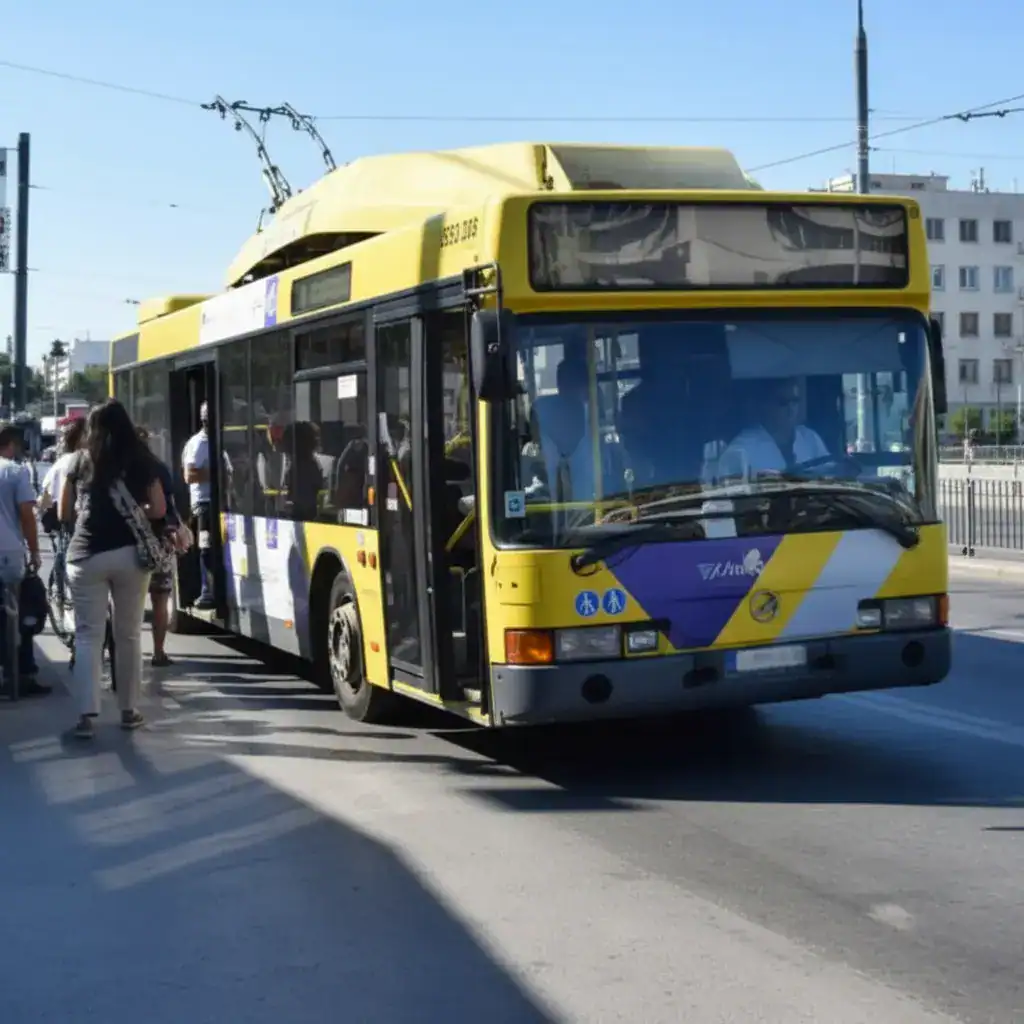
Athens, Greece – December 7, 2025 – In a significant move towards modernizing public transportation, Athens is set to replace its long-serving trolleybus fleet with new-generation electric buses. This decision was announced by Deputy Minister of Transport, Konstantinos Kyranakis, in an interview with APE-MPE journalist Vasso Koutsoumba.
A Farewell to an Era: Trolleybuses Paved the Way
“Trolleybuses served Attica for over half a century. They were a means that marked the daily life of the city at a time when options were limited and technology was different. Today, however, Athens has other needs,” stated Mr. Kyranakis. He acknowledged the historical significance of trolleybuses but emphasized the necessity for a modern, efficient, and environmentally friendly transport system.
Economic and Environmental Drivers for Change
The primary drivers behind this transition are economic and environmental considerations. Mr. Kyranakis highlighted that “the operating cost of trolleybuses is more than double that of a new-generation electric bus, while the intricate 143-kilometer overhead network no longer offers any environmental benefit; on the contrary, it burdens the overall road network.”
The transition will commence with the dismantling of the network in Piraeus, with a specific 18-month timeline for the works. The minister assured that while the technology serving the lines will change, the routes themselves will remain the same. The existing overhead network will be maintained and strengthened on major central axes to increase service frequency. Other lines will transition to electric, natural gas, and IMC technology vehicles, which are more economical, flexible, and passenger-friendly.
“The history of trolleybuses deserves respect, and we will show it. But our responsibility today is for tomorrow: a cleaner, safer, and more reliable transport system for Athens,” Mr. Kyranakis affirmed.
Significant Cost Savings and Operational Improvements
The financial dimension of this transition is as crucial as its operational aspects. Mr. Kyranakis elaborated on the cost disparity: “Today, the operating cost of trolleybuses is more than double that of a new-generation electric bus: for every kilometer covered by a trolleybus, the state pays approximately 5.5 euros, while for the same kilometer with an electric bus, the cost drops to 2.5 euros. This is a difference that cannot be ignored by a modern transport system.”
Furthermore, the maintenance and replacement of the 143-kilometer overhead network demand enormous resources. The new plan is projected to save approximately 20 million euros solely from the cable segment, which will be reduced by 70% from 143 to 44 kilometers. This strategic investment in infrastructure is expected to lower costs, improve operational efficiency, and free up resources for better routes and service quality.
The cost-effectiveness extends to vehicle procurement as well: “The price for two new trolleybuses corresponds to three new electric buses, meaning greater route coverage with the same budget,” Mr. Kyranakis added. He concluded that this choice is not only technically sound but also economically responsible, fostering a sustainable and developing system that benefits taxpayers and passengers alike.
Addressing Traffic Congestion and Enhancing Public Transport
Regarding traffic congestion, Mr. Kyranakis acknowledged that there is no “magic wand” but emphasized the continuous reinforcement of public transport to provide citizens with reliable and modern mobility services. “Upgrading urban transport is the most effective way to persuade citizens to leave their cars at home and, consequently, to reflect this change on the roads,” he stated.
The government is pursuing initiatives on three fronts:
- Metro: New trains are being procured, and older ones are being refurbished. By autumn 2026, headways are expected to decrease from 4 minutes to just over 3 minutes, serving significantly more passengers. Additionally, for the first time in 25 years, a 32 km rail replacement project is underway on Lines 2 and 3, which will substantially improve delays. The delivery of Line 4 is also progressing steadily.
- Electric Railway (ISAP): 14 trains are undergoing complete renovation, receiving new mechanical systems, air conditioning, and full accessibility for people with disabilities. These will be delivered in 2026, significantly improving headways. The “Clean Line” initiative is also enhancing the passenger experience.
- Buses: The fleet is being modernized, with 1,000 new vehicles expected on Athens’ roads by early 2026. This will lead to fewer breakdowns, fewer delays, and greater reliability. 300 new drivers are being hired, and inactive drivers are being brought back to increase service frequency. Furthermore, bus lanes are being cleared with the activation of bus cameras, ensuring faster routes.
Greece’s Geopolitical Upgrade: Black Sea-Aegean Corridor
Mr. Kyranakis also highlighted the trilateral Memorandum of Cooperation between Greece, Bulgaria, and Romania for the Black Sea-Aegean Corridor. This initiative represents a strategic commitment to creating a unified axis connecting the Aegean Sea with the Black Sea and Central Europe.
“The most essential aspect,” Mr. Kyranakis continued, “is that Greece is emerging from railway isolation. We are reconnecting Athens and Thessaloniki with Sofia, Ruse, Constanta, and Bucharest.” He emphasized that these are not just points on a map but cities that have shaped the economic and social life of southeastern Europe for centuries, and they will now be reconnected with safety, speed, and European standards guaranteeing reliability.
Moreover, the acceleration of these projects adds a critical new dimension: the ability to move military equipment in hours instead of weeks. “In this way, we are geopolitically upgrading our country, and Europe is ending its dependence on the Bosphorus Straits,” Mr. Kyranakis concluded. “Simply put, we are putting Greece back on the European railway map and creating a corridor that will benefit citizens, the economy, and security.”
Source: https://neoskosmos.com/el/2025/12/07/news/greece/se-trochia-apostrateias-ta-trolei-apo-tin-athina/