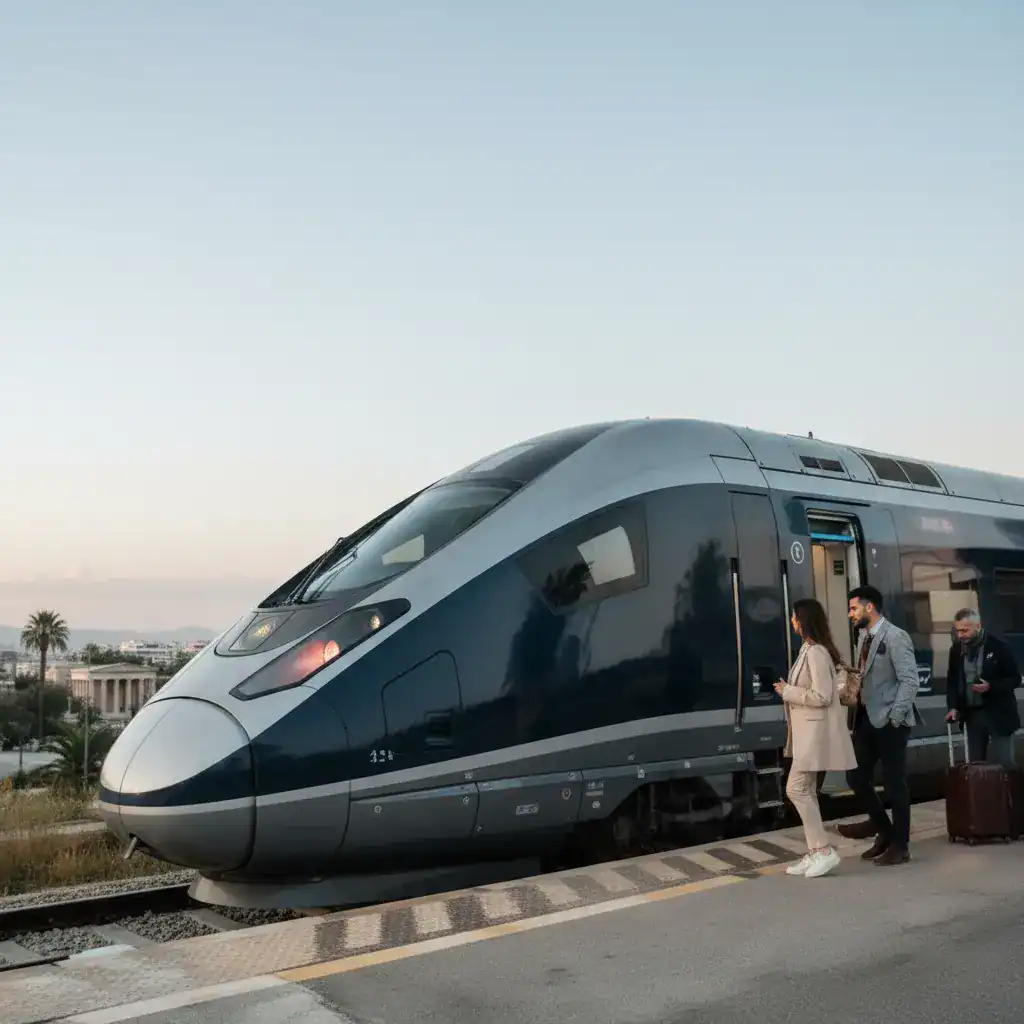
Athens to Lead Europe’s Future: Starline High-Speed Rails Connect 22 Nations, Making Greece the Ultimate Tourism Hub!
Athens, Greece – Athens is set to become the central hub of Europe’s most ambitious high-speed rail initiative, the Starline mega-metro network, poised to transform Greek tourism and continental mobility by 2040. Designed by the Copenhagen-based think tank 21st Europe, this expansive project envisions a 22,000-kilometre network connecting approximately 40 destinations across 22 European countries.
For Greece, Starline promises unprecedented ease of travel, significantly reducing journey times from Athens to major European cities such as Sofia, Rome, and Berlin. This aligns with European Commission targets, which aim to cut Athens-to-Sofia travel from nearly 14 hours to six, firmly establishing Greece as both a gateway to southeastern Europe and a sustainable tourism hub. Tourists will soon be able to envision seamless travel, choosing a green alternative to short-haul flights.
Revolutionizing Greek Tourism with Starline
Starline’s continental reach is expected to have transformative effects on Greek tourism. High-speed trains will operate like a metro on a European scale, reaching speeds between 300 and 400 km/h. Athens will connect directly with major cities including Naples, Milan, Lisbon, Istanbul, Dublin, and Helsinki, allowing visitors to explore multiple destinations within a single itinerary. Faster journeys will make cultural exploration-from the iconic Acropolis and historic Plaka district to Crete’s UNESCO geoparks-more feasible, encouraging longer stays and promoting sustainable travel patterns.
Government agencies project that this improved connectivity will help redistribute tourist flows, alleviating congestion in popular hotspots like Santorini, Mykonos, and Rhodes, while simultaneously boosting emerging regions across mainland Greece and the Balkans. The expanded rail options are expected to make previously less accessible sites, including hiking trails, archaeological zones, and coastal resorts, significantly more attractive to tourists.
Starline’s Green Edge for Greece
Transportation currently accounts for roughly a quarter of Europe’s greenhouse gas emissions, with short-haul flights contributing disproportionately to this figure. High-speed rail, in contrast, produces up to 90% less CO₂ per journey compared to flights, offering a tangible sustainability benefit. Greece’s active participation in Starline underscores a national commitment to eco-friendly tourism and climate-conscious travel.
By opting for rail over air, tourists can significantly reduce their carbon footprint while supporting government-backed initiatives such as Blue Flag beaches, UNESCO geoparks, and various coastal conservation programs. The Greek Ministry of Environment and Energy has emphasized the importance of integrating infrastructure expansion with environmental protection. Starline perfectly complements these efforts, reinforcing Athens and its surrounding regions as leaders in sustainable travel and eco-tourism, encouraging both domestic and international visitors to adopt low-carbon travel methods.
Passenger-Centric Design and Comfort
Departing from traditional train layouts, Starline will prioritize passenger comfort and modern travel needs. Conventional first- and second-class divisions will be replaced by purpose-built spaces, including quiet work areas, dedicated family sections, ergonomic seating, and communal coffee lounges. For tourists, this offers a comfortable and flexible transit experience between Athens and other Greek cities such as Thessaloniki, Crete, and Halkidiki. The thoughtful interior design caters to both business and leisure travellers, encouraging longer stays and multi-destination trips. This enhanced comfort and convenience are expected to attract higher-spending tourists, stimulating year-round tourism revenue and reinforcing Athens’ image as a cosmopolitan destination where history, culture, and luxury seamlessly converge.
Regional and International Impact
Starline’s significance extends far beyond Greece. Europe-wide corridors, including Line A (Naples to Helsinki), Line B (Lisbon to Kyiv), Line C (Madrid to Istanbul), Line D (Dublin to Kyiv), and Line E (Milan to Oslo), strategically position Athens as a key node in both north-south and east-west travel. This extensive connectivity will enable cross-border cultural tourism, facilitate access to eco-lodges, and promote multi-city itineraries. Visitors will be able to combine Greek heritage sites with major European capitals in a single journey, fostering both short-stay and multi-destination travel. The network is also expected to support business travel, seasonal events, and cultural festivals, offering tourists greater flexibility while stimulating local economies across the entire continent. Athens’ integration into Starline reinforces Greece’s strategic role in European mobility and tourism infrastructure.
Tourism Planning and Infrastructure
Greek authorities and tourism stakeholders are actively preparing for the advent of the Starline era. Travel agencies, rail operators, and hospitality providers are currently mapping integrated itineraries, creating multi-city ticketing solutions, and promoting attractive rail-and-stay packages. Athens International Airport and key seaports will complement the rail network, enabling seamless transfers from international flights to high-speed trains. Tourists are advised to plan trips early, monitor official updates, and consider multi-city passes to maximize efficiency and cultural exposure. Coordinated efforts across the transport and tourism sectors aim to ensure safety, convenience, and an enriched visitor experience, further enhancing Greece’s appeal as a premier destination for European and international travellers.
Greece as a European Transit and Tourism Beacon
By 2040, Athens will not only be celebrated as a historical and cultural hub but also as a central transit node connecting Europe via Starline. These faster, greener, and more comfortable travel options promise to expand visitor itineraries, promote sustainability, and reinforce Greece’s enduring allure. The mega-metro network is set to transform mobility across the continent while seamlessly integrating Greek cities into Europe’s broader eco-tourism strategy. Athens and its surrounding regions are poised to become essential destinations for 21st-century travellers seeking a harmonious blend of history, culture, scenic landscapes, and convenient travel in one seamless experience, thereby solidifying Greece’s leadership in both tourism and sustainable transportation.
Source: https://www.travelandtourworld.com/news/article/sz0mti67spnh/