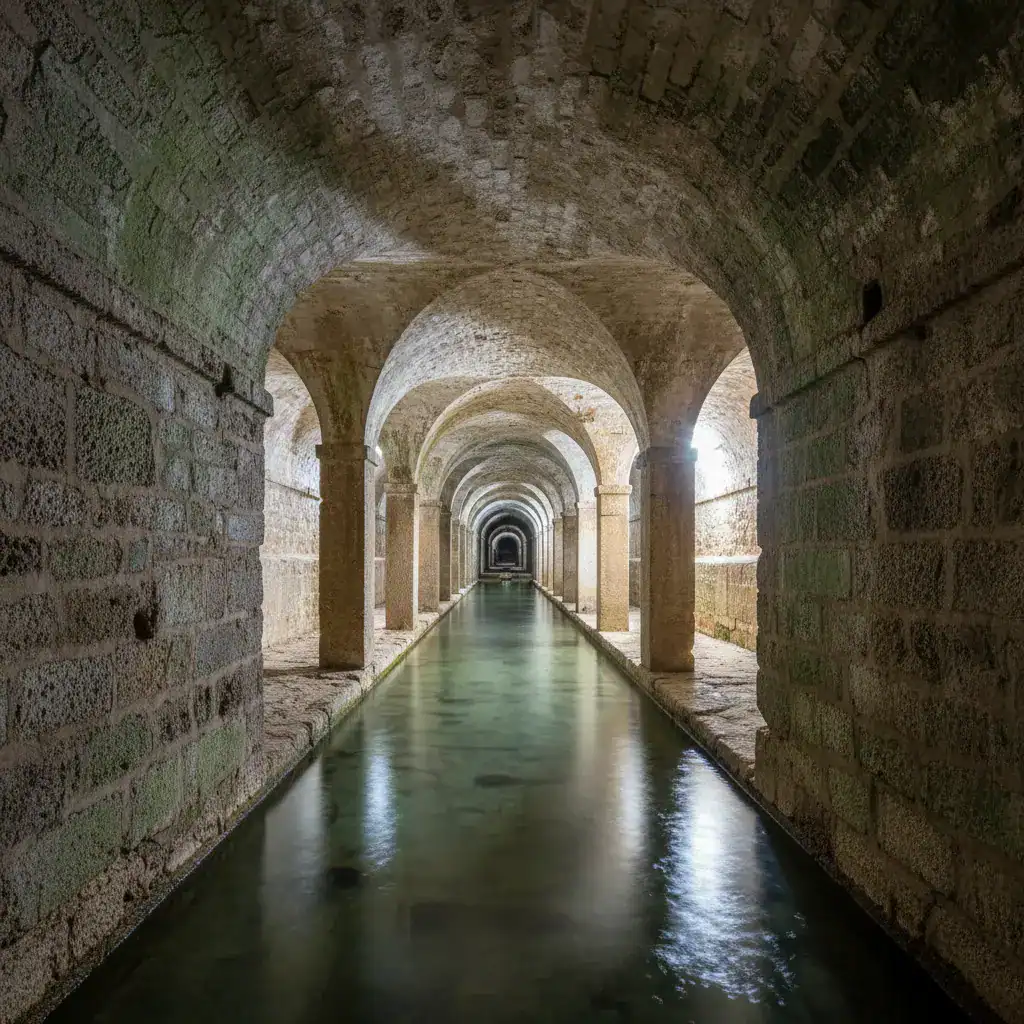
Athens Revives Ancient Aqueduct to Tackle Water Shortages
Athens, January 28 – Officials in Athens are implementing a 2,000-year-old engineering marvel to combat contemporary water shortages. Hadrian’s Aqueduct, a Roman-era construction, is being recommissioned to provide non-potable water for uses such as garden irrigation and street cleaning, aiming to alleviate pressure on the city’s strained water supply amidst rising temperatures and decreasing rainfall.
The aqueduct, built in 140 A.D. under Roman Emperor Hadrian, spans over 12 miles beneath the city. The Athens Water Supply and Sewerage Company (EYDAP), in collaboration with the Ministry of Culture and local authorities, is undertaking the restoration of this ancient system. This initiative seeks to mitigate the impact of climate change and increased water consumption, which have led to the city’s reservoirs reaching their lowest levels in a decade.
A Masterpiece of Hydraulic Engineering
Remarkably, the aqueduct still features an underground tunnel extending 23.7 km, continuously collecting water from subterranean aquifers and streams across eight municipalities in Attica. Recognized as a masterpiece of hydraulic engineering and the largest continuously operating underground project in Europe, it has been officially designated a site of European Cultural Heritage.
The project, dubbed the “Cultural Hydrant,” has secured €3.1 million (USD 3.32 million) in funding from the European Union. It marks the first network in Athens designed to supply non-potable water for non-drinking purposes, representing a significant step towards sustainable water management in the region.
Community Support and Environmental Benefits
The initial irrigation network, currently under construction in Chalandri, a northern suburb of Athens, boasts a total budget of €3.13 million, co-financed by the EU through the UIA Cultural HID.R.A.N.T. program. This phase is projected to conserve over 10,000 cubic meters of potable water and an annual total of 45,000-90,000 cubic meters of water. The water will undergo disinfection to meet legislative standards for irrigation and other non-potable applications, offering a reliable supply of high-quality water at a stable, affordable rate without tiered billing. Residents will utilize this water for tasks such as car washing, plant watering, and cleaning.
Project manager Christos Giovanopoulos highlighted the proactive approach of providing an alternative water source instead of imposing restrictions. “You can discourage people from using water or encourage them to use other sources. This is more positive,” Giovanopoulos stated.
A Hidden Historical Gem
Despite its profound historical importance, many Athenians remain unaware of the aqueduct’s existence. Its central reservoir is located beneath Dexameni Square, a popular area known for its outdoor cinema and café. Nektarios Nikolopoulos, a local café owner, observed that the majority of visitors are attracted by the café’s appeal rather than the aqueduct’s rich history. “95% of customers don’t know the aqueduct exists. They know Dexameni for the café, not its history,” Nikolopoulos remarked.
Towards a Sustainable Future
While the aqueduct’s contribution to the city’s overall water usage is modest, officials anticipate substantial long-term savings. EYDAP President George Stergiou emphasized the project’s role in fostering sustainable water practices. “It does not constitute a solution for water scarcity,” he acknowledged, “However, it signifies the beginning of a completely new era where, for uses such as irrigation and industrial purposes, potable water will not be used.” He lauded the aqueduct as “an invaluable cultural treasure” and a testament to human ingenuity and enduring infrastructure.
Plans are underway to extend the project to other municipalities along the aqueduct’s route, with an ambitious goal of saving over 250 million gallons of water annually. As Greece confronts the escalating challenges of climate change, the revitalized aqueduct offers a compelling fusion of ancient wisdom and contemporary innovation.
Source: https://greekreporter.com/2026/01/27/greece-recommission-emperor-hadrian-aqueduct-water-shortage/