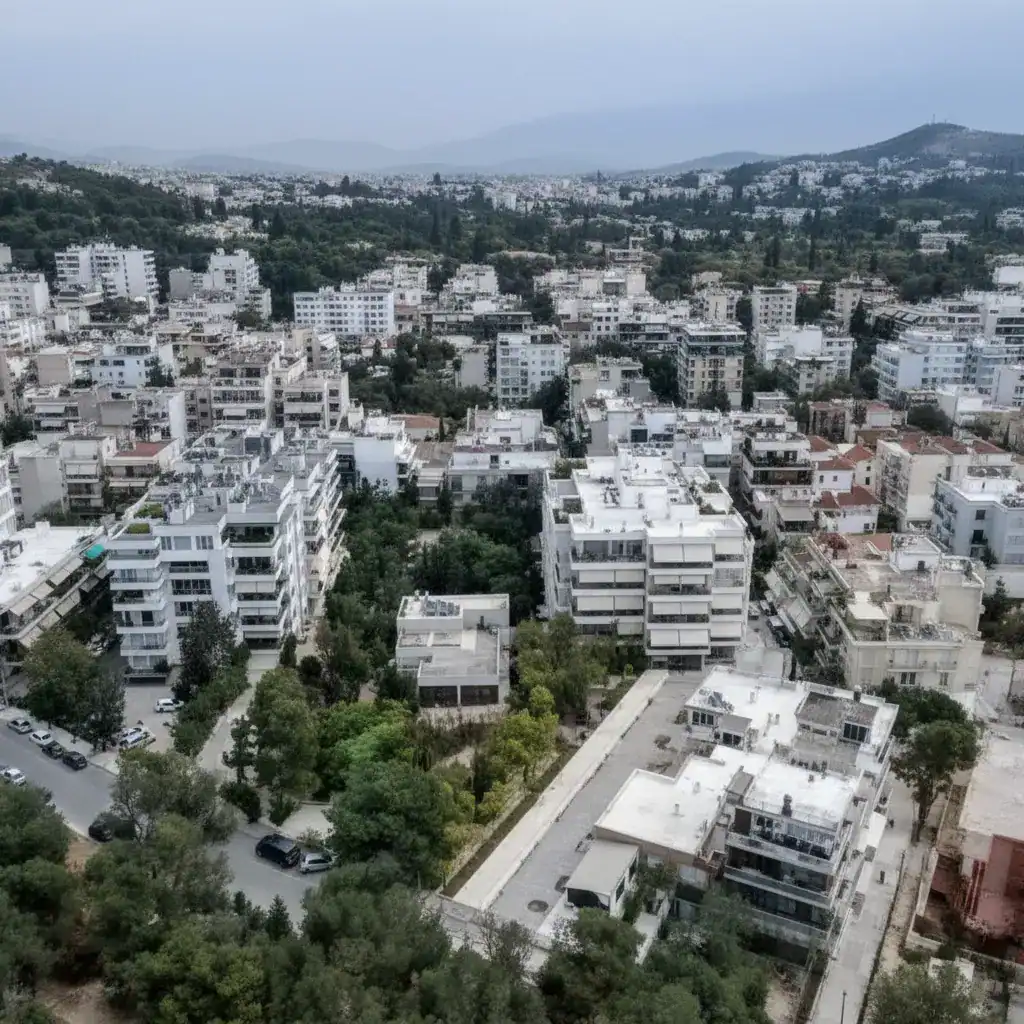
The Greater Athens housing market is showing its first signs of consolidation, with a deceleration in the rate of value increases and a stabilization, albeit at high prices. This marks a pivotal shift from a period of rapid growth to one of strategic maturation, as highlighted in the latest annual report from Engel & Volkers Greece.
From Rapid Growth to Strategic Maturation: A Deeper Look
According to Engel & Volkers Greece, the Athens real estate market, as it navigates the first half of 2026, is no longer merely recovering but is becoming “more selective, more demanding and, ultimately, more professional.” This evolution suggests a market that is refining itself, moving beyond broad recovery to a more nuanced landscape where specific criteria drive demand and value.
The company’s data, derived from actual transactions, indicates that the average sale price for both new and older properties now exceeds €3,000 per square meter. While high-demand areas like Maroussi and Nea Smyrni continue to experience rapid annual price increases of 12% and 13% respectively, other areas that previously saw significant surges are now recording milder increases, often below 4-5%. This divergence underscores the market’s growing selectivity.
Shifting Demands and the Rise of Functional Living
A notable trend identified by Engel & Volkers is the increasing preference for smaller, more functionally designed homes. This shift is attributed to the rising costs of purchase and maintenance, compelling families to prioritize efficiency over sheer size. “While previously a family of four was looking for 120 sq.m., now it is turning to smaller apartments, but with a more functional layout in order to be able to cope with the cost of purchase and maintenance,” the report emphasizes.
This change in consumer behavior reflects a broader economic reality, where affordability and practicality are becoming paramount in housing decisions. It also suggests a potential long-term impact on urban planning and residential development, favoring compact, well-designed living spaces.
International Investment and the Two-Speed Market
Giorgos Petras, CEO of Engel & Volkers Greece, sheds light on the evolving nature of international investment in the Greek economy. While foreign investors continue to express confidence, their approach has become more discerning. “Foreign institutional and private investors are no longer looking for ‘opportunities’ in general, but are focusing precisely on high-value-added properties,” Petras explains.
This convergence of domestic and international demand is shaping a “two-speed market.” High-end properties are now ensuring greater liquidity and capital appreciation, making them attractive to sophisticated investors. Conversely, properties that do not meet modern standards are increasingly struggling to attract interest, highlighting a growing disparity in market performance based on property quality and value proposition.
Geographical Disparities in Property Values
The report also delineates the geographical landscape of property values in Athens. The most expensive areas continue to be Vouliagmeni, Glyfada, Psychiko, Filothei, and Kolonaki, reflecting their established status and desirability. In contrast, Agia Varvara, Menidi, Perama, and Ano Liosia remain among the most affordable areas, offering more accessible options for a wider range of buyers.
This segmentation underscores the diverse socio-economic fabric of Greater Athens and the varied investment opportunities available across different neighborhoods. The continued premium on certain affluent areas suggests sustained demand for luxury and prime locations, even as the overall market matures.
The Road Ahead: Challenges and Opportunities
The consolidation of property rates in Greater Athens, coupled with changing buyer preferences and selective investment, presents both challenges and opportunities. For developers, it necessitates a pivot towards building smaller, more functional homes that cater to the evolving needs of families. For investors, it demands a more strategic approach, focusing on high-value-added properties that promise greater returns and liquidity.
The market’s maturation phase implies a move away from speculative growth towards sustainable development. This could lead to a more stable and predictable real estate environment, benefiting both residents and long-term investors. However, it also raises questions about affordability for those at the lower end of the income spectrum, especially as even stabilized prices remain high.
The Athens real estate market is signalling a new era, one where discernment, functionality, and strategic investment will define its trajectory. The coming months will reveal how effectively stakeholders adapt to these shifting dynamics, shaping the future of housing in one of Europe’s most historic capitals.