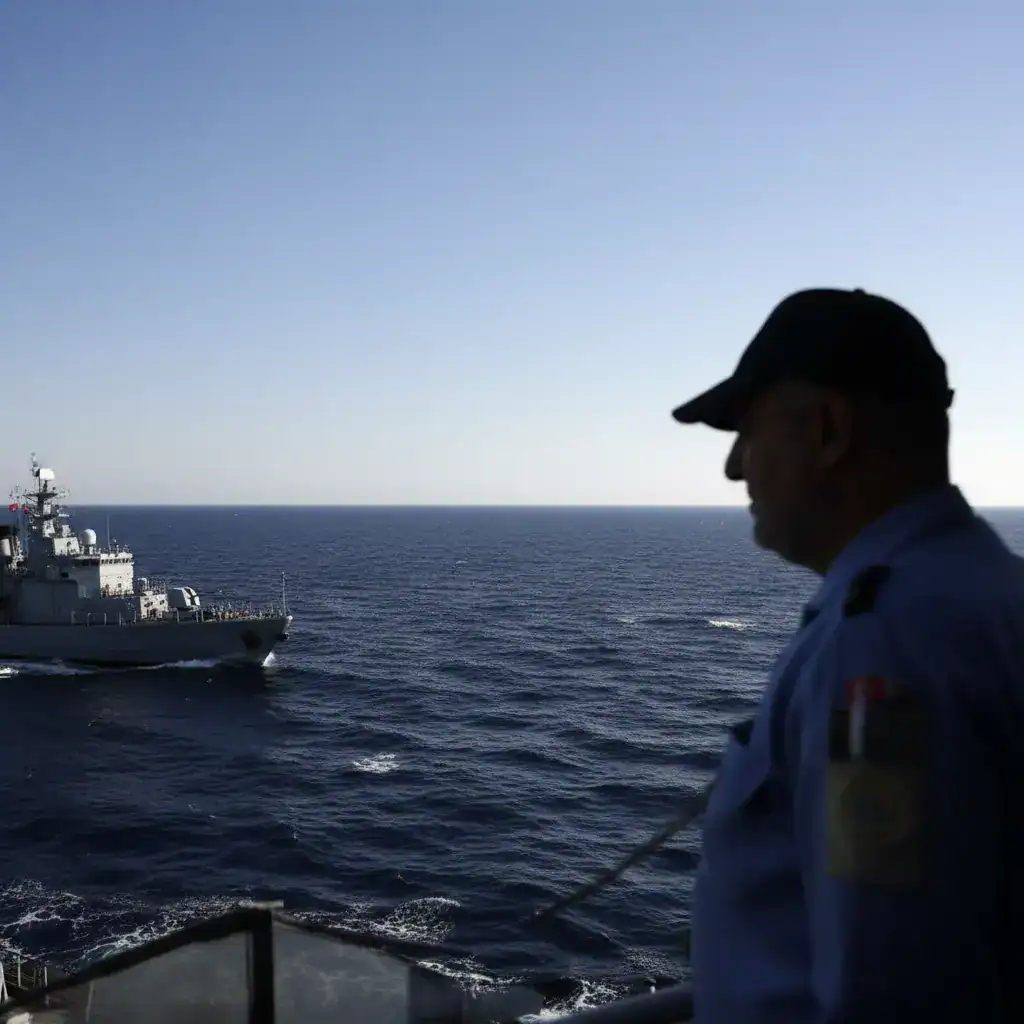
Athens, Greece – Reports of an upcoming ‘Legislative Turkography’ from Ankara are sending ripples of concern through Athens, as Greek officials warn that any unilateral Turkish attempt to legislate disputed sea zones would constitute a clear violation of international law. This development threatens to destabilize the delicate ‘calm waters’ that have characterized Greek-Turkish relations over the past year, prompting a deeper look into the complex dynamics of the eastern Mediterranean.
The Looming Threat of ‘Legislative Turkography’
Greek Foreign Minister George Gerapetritis, addressing press questions on Thursday, reiterated Athens’ firm stance against unilateral actions, stating they are “incompatible with the fundamental principles of the law of the sea” and will be dismissed by Athens. These remarks come amidst growing debate in Turkey, fueled by leaks-deliberate or otherwise-regarding a draft law reportedly designed to formally define Turkish maritime zones through domestic legislation. Such a move is perceived by Greek officials as both legally baseless and politically provocative.
Drawing on Greek media analysis, Athens is reportedly preparing for a new phase in the protracted maritime dispute between the two NATO allies. While striving to preserve the fragile climate of détente, the potential for escalation remains a significant concern.
UNCLOS and Customary International Law
Gerapetritis highlighted Turkey’s historical abstention from signing and ratifying the United Nations Convention on the Law of the Sea (UNCLOS). However, he emphasized that UNCLOS’s core provisions are integral to customary international law, rendering them binding on all states regardless of formal ratification. This legal framework forms the bedrock of Greece’s position, asserting that Turkey’s proposed legislation would lack international legitimacy.
Athens’ Diplomatic Response and the ‘Battle of Maps’
Greek officials are awaiting the formal publication of the Turkish draft legislation, anticipated in June, before formulating a coordinated diplomatic response. Gerapetritis indicated that if the proposed language deviates from internationally accepted maritime law, Greece will respond both bilaterally with Turkey and multilaterally through the European Union and the United Nations.
Athens views this Turkish initiative, in part, as a reaction to Greece’s recent efforts to solidify its maritime claims on the international stage. Of particular note is Greece’s submission of its Maritime Spatial Planning map to the EU, which represents the first official depiction of the outer limits of the country’s continental shelf and Exclusive Economic Zone (EEZ)-a mandatory action for all EU member states.
This move reportedly angered Ankara, especially after Turkey submitted its own competing maritime map to UNESCO, intensifying what Greek analysts have termed a “battle of maps” over the Aegean and eastern Mediterranean.
“If any country chooses to take unilateral measures that, under international law, should be determined through bilateral or multilateral agreement, then such moves will exist purely for domestic consumption and will have no international effect,” Gerapetritis asserted during a conference organized by the FT.
His comments coincide with an increasing trend in Turkish academic and political circles to frame the proposed legislation as a concrete manifestation of the “Blue Homeland” doctrine-Ankara’s expansive maritime strategy aimed at projecting Turkish influence across surrounding seas.
‘Calm Waters’ Under Pressure: Restraining Escalation
Despite heightened vigilance within the Greek foreign ministry and the office of Prime Minister Kyriakos Mitsotakis, officials maintain that a complete breakdown of Greek-Turkish relations is not expected. Two key factors are believed to be restraining escalation: the highly unstable international environment and the existence of functioning communication channels between Athens and Ankara.
Gerapetritis referenced his regular contacts with Turkish Foreign Minister Hakan Fidan, stating, “It is remarkable how many times both I and my Turkish counterpart have intervened to defuse tensions before they emerged. This kind of dialogue is absolutely essential, especially in moments like these.”
However, Greek officials privately acknowledge that codifying Turkish maritime claims into national legislation would represent a significant diplomatic escalation, even if it does not immediately lead to confrontation at sea. Athens also suspects the Turkish move could serve as a maximalist opening position for future negotiations. Such a framework, however, would leave little common ground if Ankara continues to reject the law of the sea as the basis for dispute resolution.
The Shadow of Sèvres and Divergent Narratives
The increasingly nationalistic tone of Turkish public debate has also raised alarms among Greek observers. Turkish politicians, analysts, and retired military officers have frequently argued that Greece, Cyprus, and Israel are attempting to confine Turkey within a “maritime version of the Treaty of Sèvres”-a reference to the 1920 agreement widely viewed in Turkey as a symbol of national humiliation and attempted partition.
The refrain, “One handful of small islands cannot imprison a country with more than 1,000 kilometers of coastline,” has become increasingly common in Turkish discourse, underscoring the fundamentally different strategic outlooks shaping policy in Athens and Ankara.
Even as both governments publicly advocate for dialogue and “calm waters,” the maritime dispute appears to be once again moving to the forefront of Greek-Turkish relations, with diplomacy, law, and national narratives clashing across the eastern Mediterranean.
Source: https://www.tovima.com/politics/reports-of-upcoming-legislative-turkography-raise-eyebrows-in-athens/