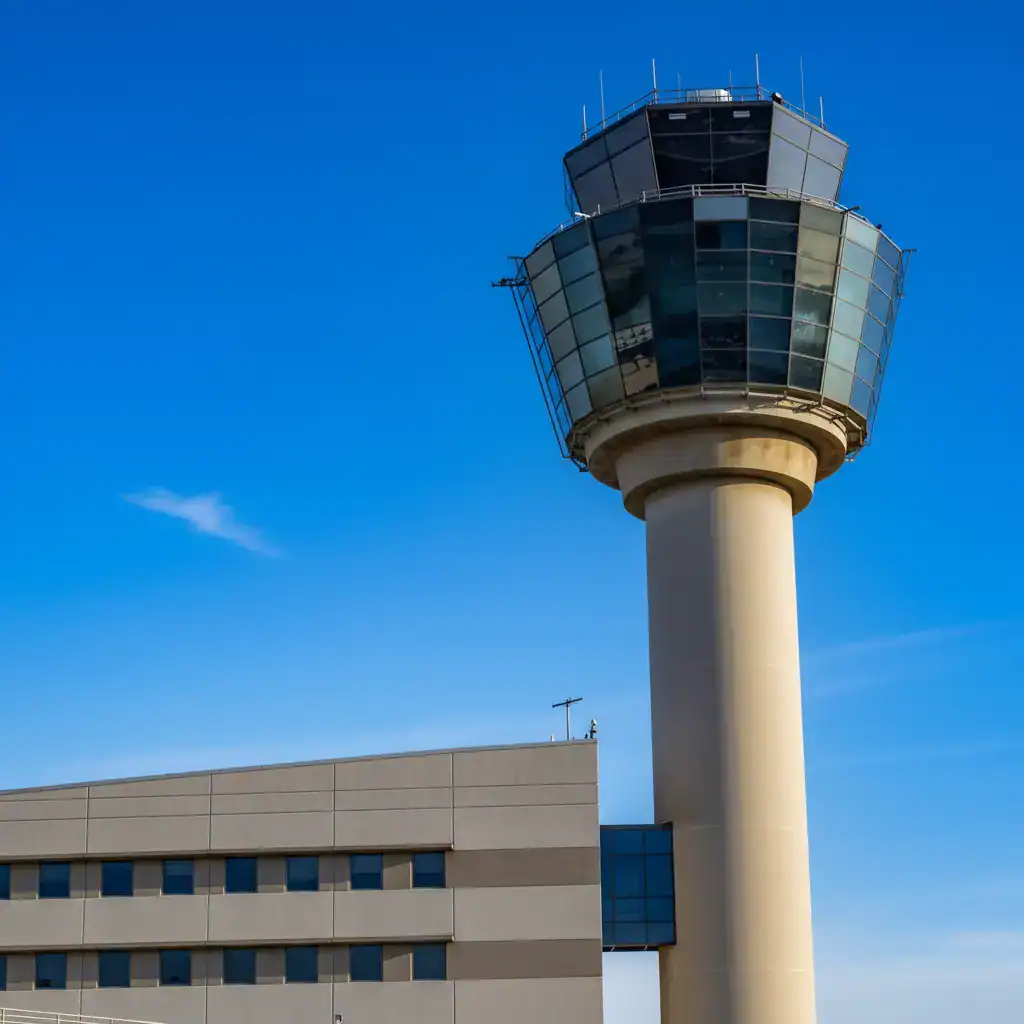
The ‘Route 2025’ program, with a total budget of 70 million euros, reflects not only an environmental acceleration but also the strategic choice of Greece’s largest airport to integrate energy autonomy and decarbonization into the core of its operational development.
‘Route 2025’: A Strategic Commitment to Sustainability
The ‘Route 2025’ initiative began in 2019 when Athens International Airport (AIA) signed the Larnaca Declaration, committing to achieve a carbon-neutral footprint in the aviation sector by 2050. Just a few months later, the airport’s management decided to transform this long-term commitment into a clear and time-bound roadmap, setting the ambitious goal of achieving net zero by 2025. The name ‘Route 2025’ was deliberately chosen to emphasize a program with specific steps, investments, and measurable results, rather than a general environmental declaration.
Self-Production of Clean Energy at the Core of the Plan
At the heart of the plan was the decision to self-produce clean electricity, aiming to fully cover the airport’s energy needs within its facilities. AIA chose to avoid accounting approaches, such as guarantees of origin, and instead invested in infrastructure with measurable environmental impact and long-term energy security. This decision gained particular significance considering that the program was designed and implemented during a period of intense turmoil for the industry, with the pandemic severely affecting air transport and creating conditions of increased uncertainty.
Two Phases of Investment and Implementation
The investment was implemented in two distinct phases. The first phase involved the installation of a 16 MWp photovoltaic park, which became operational in early 2023. This unit covers approximately 45% of the airport’s annual electricity consumption, providing tangible results early on, both in terms of cost and environmental footprint. The second phase was completed in the second half of 2025 and included the development of a 35.5 MWp photovoltaic park, combined with an 82 MWh battery energy storage system.
With the completion of both phases, AIA now boasts a total installed capacity of 51.5 MW from photovoltaics, enhanced with a storage system, which maximizes self-consumption and improves the stability of the energy supply. The integration of energy storage is considered crucial, as it facilitates optimal management of the generated energy and reduces reliance on the grid during peak hours. At a European level, this undertaking is among the most comprehensive examples of self-produced energy within airport facilities.
Comprehensive Interventions Beyond Energy
In parallel with the energy aspect, ‘Route 2025’ included a series of interventions affecting the airport’s overall operations. As part of this, 61 vehicles in the fleet were converted to electric, an extensive charging network was developed, medium-voltage infrastructure was upgraded, and heat pumps were installed for heating needs, replacing natural gas. These interventions are part of a comprehensive strategy to reduce both direct and indirect emissions, taking into account the airport’s entire operational footprint.
From January 1, 2026, ‘Eleftherios Venizelos’ will cover 100% of its electricity needs through self-production from renewable sources, making it the first major international airport in Greece to achieve net zero status. Additionally, it is among the few European airports that rely on such extensive self-production of energy from renewable sources. This strategy has been designed to support future airport expansion, ensuring that additional energy needs will not disrupt the balance.
A Model for Sustainable Aviation and National Development
The significance of ‘Route 2025’ extends beyond a single investment. The program strengthens the airport’s role as a key pillar of the country’s tourism product and contributes to shaping a more sustainable image for Athens and Greece in the international environment. In this context, representatives of the state and European institutions have emphasized that the decarbonization of transport is now a one-way street, with airports evolving from simple transport infrastructures into energy hubs, innovation centers, and catalysts for the green transition.