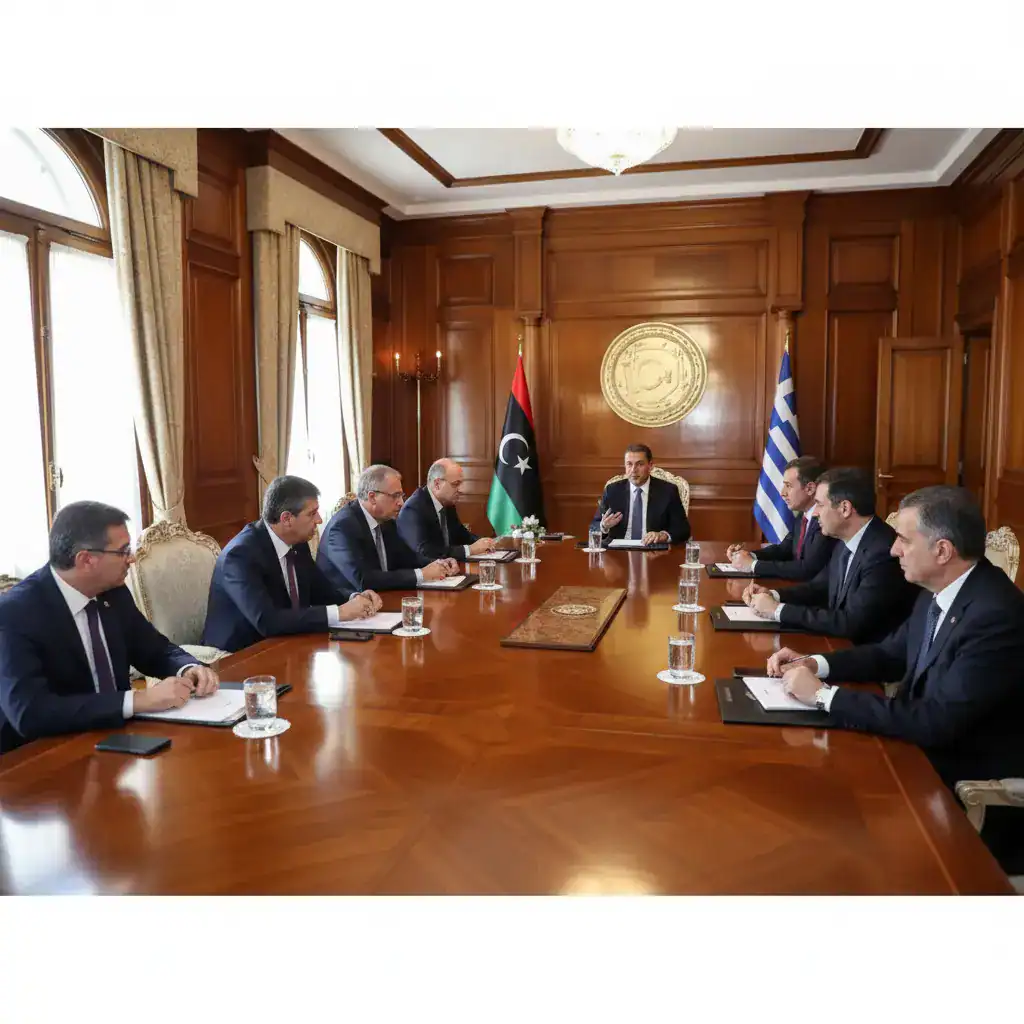
ATHENS, Greece – Greek Foreign Minister George Gerapetritis concluded a series of meetings in Tripoli, Libya, on April 27, 2026, with Athens subsequently expressing its satisfaction with the results. The visit aimed at strengthening ties between Greece and Libya, focusing on areas of mutual interest and addressing critical regional issues.
Common Will for Enhanced Cooperation
The core outcome of Gerapetritis’ discussions in Tripoli was a shared commitment to further enhance cooperation and intensify bilateral contacts between the two nations. This common will signals a positive trajectory for future relations, building on the momentum generated by these high-level engagements.
Key Issues on the Agenda
During his visit, Minister Gerapetritis engaged in comprehensive discussions covering several pivotal topics:
- Exclusive Economic Zone (EEZ) and Continental Shelf: These maritime issues, crucial for both countries, were central to the talks, reflecting their significance in regional geopolitics and resource management.
- Migration: Addressing the challenges of migration, a pressing concern for both Greece and the wider European Union, was a key point of discussion, with both sides seeking collaborative solutions.
- Bilateral Cooperation: Broader aspects of bilateral cooperation were explored, encompassing various sectors aimed at fostering mutual growth and stability.
The Greek Foreign Ministry highlighted the constructive nature of the meetings, emphasizing the potential for concrete advancements in these areas. The discussions underscored the importance of dialogue and cooperation in resolving complex issues and promoting regional stability.
Broader Context of Regional Diplomacy
Gerapetritis’ visit to Tripoli comes at a time of heightened diplomatic activity in the region. Greece has been actively pursuing a foreign policy that prioritizes stability, adherence to international law, and the development of strong, cooperative relationships with its neighbors.
The emphasis on the EEZ and continental shelf reflects Greece’s consistent stance on respecting international maritime law and safeguarding its sovereign rights. Similarly, the focus on migration underscores a shared responsibility in managing migratory flows and addressing their root causes.
Officials in Athens believe that these discussions will pave the way for more structured engagements and potentially lead to agreements that benefit both Greece and Libya. The next steps are expected to involve technical discussions and follow-up meetings to translate the shared will into tangible outcomes.
The positive reception of the meetings in Athens suggests a renewed optimism for Greek-Libyan relations. This diplomatic initiative is seen as a crucial step towards building a more stable and prosperous future for the Eastern Mediterranean region.