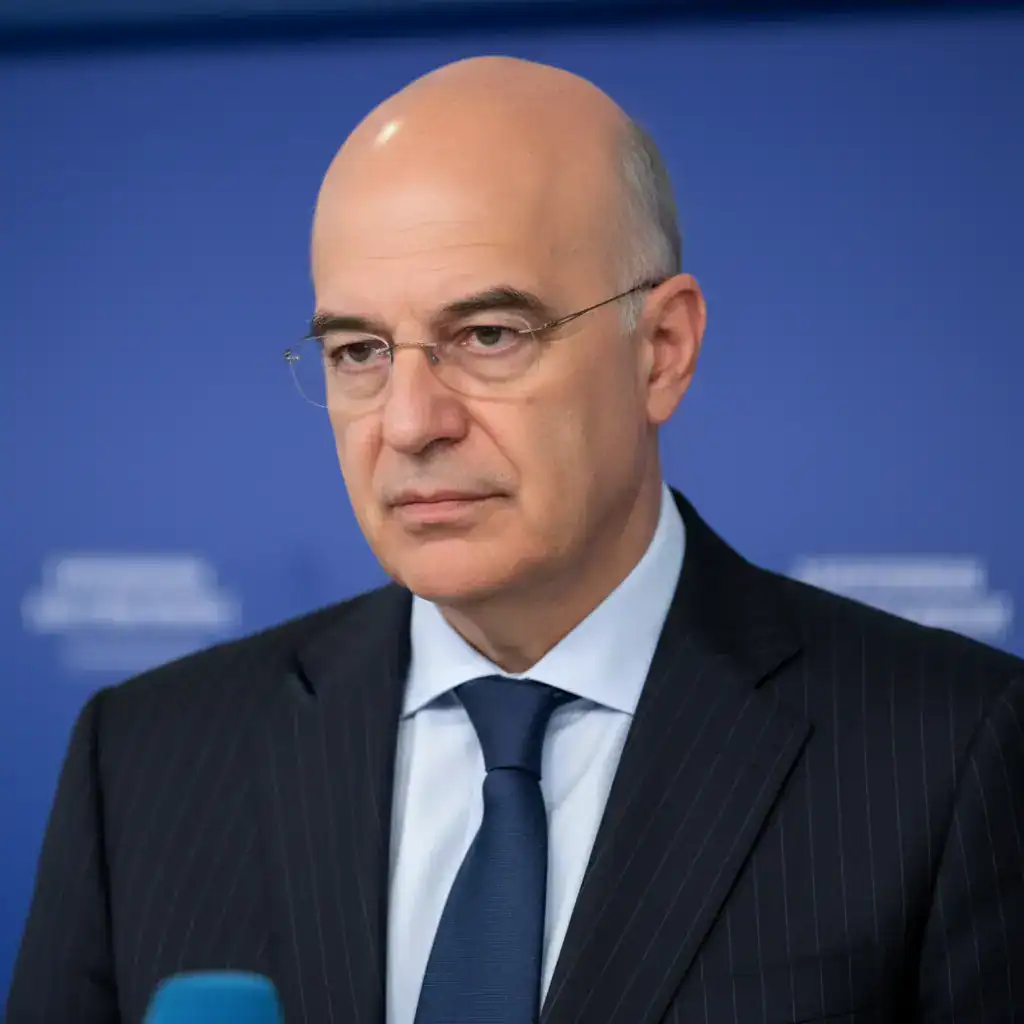
Athens Responds to Turkey’s Harassment of Dendias – Ankara’s Provocative Remark
Athens, June 8, 2026 – The Greek Defence Minister, Nikos Dendias, briefed his European counterparts on an incident of Turkish harassment directed at his aircraft while en route to Cyprus for the EU Defence Ministers’ meeting. Athens has unequivocally condemned the incident, stressing that conduct departing from international law will not be tolerated. Turkey, in turn, issued a statement denying the harassment and claiming a violation of its airspace.
Turkish Harassment Confirmed by Athens
The incident involved radio harassment of the aircraft carrying Defence Minister Nikos Dendias, as well as planes transporting French and Dutch delegations, while flying to Cyprus. This event, which occurred on June 7, 2026, once again confirms that Turkey is disturbing otherwise calm waters, according to Greek officials. The interference reportedly came via radio transmissions originating from the Turkish-occupied part of Cyprus, specifically from the illegal Tymbou (Ercan) airport. Reports also indicated that Turkish F-16 fighter jets stationed in the occupied territories were scrambled.
The issue gained particular significance because it prompted, at Greece’s initiative, a discussion on activating Article 42.7 of the EU Treaty – the mutual assistance clause requiring all member states to aid a fellow member under attack. Mr. Dendias briefed his European counterparts on the Turkish harassment after Cypriot Defence Minister Vasilis Palmas raised the matter during the meeting.
Government spokesperson Pavlos Marinakis stated, “We unequivocally condemn this specific incident, and any behaviour that deviates from international law cannot be tolerated.” He added that the relevant ministries would decide on any further actions.
Ankara’s Counter-Claims and Denial
Meanwhile, the Turkish Presidency issued a statement commenting on the aircraft incident. The statement, which does not address the alleged radio interference from the “control tower” of the illegal Tymbou (Ercan) airport in occupied Cyprus, instead claims there was a violation of the “airspace” of the “Turkish Republic of Northern Cyprus” (TRNC).
The full statement from the Turkish Presidency reads:
“Claims circulating in certain media outlets and social media accounts that ‘Turkish aircraft harassed the plane carrying Greek Defence Minister Nikos Dendias and European ministers, and that Turkish aircraft violated Greek airspace’ are completely false. On 7 June 2026, four of the six aircraft operating on the Greece-Southern Cyprus route violated the airspace of the ‘Turkish Republic of Northern Cyprus (TRNC)’. Consequently, two Turkish F-16 aircraft performing air traffic control duties and stationed in the ‘TRNC’ immediately took off as a precautionary measure. The aircraft flew within the airspace of the TRNC and did not violate the airspace of the Greek Cypriot Administration (Republic of Cyprus). No harassment of the aforementioned aircraft took place. Furthermore, all flights conducted on 6 June 2026 as part of the 115th anniversary of the Air Force Command and the ‘Youth and Aviation Festival’ were carried out within the designated flight area of the 2nd Main Jet Base Command. Greek airspace was not violated in any way. We strongly urge the public not to lend credibility to these claims, which are being made with the aim of manipulating international public opinion and creating provocations.”
Underlying Tensions and EU Response
The incident highlights ongoing tensions between Greece, Cyprus, and Turkey, particularly concerning airspace and sovereign rights in the Eastern Mediterranean. The defence assistance provided by Greece and other European states to Cyprus against drone attacks launched by Hezbollah is a point of irritation for Ankara, as suggested by the Greek government.
The discussion initiated by Greece on activating Article 42.7 of the EU Treaty underscores the seriousness with which Athens views the incident and its potential implications for regional stability and EU solidarity. The mutual assistance clause would require all member states to aid a fellow member under attack, signaling a strong collective response to acts of aggression or harassment.
International Law and Future Actions
Athens maintains that any behaviour deviating from international law will not be tolerated. The Greek government is currently evaluating further actions in response to the incident, with decisions to be made by the relevant ministries.
The conflicting narratives from Athens and Ankara underscore the complex and contentious nature of their bilateral relations. While Greece condemns the actions as a clear act of harassment, Turkey frames its response as a necessary measure to protect its claimed airspace. The international community will be closely watching how these developments unfold and whether diplomatic efforts can de-escalate the situation.
The incident serves as a reminder of the delicate geopolitical balance in the Eastern Mediterranean and the importance of adhering to international norms and laws to prevent further provocations.