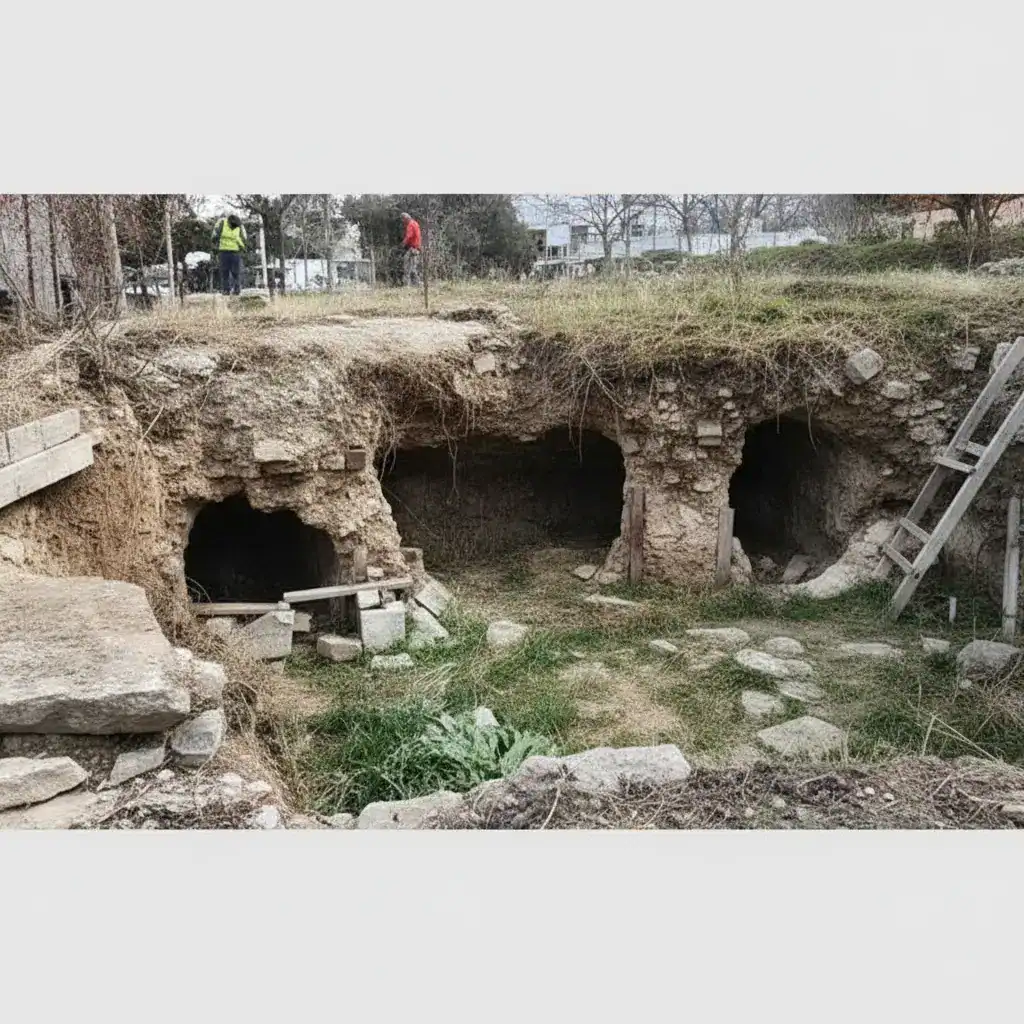
The air in Petralona, Athens, often hums with the cacophony of daily life – the murmur of conversations from bustling cafes, the playful shouts of children, the incessant thrum of traffic. Yet, for decades, a silent witness lay hidden beneath this urban symphony, an ancient secret waiting to be fully unveiled. The Antaios Fountain, a small but significant monument, discovered almost fifty years ago, is finally stepping out of the shadows, thanks to a comprehensive restoration effort by the Ministry of Culture.
The ‘Unknown’ Fountain That Refused to Disappear
Imagine this: you’re digging for pipes, an essential modern amenity, and suddenly, you hit antiquity. This quintessentially Athenian origin story is precisely how the Antaios Fountain came to light in 1976, during a rescue excavation for sewer works. Tucked away at the junction of Antaios Street and Gennaiou Kolokotroni Street, near the lively Amalia Mercouri Square, the fountain became another forgotten gem in a city brimming with historical treasures.
For years, it existed in a precarious state, ‘trapped within the modern road network,’ as the Ministry of Culture described it. It was present, yes, but not adequately protected, not truly legible, a silent testament to a bygone era, slowly succumbing to the relentless march of time and urban sprawl. In 2024, an inspection revealed the extent of its suffering: significant deterioration of the upper rock surface, detachment and collapse of parts of the rock, and cumulative damage from weather, pollution, and the constant vibration of traffic.
A Monument Suffocating Under the City’s Embrace
Culture Minister Lina Mendoni aptly characterized the Antaios Fountain as ‘special but unknown.’ It’s a paradox that speaks volumes about Athens’s unique relationship with its past. While some monuments receive the full ‘mythological superstar’ treatment – scaffolding, banners, ticket booths, and throngs of tourists – others, like Antaios, sit quietly, almost politely, in the urban fabric, too dignified to complain about their neglect.
The fountain’s physical location further exacerbated its vulnerability. Situated within a triangular plot, its courtyard lies noticeably lower than the surrounding streets, with its roof almost at modern road height. This ‘odd geometry’ made it feel swallowed by the city, a poignant symbol of history struggling to breathe amidst modernity. An attempt in 1985 to narrow a section of Antaios Street and pedestrianize it offered a glimmer of hope, but true rescue remained elusive until now.
From Theory to Action: A Holistic Restoration
The Ministry of Culture recognized that mere patchwork would not suffice. The Antaios Fountain demanded a complete rescue, a genuine integration into the neighborhood’s daily cultural tapestry. This ambitious project isn’t just about preserving an ancient relic; it’s about giving it a new lease on life, transforming it into a functional and beautiful space for the community.
The restoration plan is comprehensive, addressing every facet of the fountain’s preservation and integration:
- Structural and Conservation Works: This includes the structural restoration and stabilization of the cave/shelter, gentle interventions on architectural elements, and meticulous repairs, supplements, cleaning, and conservation of the marble parapet and courtyard paving.
- Water and Drainage Management: A critical aspect, as water is often the ‘silent killer’ in Athenian archaeology. The plan involves the creation of a natural channel and an underground drainage pipe connection to the public sewage network, ensuring the fountain’s longevity.
- Surrounding Area Redesign: This is where the true transformation takes place. The excavated area will be redesigned, incorporating retaining structures and a perimeter walking route. New infrastructure and lighting will enhance visitor understanding, making the monument legible, not just ‘present.’
The central promise of this redesign is the creation of a new square, incorporating the archaeological site, with green zones and pedestrian public space. This will culminate in a functional, high-quality neighborhood walking and leisure area, a true gift to the residents of Petralona.
More Than Just a Monument: An Investment in Identity
Petralona is not a museum district. It’s the beating heart of real Athens – a vibrant tapestry of cafes, children, late-night activity, and the beautiful chaos of everyday life. When Minister Mendoni refers to this project as ‘an investment in the identity of the historic neighborhood,’ she underscores a crucial point: this isn’t about creating another tourist trap.
This is about reclaiming a piece of history for the locals, a monument that truly belongs to them. No longer will it be fenced off and forgotten, crushed under the stress of traffic, or treated as a mere inconvenience in the urban landscape. Instead, the Antaios Fountain will be restored to its rightful place, a living testament to Petralona’s rich past and a vibrant addition to its present and future.
The restoration of the Antaios Fountain is more than just an archaeological endeavor; it’s a narrative of resilience, a story of an ancient monument refusing to disappear, and a community embracing its heritage. As the scaffolding goes up and the work progresses, Petralona is not just restoring a fountain; it’s rekindling a connection to its soul, ensuring that the whispers of the past can be heard clearly amidst the vibrant rhythms of today.
Source: https://www.argophilia.com/news/antaios-fountain-petralona-athens-protection-plan/247436/