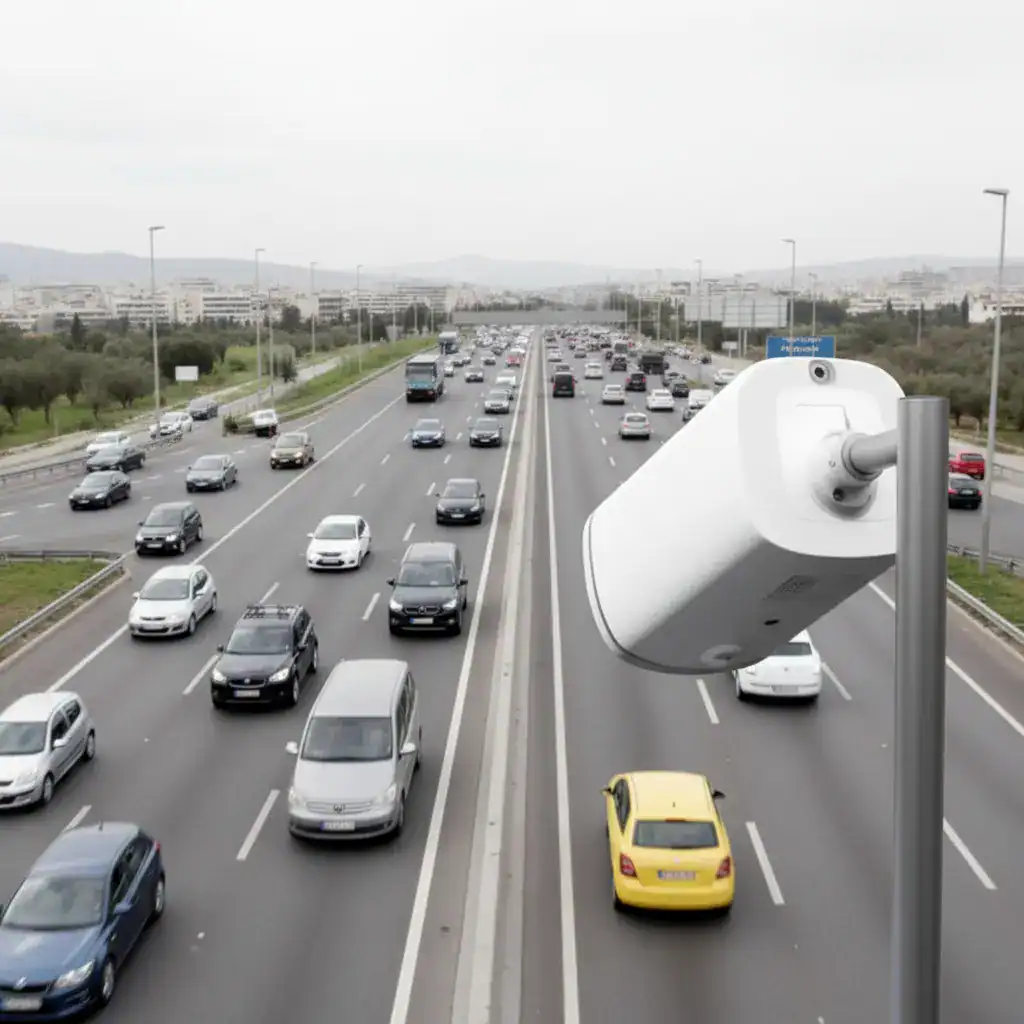
Athens, March 31 – Motorists in Athens have started receiving the first artificial intelligence-generated traffic fines, as Greek authorities escalate their crackdown on dangerous driving. The new system, employing AI-equipped fixed and bus-mounted cameras, aims to enhance road safety and reduce accidents across the country.
First Wave of Fines Issued Electronically
The Finance Ministry announced on Monday that the initial 130 fines have been dispatched to citizens’ gov.gr portal inboxes and digital wallets. These penalties primarily target infringements recorded since Saturday, March 29, 2026, including motorists running red lights and motorcyclists failing to wear crash helmets.
Currently, a pilot scheme is in operation with eight AI traffic cameras strategically placed at what the ministry describes as “increased-risk” spots within the Greater Athens region. Additionally, ten public transport buses are equipped with cameras to monitor traffic violations. This number is projected to increase significantly in the coming months.
Comprehensive Surveillance Capabilities
The fixed AI cameras are designed to detect a wide range of traffic offenses. These include:
- Running red lights
- Speeding
- Driving or parking in bus lanes
- Not wearing helmets (for motorcyclists) or seat belts
- Driving while using a mobile phone
Cameras mounted on buses will specifically record vehicles illegally using or parking in bus lanes. Beyond immediate traffic violations, the collected footage will also be utilized to identify motorists who have not paid their road tax, breached pollution regulations for entering the center of Athens, or are operating uninsured vehicles or those that have failed regular roadworthiness tests.
Expansion Plans for AI Camera Network
The ministry has outlined ambitious plans for the expansion of this AI surveillance network. A total of 1,000 fixed AI traffic cameras are slated for installation by the end of 2026 across the Greater Athens region, Thessaloniki, and Crete, with further deployments planned for 2027. Concurrently, approximately 300 bus-mounted cameras are expected to be in place by early 2027.
Government’s Broader Road Safety Initiative
This deployment of AI-powered enforcement tools is part of a larger government initiative launched in recent months to combat dangerous driving. The overarching goal is to significantly boost road safety and reduce the incidence of traffic accidents nationwide. As part of this effort, financial and legal penalties for breaches of the highway code have been substantially increased, and police forces across the country have issued tens of thousands of fines.
The introduction of AI-generated fines represents a significant technological leap in traffic enforcement for Greece, aiming to create a more disciplined driving environment and ultimately save lives on the roads.
Source: ekathimerini.com