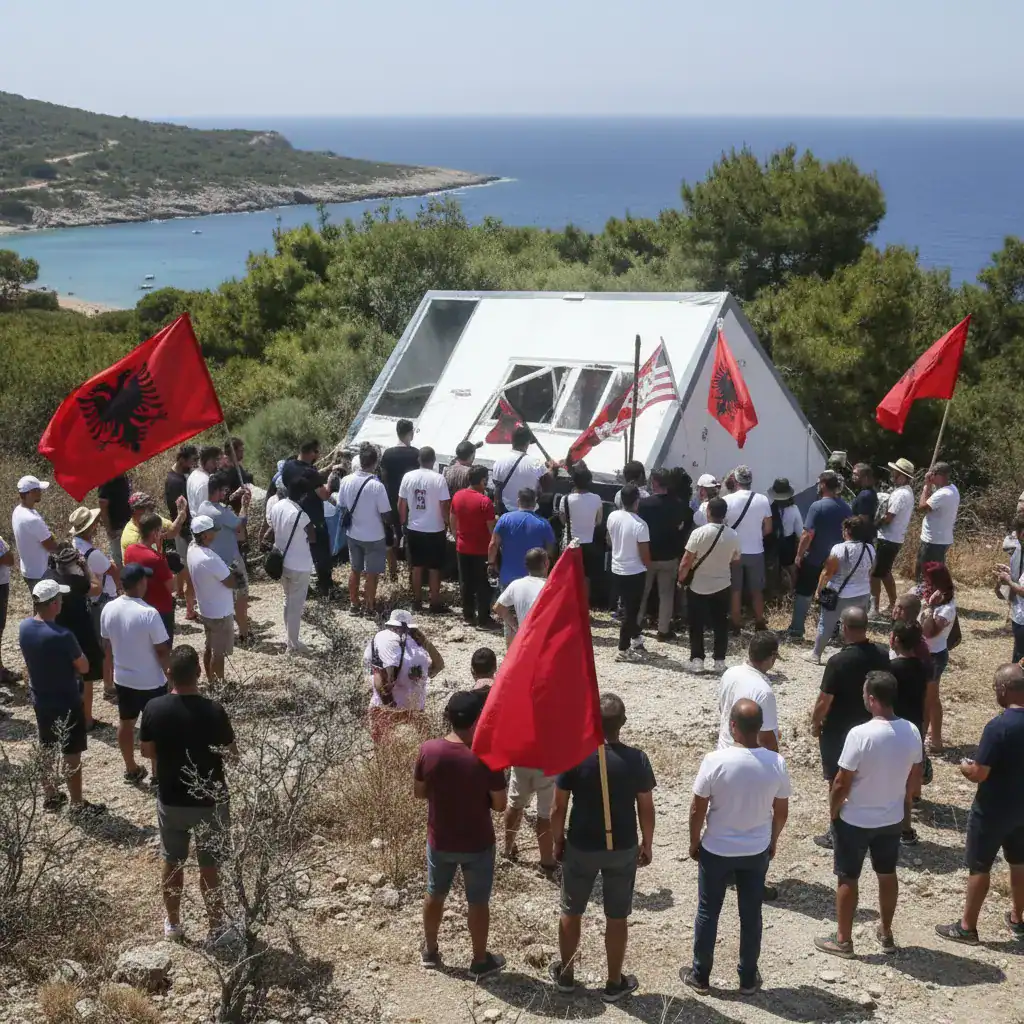
The recent dismantling of fences in Kakomia Bay, Albania, by the “Albania Without Fences” movement is more than just a local protest; it’s a potent symbol of a protracted struggle over land rights, public access, and the contentious path of tourism development. This event, occurring on Sunday, June 22, 2026, not only reasserts local claims to the land but also brings to light a forgotten chapter of ambitious tourism plans involving Club Med, which failed to materialize decades ago.
A Decades-Old Dream Deferred: Club Med’s Albanian Ambitions
The story of Kakomia Bay intertwines with Corfu’s tourism history. In the early 2000s, after its departure from facilities in Corfu, Club Med reportedly eyed Kakomia Bay as a prime location for a new, large-scale tourist development. The bay, with its sheltered waters, sandy beach, and close proximity to Corfu, was deemed ideal for a high-standard international tourist destination. This plan allegedly received political backing from the then-Albanian government and Prime Minister Fatos Nano, who was keen on attracting major foreign investments to the country.
However, the investment never came to fruition. Intense opposition from residents of Nivica and surrounding communities, who disputed land ownership and feared losing access to their beaches and land, proved to be an insurmountable hurdle. Two decades later, the same issue persists, demonstrating the enduring power of local resistance against top-down development initiatives.
The Symbolism of the Fallen Fence: Beyond Kakomia Bay
The recent demolition of the last fence by residents is seen as a symbolic victory in a struggle that began when Kakomia Bay was at the center of plans for one of Southern Albania’s largest tourist investments. Organizers of the “Albania Without Fences” movement emphasize that this act goes beyond just access to Kakomia Bay. They view it as a broader reaction against what they describe as a corrupt political class that has governed the country for 36 years, serving narrow economic interests at the expense of the public good.
In their statements, the organizers accuse the political system of building an oligarchic economic model over the past decades, which, they argue, has enriched a small group of people connected to power at the expense of citizens and national assets. They claim that public land, coastlines, natural resources, and strategic assets have been exploited for the benefit of a connected few.
“The removal of the gate is a significant victory for citizen pressure, but our struggle does not end here. We will continue even more dynamically to denounce abuses against national property and to oppose a governance model that has produced corruption and privileges for a minority at the expense of the majority,” stated the organizers.
They also recalled that during protests in Tirana, the issue of Kakomia Bay and the fences restricting public access was highlighted as a symbol of a wider problem concerning the management of public land and property in Albania. The mobilization was carried out under the central slogan “Albania Without Fences,” with organizers stressing that it is an open, citizen-led, non-partisan protest.
Corfu’s Stake in the Albanian Coastline’s Future
This history holds particular interest for Corfu, given its close geographical and historical ties to the Albanian coast. The bay, once destined to host the continuation of an emblematic Corfiot tourism activity, remains a field of contention between tourism exploitation, property rights, and the demand of local communities to maintain control over their land. The incident at Kakomia Bay serves as a stark reminder of the complex dynamics at play in the region’s development, where economic aspirations often clash with local identities and environmental concerns.
The question remains: how will Albania balance the desire for economic growth through tourism with the legitimate concerns of its citizens regarding land ownership and public access? The “Albania Without Fences” movement signals a growing demand for transparency, accountability, and a more equitable distribution of the benefits of development. As the region continues to evolve, the lessons from Kakomia Bay will undoubtedly shape future debates on sustainable tourism and community empowerment.